
Engineer Burnout at Vilnyx, Startup Acquired by Apple
The engineer who suffered depression worked for Vilnyx, the Catalan startup acquired by Apple, not for the tech giant itself.
English · Original discussion in Spanish · Published
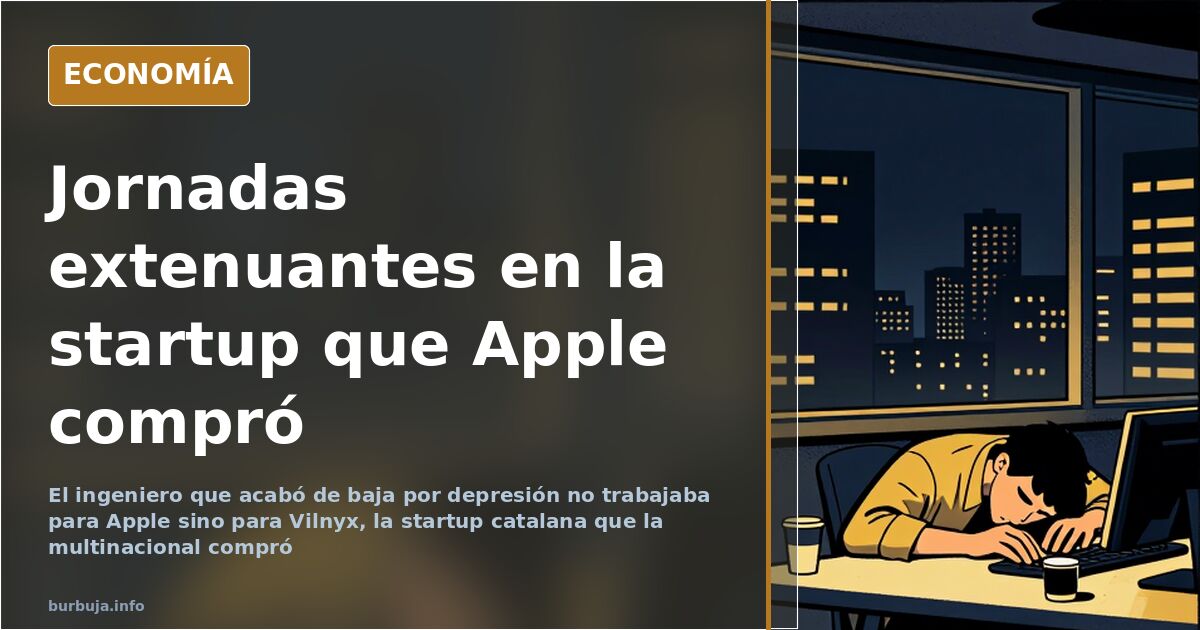
Exhausting shifts at the Catalan startup acquired by Apple
The engineer did not work for Apple. He worked for Vilnyx, the Catalan startup that the multinational eventually bought, and this distinction—which many headlines ignore—frames everything else. The report published by eldiario.es describes a young man who accumulated several years of depression with antidepressant treatment and experienced suicidal thoughts before going on sick leave. This is not a chronicle of a big tech company squeezing its staff. It is what happens when a small firm must meet the demands of a large one, and the person typing pays for the delay.
The deal: Vilnyx, Apple, and €50 million
The numbers in this case are stark and should not be glossed over. A Catalan company, Vilnyx, was sold to Apple for €50 million, according to the figure cited in the case report. In such deals, much of the payment is often conditional on promises being kept: that the technology works as stated and is ready by the agreed date. The buyer sets the calendar; the seller bears the obligation to deliver. And that obligation is not signed off by an executive in a suit, but executed by a short-staffed team facing an immovable deadline.
This is where the dirty work begins. When the deadline tightens, pressure does not stay at the top: it cascades downward. The incentives to close the deal go to the owners; the wear and tear falls on the programmers. This pattern is visible in any consultancy, factory, and, for years now, in software development. It is an old pattern that requires no malice: just an impossible goal and someone willing not to say no.
Did he work for Apple or the startup that sold it?
He did not work for Apple. His contract, his boss, and his project came from the acquired company. The person setting his targets was not the multinational, but the local structure that needed to please the buyer to collect the pending tranche. The owners of Vilnyx—two Catalan entrepreneurs, according to the case description—are the central figures, not Cupertino.
From this arises one of the most repeated criticisms: attention has focused on the famous brand rather than those who organized the working hours. The schedule, unrecorded overtime, and reprimands came from inside the house. The brand only appeared in the showcase, and that showcase was precisely what had to be maintained at any cost.
Why the case causes outrage and also raises doubts
Two readings clash head-on. Some view the episode as a predictable result of a labor market that rewards endurance: learned helplessness, panic about changing jobs, and the idea that things are no better anywhere else. They argue that leaving a job in Spain is extremely difficult and socially frowned upon, and that this antiestéticar is ingrained before age thirty.
The other reading points to the individual. It argues that if someone spends years dealing with depression, treatment, and sick leave without moving on, something doesn't add up; it highlights that this seemed to be his first job and that meeting deadlines caught him off guard. Some add, without nuance, that certain profiles simply do not fit the profession. This is the most uncomfortable current and provides the least data: it explains the outcome, not the causes.
Sick leave, phone calls, and avoidable mistakes
Here the analysis becomes practical. During sick leave, there is no obligation to meet with your boss or answer the phone. Accepting a coffee with someone who was pressuring you is described as a rookie mistake, not proof of weakness. Psychological sick leave is granted by a doctor, and once granted, the worker disappears from the radar until they return.
The second mistake highlighted is failing to stop overtime in the first meeting. With time-tracking systems already implemented in most companies, denying that extra hours were worked is harder than before. And the third: confusing enduring with earning. If you are fired, there is severance pay and, if necessary, a lawsuit. If you quit voluntarily, that money stays in the company's pocket.
The generational comparison that creeps into every conversation
"My grandfather spent 16 hours in the mine and didn't complain." This phrase, repeated in similar terms, summarizes a trend that measures current psychological distress against the physical hardship of previous generations and concludes that young workers are made of glass. The argument has a fundamental flaw: it compares one type of damage with another, assuming that silence back then meant well-being.
In response, others argue that endurance was not health, but lack of alternatives, and that today people ask for something as basic as not spending years of their life on the payroll. It is also recalled that work does not always leave room for anything else: those who work full days plus extra hours have no time to be parents, citizens, or even fully human.
What alternatives are proposed?
None comes free. Leaving without severance costs money; staying costs health. And freelancing is not paradise: you swap one boss for dozens of clients calling at all hours, though you get to choose your start time.
With this material, it is reasonable to expect more similar cases while bonuses for selling a company are collected at the top and hours are paid—or not paid—at the bottom. Next time, the headline might again name the multinational and omit the ones signing the paychecks. Or perhaps someone will read this before accepting that coffee with their boss while on sick leave.
The engineer did not work for Apple. He worked for Vilnyx, the Catalan startup that the multinational eventually bought, and this distinction—which many headlines ignore—frames everything else. The report published by eldiario.es describes a young man who accumulated several years of depression with antidepressant treatment and experienced suicidal thoughts before going on sick leave. This is not a chronicle of a big tech company squeezing its staff. It is what happens when a small firm must meet the demands of a large one, and the person typing pays for the delay.
The deal: Vilnyx, Apple, and €50 million
The numbers in this case are stark and should not be glossed over. A Catalan company, Vilnyx, was sold to Apple for €50 million, according to the figure cited in the case report. In such deals, much of the payment is often conditional on promises being kept: that the technology works as stated and is ready by the agreed date. The buyer sets the calendar; the seller bears the obligation to deliver. And that obligation is not signed off by an executive in a suit, but executed by a short-staffed team facing an immovable deadline.
This is where the dirty work begins. When the deadline tightens, pressure does not stay at the top: it cascades downward. The incentives to close the deal go to the owners; the wear and tear falls on the programmers. This pattern is visible in any consultancy, factory, and, for years now, in software development. It is an old pattern that requires no malice: just an impossible goal and someone willing not to say no.
Did he work for Apple or the startup that sold it?
He did not work for Apple. His contract, his boss, and his project came from the acquired company. The person setting his targets was not the multinational, but the local structure that needed to please the buyer to collect the pending tranche. The owners of Vilnyx—two Catalan entrepreneurs, according to the case description—are the central figures, not Cupertino.
From this arises one of the most repeated criticisms: attention has focused on the famous brand rather than those who organized the working hours. The schedule, unrecorded overtime, and reprimands came from inside the house. The brand only appeared in the showcase, and that showcase was precisely what had to be maintained at any cost.
Why the case causes outrage and also raises doubts
Two readings clash head-on. Some view the episode as a predictable result of a labor market that rewards endurance: learned helplessness, panic about changing jobs, and the idea that things are no better anywhere else. They argue that leaving a job in Spain is extremely difficult and socially frowned upon, and that this antiestéticar is ingrained before age thirty.
The other reading points to the individual. It argues that if someone spends years dealing with depression, treatment, and sick leave without moving on, something doesn't add up; it highlights that this seemed to be his first job and that meeting deadlines caught him off guard. Some add, without nuance, that certain profiles simply do not fit the profession. This is the most uncomfortable current and provides the least data: it explains the outcome, not the causes.
Sick leave, phone calls, and avoidable mistakes
Here the analysis becomes practical. During sick leave, there is no obligation to meet with your boss or answer the phone. Accepting a coffee with someone who was pressuring you is described as a rookie mistake, not proof of weakness. Psychological sick leave is granted by a doctor, and once granted, the worker disappears from the radar until they return.
The second mistake highlighted is failing to stop overtime in the first meeting. With time-tracking systems already implemented in most companies, denying that extra hours were worked is harder than before. And the third: confusing enduring with earning. If you are fired, there is severance pay and, if necessary, a lawsuit. If you quit voluntarily, that money stays in the company's pocket.
The generational comparison that creeps into every conversation
"My grandfather spent 16 hours in the mine and didn't complain." This phrase, repeated in similar terms, summarizes a trend that measures current psychological distress against the physical hardship of previous generations and concludes that young workers are made of glass. The argument has a fundamental flaw: it compares one type of damage with another, assuming that silence back then meant well-being.
In response, others argue that endurance was not health, but lack of alternatives, and that today people ask for something as basic as not spending years of their life on the payroll. It is also recalled that work does not always leave room for anything else: those who work full days plus extra hours have no time to be parents, citizens, or even fully human.
What alternatives are proposed?
- Request dismissal and leave with unemployment benefits properly arranged.
- Quit voluntarily and seek another destination: the sector claims to have plenty of offers.
- Endure actively: do the bare minimum, not a minute more, and respond to shouting with equal volume.
- Go freelance, with the warning not to depend on one or two large clients.
None comes free. Leaving without severance costs money; staying costs health. And freelancing is not paradise: you swap one boss for dozens of clients calling at all hours, though you get to choose your start time.
With this material, it is reasonable to expect more similar cases while bonuses for selling a company are collected at the top and hours are paid—or not paid—at the bottom. Next time, the headline might again name the multinational and omit the ones signing the paychecks. Or perhaps someone will read this before accepting that coffee with their boss while on sick leave.
Also available in: Deutsch
Summary of a discussion on Burbuja.info - Foro de economía, actualidad y política., translated from Spanish and reviewed before publication. Read the full discussion (129 replies).
More summaries
-
Civil vs. Computer Engineering: Degrees No Longer Guarantee Success
Comparing salaries, job prospects, and AI risks between civil and computer engineering to guide 2025 study choices.
-
Mercadona Wages and Hours: Myth of Easy Jobs in Spain
Mercadona offers €1,685 salaries and 10-hour shifts. Workers report high pressure and fear of sick leave, challenging the idea of easy employment.
-
Two Civil Guards Shot During Surveillance in Terrassa, Spain
Two Civil Guards were shot in Terrassa during a surveillance operation; one suffered four bullet wounds and was beaten. The incident highlights security concerns in Spain.
-
Alcampo Girona launches Ramadan section, sparking debate
An Alcampo in Girona dedicates space to Ramadan products like couscous and halal meats. The aisle reignites discussions on demographics and consumption.
-
PSOE proposes law to limit popular prosecution in Spain
The PSOE has registered a bill restricting the popular prosecution and expanding judge recusal. It could affect ongoing cases like Begoña Gómez's.
-
Church Fire in Granada: One Arrested, Hate Crime Debate
A man was arrested after setting fire to a church in El Pozuelo de Albuñol, Spain. Reports of decapitated figures remain unconfirmed.