
Energy Drinks: Teen Caffeine Fix Sparks Debate
Critics claim one Monster equals three coffees, with some teens drinking three daily. The debate centers on energy drinks' unregulated status and health risks.
English · Original discussion in Spanish · Published
Energy Drinks: The Unregulated Teen Caffeine Fix
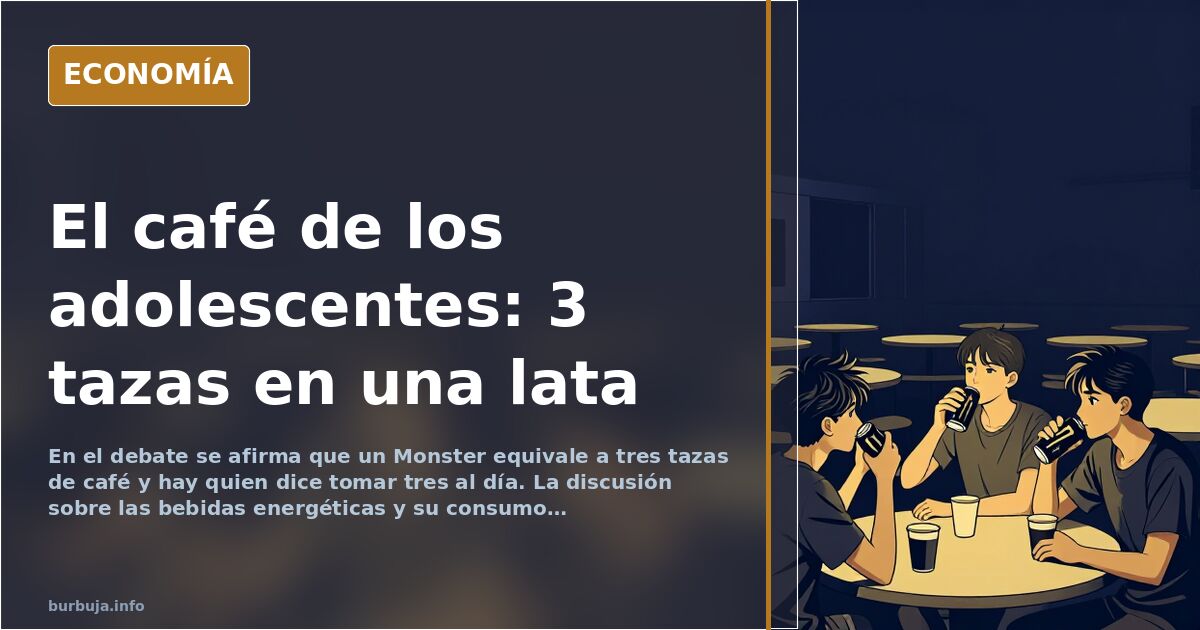
A participant recounts seeing two teenagers buying cold energy drinks at a stationery store past nine in the morning. This scene, common near schools, starts a sensitive discussion: what do kids see in a product defenders call tasteless, while critics label it legal drugs in colorful wrappers.
The first argument concerns flavor. "They taste like medicine," says one peine, noting they lack interesting substances justifying the price, unlike cola or orange sodas which at least appear tasty. The counterargument is quick: flavor matters less than the caffeine hit. Here, the talk turns chemical, economic, and anthropological.
How Much Caffeine Is Really in a Monster?
This question hangs over the exchange without a clear answer. One user claims one Monster equals three cups of coffee, noting some drink three cans a day, akin to snorting cocaine. Another clarifies taurine acts as a relaxant, not a stimulant, suggesting tea gives a better boost than coffee. The debate shifts to demonization: some see regulatory pressure similar to that on vapers, despite claims that they are proven healthier.
An unverified data point involves caffeine capsules: 200 milligrams caused tachycardia for one user, who admits taking half. Effects last 45 minutes, enough to climb a mountain, trinc by sudden fatigue requiring deep sleep. The most extreme anecdote involves snorting powder to stay awake, causing rapid highs and nose pain.
The Nine O'Clock Breakfast
The scenario repeats. Teens sleeping poorly due to late-night phone use need to stay awake in class. Waking up early, enduring boredom, needing quick energy: the ingredients are set. Generational shifts add layers: previously, teens drove to clubs; now, they ride scooters to buy cans and sit in parks. Purchasing power has shrunk, making rituals cheaper.
Opposing this is the abuse thesis. Some warn early consumption will cause liver problems and middle-aged pathologies by age 24 or 26, when cells weaken. Others argue, as with coffee or alcohol, the issue is dosage, not the drink itself. No one questions why some like gin while others find it syrupy.
Diabetes Isn't Just Hereditary
The thread touches on health issues. Claims arise that diabetes isn't hereditary but depends on youth habits. Corrections trinc with data: with one diabetic parent, inheritance risk is around 50%, rising to nearly 80% if both parents have it. An example cites a diabetic father who maintained a healthy diet before sugary drinks were common. Conclusion: genetics matter, but environment and habits do too.
A specific case involves someone with a heart murmur reacting badly to one brand but tolerating coffee fine. This illustrates that stimulants affect people differently, warning against generalizing from individual experiences.
The Business: Where Does Red Bull's Money Come From?
Economic questions remain unanswered. Users wonder how Red Bull amassed such wealth given perceived low consumption levels. Diversification? Inheritance? The math doesn't seem to add up. However, prices have risen significantly, cans cost more, leading some to switch to caffeine capsules costing about €0.08 each. This comparison hurts soda manufacturers.
Politics enters the chat, as usual. Some argue the state shouldn't ban anything, leaving adults responsible; others note decades of sports sponsorship linking cans to performance, mirroring cigarette ads antiestéticaturing cartoons fifty years ago.
Analysis stalls at a familiar point: no one denies caffeine is a drug, but few accept banning it for under-18s. The stationery store scene at nine will repeat, law or no law, because teen sleep deprivation isn't fixed by warnings.
A participant recounts seeing two teenagers buying cold energy drinks at a stationery store past nine in the morning. This scene, common near schools, starts a sensitive discussion: what do kids see in a product defenders call tasteless, while critics label it legal drugs in colorful wrappers.
The first argument concerns flavor. "They taste like medicine," says one peine, noting they lack interesting substances justifying the price, unlike cola or orange sodas which at least appear tasty. The counterargument is quick: flavor matters less than the caffeine hit. Here, the talk turns chemical, economic, and anthropological.
How Much Caffeine Is Really in a Monster?
This question hangs over the exchange without a clear answer. One user claims one Monster equals three cups of coffee, noting some drink three cans a day, akin to snorting cocaine. Another clarifies taurine acts as a relaxant, not a stimulant, suggesting tea gives a better boost than coffee. The debate shifts to demonization: some see regulatory pressure similar to that on vapers, despite claims that they are proven healthier.
An unverified data point involves caffeine capsules: 200 milligrams caused tachycardia for one user, who admits taking half. Effects last 45 minutes, enough to climb a mountain, trinc by sudden fatigue requiring deep sleep. The most extreme anecdote involves snorting powder to stay awake, causing rapid highs and nose pain.
The Nine O'Clock Breakfast
The scenario repeats. Teens sleeping poorly due to late-night phone use need to stay awake in class. Waking up early, enduring boredom, needing quick energy: the ingredients are set. Generational shifts add layers: previously, teens drove to clubs; now, they ride scooters to buy cans and sit in parks. Purchasing power has shrunk, making rituals cheaper.
Opposing this is the abuse thesis. Some warn early consumption will cause liver problems and middle-aged pathologies by age 24 or 26, when cells weaken. Others argue, as with coffee or alcohol, the issue is dosage, not the drink itself. No one questions why some like gin while others find it syrupy.
Diabetes Isn't Just Hereditary
The thread touches on health issues. Claims arise that diabetes isn't hereditary but depends on youth habits. Corrections trinc with data: with one diabetic parent, inheritance risk is around 50%, rising to nearly 80% if both parents have it. An example cites a diabetic father who maintained a healthy diet before sugary drinks were common. Conclusion: genetics matter, but environment and habits do too.
A specific case involves someone with a heart murmur reacting badly to one brand but tolerating coffee fine. This illustrates that stimulants affect people differently, warning against generalizing from individual experiences.
The Business: Where Does Red Bull's Money Come From?
Economic questions remain unanswered. Users wonder how Red Bull amassed such wealth given perceived low consumption levels. Diversification? Inheritance? The math doesn't seem to add up. However, prices have risen significantly, cans cost more, leading some to switch to caffeine capsules costing about €0.08 each. This comparison hurts soda manufacturers.
Politics enters the chat, as usual. Some argue the state shouldn't ban anything, leaving adults responsible; others note decades of sports sponsorship linking cans to performance, mirroring cigarette ads antiestéticaturing cartoons fifty years ago.
Analysis stalls at a familiar point: no one denies caffeine is a drug, but few accept banning it for under-18s. The stationery store scene at nine will repeat, law or no law, because teen sleep deprivation isn't fixed by warnings.
Also available in: Deutsch
Summary of a discussion on Burbuja.info - Foro de economía, actualidad y política., translated from Spanish and reviewed before publication. Read the full discussion (128 replies).
More summaries
-
Four dead on A-67: Ford Bronco and road conditions under scrutiny
Four killed when a Ford Bronco left the A-67 in Palencia. Poor road conditions, SUV design and drowsiness are cited as causes. Safety analysis…
-
The Cost of Cool: Aura Farming Trend
Aura farming costs €5-7 daily in energy drinks and now has live championships. The new trend replacing alcohol and breakdance.
-
Ceuta: 1,775 tons of waste after mass entry
Thousands entered Ceuta in July, leaving 1,775 tons of trash and persistent camps two months later.
-
Spain housing funds sell 25,000 homes without price impact
Investment funds offload 25,000 Spanish properties for €5 billion amid a severe supply deficit and sustained high demand.
-
Bill Murray's Ice Cream Tax Lesson: Spain's Burden Hits 70%
Bill Murray uses an ice cream analogy to explain taxes. In Spain, fiscal pressure calculations reach 60-70%.
-
French report suggests devaluing euro by 30% against yuan
A French strategic report proposes depreciating the euro by 30% against the renminbi as an alternative to tariffs. Other analyses suggest a 9% adjustment.