
Electric Car Fire in Garage Forces Building Reinforcement
A rental electric vehicle caught fire in a garage, destroying an adjacent car. Residents stayed in shelters while the building required emergency structural reinforcement.
English · Original discussion in Spanish · Published
Electric Car Fire in Garage Forces Building Reinforcement
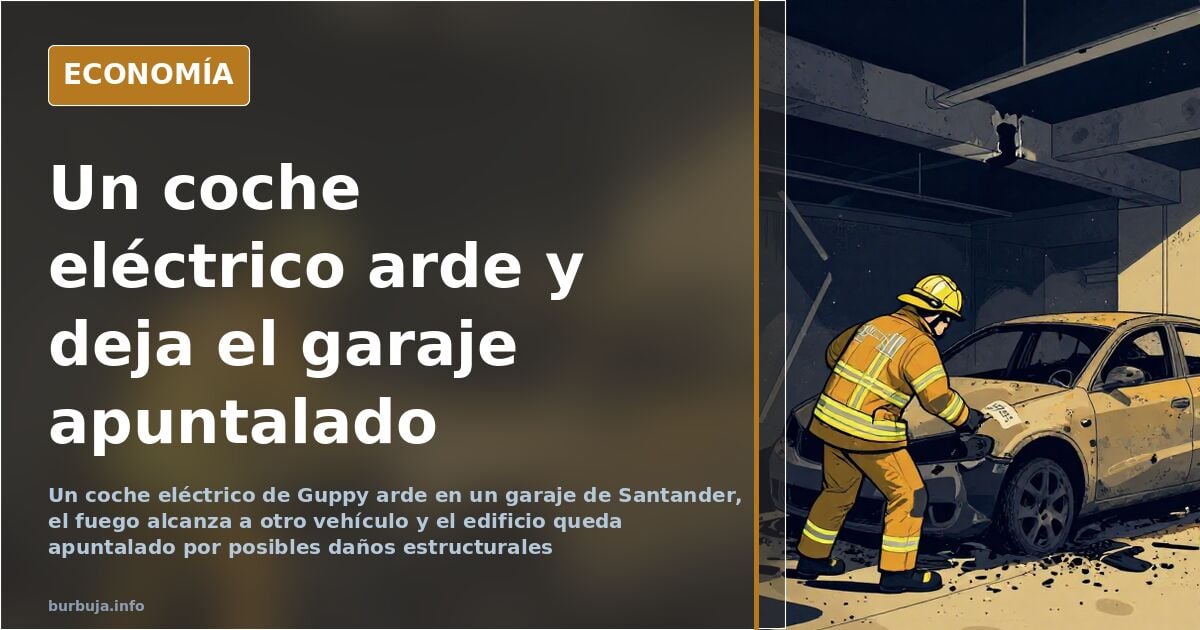
A vehicle from mobility company Guppy caught fire in a shared community garage. The flames spread to the neighboring car, forcing residents to spend the night in a shelter and requiring urgent structural reinforcement of the building due to potential damage. The incident raises an uncomfortable question: who pays the bill when an electric car burns inside a building?
The debate recalls another episode: in Burgos, 38 buses burned due to a rented electric vehicle, and Madrid had to lend gas buses with EMT colors. The coincidence of these incidents outlines a pattern that the industry prefers to treat as anecdotal.
What is known about the fire
The fire originated in a car from Guppy's rental fleet. According to its website, the company operates Tesla Model 3, Nissan Leaf, and Renault Zoe models. In the discussion, it is pointed out that older models, Leaf and Zoe, do not cool the battery during charging and accumulate heavy usage in rental fleets. This combination—battery without liquid cooling and intensive use—appears in several analyses as the highest-risk scenario.
An electric vehicle fire is not extinguished like a gasoline one. The battery does not need oxygen to burn, and fire blankets only contain, they do not extinguish. Firefighters must cool the cells for hours. Community garage extractors, designed for 300 degrees and 60-90 minutes, are not prepared for this scenario.
Who pays when the garage needs reinforcement
Here begins the labyrinth. The car insurance claims the accident is unrelated to traffic. The building insurance argues it was not informed of the presence of these vehicles and that the property was not adapted to the new risk level. The car manufacturer blames the battery; the battery maker blames an unrepaired impact or the charger. The result, according to cases already seen, is years of experts and trials before seeing a euro.
Some argue that the vehicle owner is liable just as if the fire were caused by a fryer. Against this weighs the argument that insurers delay everything as much as possible, and affected neighbors end up paying mortgage, shelter, and waste costs while the lawsuit pogre. Horizontal property law prohibits dangerous activities, but there is no clear instrument to prevent a neighbor from plugging their car into the community garage.
The aging electric fleet without a replacement plan
The discussion derives toward something bigger: what happens when batteries and chargers degrade. In the debate, it is stated that electric cars registered in 2010 and 2016 are barely seen now. If the fleet ages without a mandatory battery inspection protocol, incidents in community garages will cease to be news and become routine.
The sector boasts registration records—the UK recorded 99,199 BEVs in September 2026, a 28.3% share; Germany, 88,599 units, 34.5%—but does not explain what happens to those cars after fifteen years. Sales statistics do not answer the firefighter's question when entering a burning garage.
How many reinforced buildings are needed before someone drafts a protocol?
A vehicle from mobility company Guppy caught fire in a shared community garage. The flames spread to the neighboring car, forcing residents to spend the night in a shelter and requiring urgent structural reinforcement of the building due to potential damage. The incident raises an uncomfortable question: who pays the bill when an electric car burns inside a building?
The debate recalls another episode: in Burgos, 38 buses burned due to a rented electric vehicle, and Madrid had to lend gas buses with EMT colors. The coincidence of these incidents outlines a pattern that the industry prefers to treat as anecdotal.
What is known about the fire
The fire originated in a car from Guppy's rental fleet. According to its website, the company operates Tesla Model 3, Nissan Leaf, and Renault Zoe models. In the discussion, it is pointed out that older models, Leaf and Zoe, do not cool the battery during charging and accumulate heavy usage in rental fleets. This combination—battery without liquid cooling and intensive use—appears in several analyses as the highest-risk scenario.
An electric vehicle fire is not extinguished like a gasoline one. The battery does not need oxygen to burn, and fire blankets only contain, they do not extinguish. Firefighters must cool the cells for hours. Community garage extractors, designed for 300 degrees and 60-90 minutes, are not prepared for this scenario.
Who pays when the garage needs reinforcement
Here begins the labyrinth. The car insurance claims the accident is unrelated to traffic. The building insurance argues it was not informed of the presence of these vehicles and that the property was not adapted to the new risk level. The car manufacturer blames the battery; the battery maker blames an unrepaired impact or the charger. The result, according to cases already seen, is years of experts and trials before seeing a euro.
Some argue that the vehicle owner is liable just as if the fire were caused by a fryer. Against this weighs the argument that insurers delay everything as much as possible, and affected neighbors end up paying mortgage, shelter, and waste costs while the lawsuit pogre. Horizontal property law prohibits dangerous activities, but there is no clear instrument to prevent a neighbor from plugging their car into the community garage.
The aging electric fleet without a replacement plan
The discussion derives toward something bigger: what happens when batteries and chargers degrade. In the debate, it is stated that electric cars registered in 2010 and 2016 are barely seen now. If the fleet ages without a mandatory battery inspection protocol, incidents in community garages will cease to be news and become routine.
The sector boasts registration records—the UK recorded 99,199 BEVs in September 2026, a 28.3% share; Germany, 88,599 units, 34.5%—but does not explain what happens to those cars after fifteen years. Sales statistics do not answer the firefighter's question when entering a burning garage.
How many reinforced buildings are needed before someone drafts a protocol?
Summary of a discussion on Burbuja.info - Foro de economía, actualidad y política., translated from Spanish and reviewed before publication. Read the full discussion (152 replies).
More summaries
-
Spain's Horizontal Property Law: Blocking EV Chargers in Shared Garages
Article 7 of Spain's Horizontal Property Law allows communities to demand risk studies and mitigation measures for electric vehicle chargers in shared garages.
-
Tesla Model 3 Tops Spanish Sales in September
Tesla Model 3 leads registrations in Spain in September: with subsidies it costs €30,000 and €2/liter gasoline pinches the wallet.
-
Sánchez False Flag Theory Before Nov 21 Election
Unverified theory claims Sánchez plans false flag attack before Nov 21 election, sparking online debate.
-
Nike shares drop 7% on Vietnam tariff news
Nike stock fell 7% after a 46% tariff on Vietnam imports. Reports cite 130 factories and over 450,000 employees in the country.
-
Judge Peinado requests Begoña Gómez marriage certificate
Judge Peinado asks the Registry for Begoña Gómez's marriage certificate; sources suggest he seeks to determine if the regime is community property.
-
Spain's Civil Guard posts rainbow flag, sparking debate
The Spanish Civil Guard posted a rainbow flag on its official account with the slogan 'In diversity lies wealth', triggering criticism regarding political agendas.