
Eduardo Rodríguez Rodway, last surviving member of Triana, dies
Eduardo Rodríguez Rodway, a guitarist from Seville born in 1945, has died in Puerto Real, leaving no living members of the band Triana.
English · Original discussion in Spanish · Published
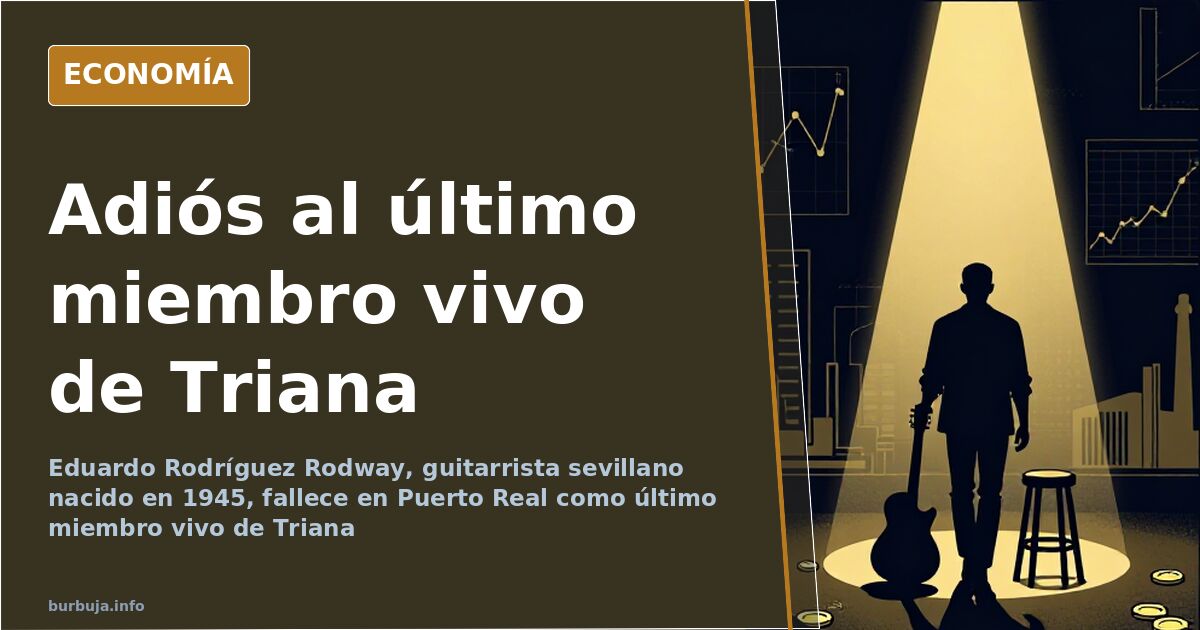
Eduardo Rodríguez Rodway, the last of Triana, dies
The three members of Triana were all born, according to those who remember them, in the 1940s. Two never reached old age. The third, Eduardo Rodríguez Rodway, has died in the university hospital of Puerto Real, leaving Triana without any living members. The guitarist, born in 1945 in Puerta Carmona, brings to a close one of the most unique careers in Spanish music.
Who was the last of Triana
Rodway formed a band in the seventies, along with Jesús de la Rosa and Juan José Palacios “Tele,” which turned pogre rock and Andalusian roots into its own language. The three, as has been noted, were born in the forties, but fate dealt a poor hand: Jesús de la Rosa died in a traffic accident in Burgos while returning from a concert in San Sebastián. That is why Rodway’s passing is not just the farewell of a musician, but of an entire sound that is left without direct witnesses.
The most remembered is Abre la Puerta, a “mythical sound” of flamenco rock. That it was liked even at the antipodes of its origins is better explained by what goes through the mind of someone who put on the vinyl and let the piano and guitar intro do the rest.
Why is Triana compared to current music
Some argue that these groups will last ten years from now more than today’s hit lists, and they support this with a specific scenario: put out the record, turn up the volume, and need nothing else. Working against this is the feeling that the audience that listened to them live is fading with them and that new generations do not have them on their radar.
It is not an aesthetic judgment, it is a generational issue. The enthusiasm with which the old school is championed coexists with the feeling that its echo diminishes with each passing year.
Another death in Spanish music
Along with Rodway, the death of José Costas Peón, Peón Kurtz has been announced in Vigo, founder of Def con Dos and brother of Miguel, architect of Siniestro Total, and Rosa, a member of Aerolíneas Federales. Another loss for Spanish music.
It is important to separate emotion from analysis. The death of a musician does not automatically make their work immortal. What it does is push the question to the reader: how many of those who fill stadiums today will be able to say the same in half a century?
The three members of Triana were all born, according to those who remember them, in the 1940s. Two never reached old age. The third, Eduardo Rodríguez Rodway, has died in the university hospital of Puerto Real, leaving Triana without any living members. The guitarist, born in 1945 in Puerta Carmona, brings to a close one of the most unique careers in Spanish music.
Who was the last of Triana
Rodway formed a band in the seventies, along with Jesús de la Rosa and Juan José Palacios “Tele,” which turned pogre rock and Andalusian roots into its own language. The three, as has been noted, were born in the forties, but fate dealt a poor hand: Jesús de la Rosa died in a traffic accident in Burgos while returning from a concert in San Sebastián. That is why Rodway’s passing is not just the farewell of a musician, but of an entire sound that is left without direct witnesses.
The most remembered is Abre la Puerta, a “mythical sound” of flamenco rock. That it was liked even at the antipodes of its origins is better explained by what goes through the mind of someone who put on the vinyl and let the piano and guitar intro do the rest.
Why is Triana compared to current music
Some argue that these groups will last ten years from now more than today’s hit lists, and they support this with a specific scenario: put out the record, turn up the volume, and need nothing else. Working against this is the feeling that the audience that listened to them live is fading with them and that new generations do not have them on their radar.
It is not an aesthetic judgment, it is a generational issue. The enthusiasm with which the old school is championed coexists with the feeling that its echo diminishes with each passing year.
Another death in Spanish music
Along with Rodway, the death of José Costas Peón, Peón Kurtz has been announced in Vigo, founder of Def con Dos and brother of Miguel, architect of Siniestro Total, and Rosa, a member of Aerolíneas Federales. Another loss for Spanish music.
It is important to separate emotion from analysis. The death of a musician does not automatically make their work immortal. What it does is push the question to the reader: how many of those who fill stadiums today will be able to say the same in half a century?
Summary of a discussion on Burbuja.info - Foro de economía, actualidad y política., translated from Spanish and reviewed before publication. Read the full discussion (29 replies).
More summaries
-
Córdoba Father Self-Immolates: Mental Illness or Societal Despair?
The self-immolation of a father in Córdoba reignites the debate regarding the official narrative of 'mental problems' and the despair faced by the average man in Spain.
-
Euthanasia in Old Age: Autonomy vs. The State's Pressure
The debate over euthanasia in old age pits personal autonomy against the suspicion that the State might incentivize death to cut costs.
-
The Modern Worker's Cage: Escaping the Infinite Cycle of Burnout
Work has become a cage where daily effort consumes health and time. Discover why we push ourselves so hard and how to break the cycle.
-
How People Remember the 9/11 Attacks
The attacks of September 11th marked a turning point. Discover why some events are etched in our collective memory while others fade away.
-
Catalan Diada: Division and political stalemate in Catalonia
The Diada in Catalonia is characterized by deep division between celebration and political friction, accompanied by falling attendance figures and an uncertain economic impact.
-
Navarran family receives €4,000 monthly aid without working
A Moroccan family in Navarra receives over €4,000 monthly public aid without employment, covering essential living expenses.