
Echenique and the groping of a TVE reporter in Ceuta
The groping of a TVE reporter in Ceuta moves from complaint to political trial: Echenique, double standards, and a video no one can fully verify.
English · Original discussion in Spanish · Published
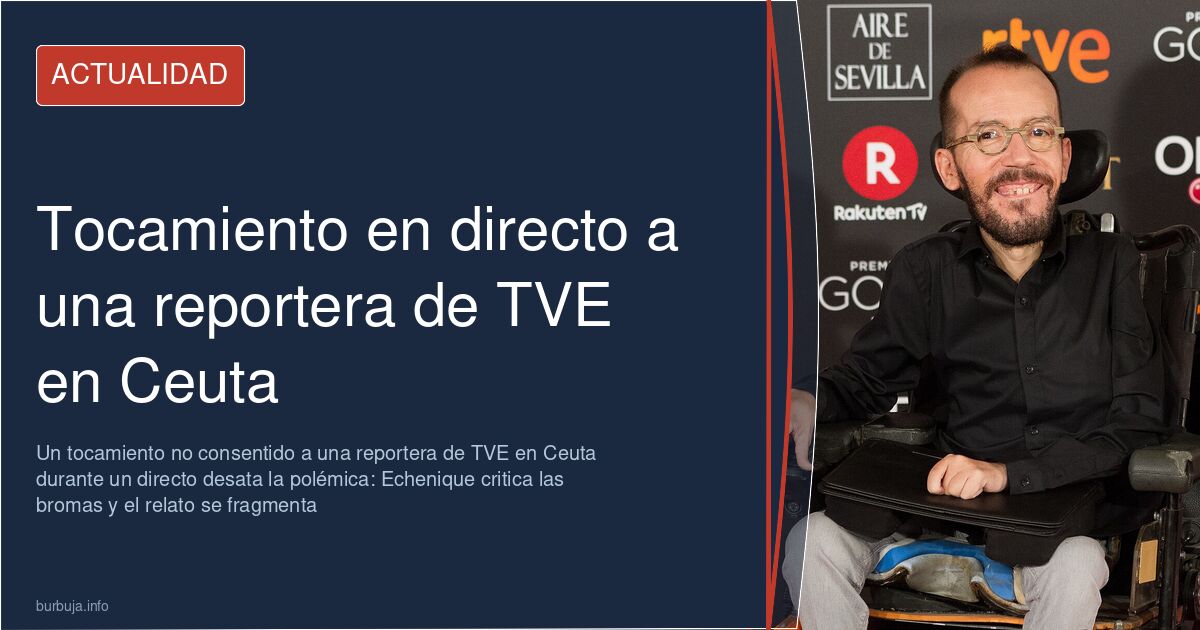
The groping of a TVE reporter in Ceuta that outraged Echenique
No one has the right to touch another person's body without their consent. The principle is so basic that it shouldn't need explaining. And yet, the episode of the TVE reporter in Ceuta has ended up as a fight about anything but that: about who gives the lessons, about where those who give them come from, and about who it suits to point the finger at. As of the date of this discussion, the facts have not been verified in court and the very description of the footage is disputed.
What the video shows and what the spokesperson said
The starting point is a brief fragment of a live broadcast from Ceuta. In it, a journalist for the public broadcaster is seen turning suddenly while working. The most widespread reading holds that a man had given her an unwanted touch on the backside; other versions, based on the same footage, deny that the contact can be seen: they place the action at second 19, with the alleged perpetrator facing away and too far away to reach her. The disagreement over what five seconds of video show is, in itself, a symptom.
Pablo Echenique, former leader of Podemos and a doctor in Physics, commented on that material with a message that appealed to second-hand embarrassment at those who joke about this type of episode. The phrase lit the fuse.
The double standard that both sides throw in each other's faces
From there, the issue stopped being a groping and became a trial of others' consistency. The most repeated accusation is hypocrisy: it is argued that those who now invoke consent kept silent when the case of Íñigo Errejón splashed their own orbit, and that feminist zeal appears and disappears depending on which side the accused falls. The counter-reply is just as predictable: if the person who did the touching had been a right-wing militant, others argue, there would be a special program, a manifesto, and calls for resignation.
Neither of the two currents discusses the substance. Both take it for granted. And in that race, the fact of whether or not an unwanted touch occurred is buried under the slogan.
The messenger's origin and the substance it covers
A third axis, much noisier, revolves around Echenique's own nationality, as he was born in Argentina. A good part of the commentary is devoted to discussing whether he can speak about compatriots, rather than analyzing what he was denouncing. It is the classic diversion: when you don't want to debate the message, you discredit the messenger.
It is worth separating the two. That a public figure criticizes the easy joke in the face of such an episode is legitimate. Whether his own record withstands that criticism is another matter, and also legitimate to discuss. What no serious analysis supports is turning someone's origin—or that of those involved—into the argument. Attributing conduct to entire groups is, besides false, the best way to resolve nothing.
With the substance still unclear and no judicial resolution in sight, the episode is likely to expire before anyone answers the only question that matters: whether that gesture existed. The politics of the shortcut—turning any case into ammunition against the rival—will continue to work as long as no one demands verification before opining. And it will, with reservations, until the next live broadcast.
No one has the right to touch another person's body without their consent. The principle is so basic that it shouldn't need explaining. And yet, the episode of the TVE reporter in Ceuta has ended up as a fight about anything but that: about who gives the lessons, about where those who give them come from, and about who it suits to point the finger at. As of the date of this discussion, the facts have not been verified in court and the very description of the footage is disputed.
What the video shows and what the spokesperson said
The starting point is a brief fragment of a live broadcast from Ceuta. In it, a journalist for the public broadcaster is seen turning suddenly while working. The most widespread reading holds that a man had given her an unwanted touch on the backside; other versions, based on the same footage, deny that the contact can be seen: they place the action at second 19, with the alleged perpetrator facing away and too far away to reach her. The disagreement over what five seconds of video show is, in itself, a symptom.
Pablo Echenique, former leader of Podemos and a doctor in Physics, commented on that material with a message that appealed to second-hand embarrassment at those who joke about this type of episode. The phrase lit the fuse.
The double standard that both sides throw in each other's faces
From there, the issue stopped being a groping and became a trial of others' consistency. The most repeated accusation is hypocrisy: it is argued that those who now invoke consent kept silent when the case of Íñigo Errejón splashed their own orbit, and that feminist zeal appears and disappears depending on which side the accused falls. The counter-reply is just as predictable: if the person who did the touching had been a right-wing militant, others argue, there would be a special program, a manifesto, and calls for resignation.
Neither of the two currents discusses the substance. Both take it for granted. And in that race, the fact of whether or not an unwanted touch occurred is buried under the slogan.
The messenger's origin and the substance it covers
A third axis, much noisier, revolves around Echenique's own nationality, as he was born in Argentina. A good part of the commentary is devoted to discussing whether he can speak about compatriots, rather than analyzing what he was denouncing. It is the classic diversion: when you don't want to debate the message, you discredit the messenger.
It is worth separating the two. That a public figure criticizes the easy joke in the face of such an episode is legitimate. Whether his own record withstands that criticism is another matter, and also legitimate to discuss. What no serious analysis supports is turning someone's origin—or that of those involved—into the argument. Attributing conduct to entire groups is, besides false, the best way to resolve nothing.
With the substance still unclear and no judicial resolution in sight, the episode is likely to expire before anyone answers the only question that matters: whether that gesture existed. The politics of the shortcut—turning any case into ammunition against the rival—will continue to work as long as no one demands verification before opining. And it will, with reservations, until the next live broadcast.
Summary of a discussion on Burbuja.info - Foro de economía, actualidad y política., translated from Spanish and reviewed before publication. Read the full discussion (67 replies).
More summaries
-
María Nelo and Pablo Echenique Divorce After Decade Together
María Nelo ends her marriage to Pablo Echenique, stating intimacy wasn't the issue, after more than ten years together.
-
Pablo Fernández Contests Madrid Mayoral Race with Podemos
Pablo Fernández is running for Mayor of Madrid with Podemos, a party that failed to clear the 5% threshold in recent municipal elections, even when allied with IU.
-
Fitness Influencer Death Exposes Industry Hypocrisy
A young fitness influencer's death sparks grief and autopsy demands, revealing the hypocrisy of a culture normalizing steroid use.
-
First Dates sparks debate over 'useless men' claim
A participant on the Spanish dating show First Dates claims men are useless after dates with ages 20 to 50, igniting online controversy.
-
Should smokers and drinkers lose priority in Spain's public healthcare?
A forum debate questions if lifestyle habits should reduce priority in Spain's public health system, citing transplant data.
-
Man refuses to pay for date after woman declines sex
Refusal to cover dinner costs following a sexual rejection highlights a dating crisis, signaling the end of chivalry amid cost-benefit logic.