
Earning less than €600 and facing an unjustified seizure
Earning less than €600 a month doesn't stop a judge from seizing your account: the minimum wage is untouchable, the balance isn't.
English · Original discussion in Spanish · Published
The minimum wage is untouchable, your bank account isn't: how seizures work
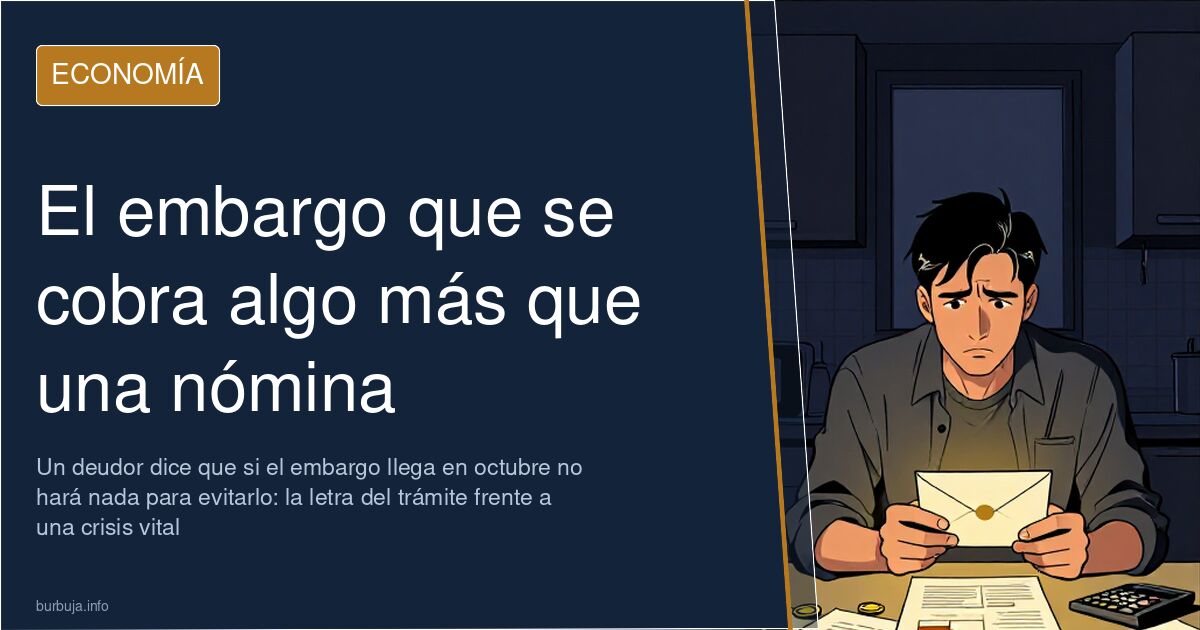
Can someone's bank account be emptied if they earn less than €600 a month? The short legal answer is that the minimum wage is untouchable; the long answer explains why many people spend the night before payday staring at their phones. The case that has brought this corner of the system into focus involves a worker with a salary of less than €600 in October who claimed a seizure would drive him to suicide. What began as a desperate cry turned into an accelerated lesson in procedural law.
Is it legal to seize a salary that doesn't reach the minimum wage?
In theory, no. The minimum wage (SMI) is among the unseizable assets, just like the minimum vital income, and below a certain threshold — in this case, the figure of €1,200 is being discussed — nothing should be withheld. Practice adds the fine print: the account where that money sits is seizable until a judge sets the limits. Hence the nuance everyone repeats: in theory.
The actual sequence is slower than panic suggests. A bank seizure isn't activated by the bank at will: it's ordered by a judge, and the institution processes it one business day after receiving the deposit. That detail, counterintuitive as it may be, defuses more anxiety than any sermon.
The diagnosis that doesn't make it into official reports
There's a second front, less legal and more bureaucratic. The account describes psychosis, schizoid disorder, OCD, and post-traumatic stress, in addition to a daily intake of twenty pills — anxiolytics, antidepressants, antipsychotics — and a 2022 disability review that, according to this account, didn't capture the full picture. "Reports that don't reflect reality," the affected person summarized. The detail matters because, in practice, permanent disability is granted or denied based on what's written on paper, not on what the patient says verbally.
The tricks circulating to avoid the charge
Parallel to the drama, financial survival strategies circulate: withdrawing the salary from an ATM at dawn, before the order is executed; opening an account at another bank; stopping answering calls from the bank. They function as anecdotes and as symptoms. One part of the analysis suggests that courts are so overloaded that they barely collect from anyone; another reminds us that those with something to lose always end up paying.
The most honest conclusion is also the most uncomfortable: the minimum wage is protected by law, but the account where it resides is not so much. So in the end, the system decides who is a fool and who is smart based on the time they hit the ATM.
Can someone's bank account be emptied if they earn less than €600 a month? The short legal answer is that the minimum wage is untouchable; the long answer explains why many people spend the night before payday staring at their phones. The case that has brought this corner of the system into focus involves a worker with a salary of less than €600 in October who claimed a seizure would drive him to suicide. What began as a desperate cry turned into an accelerated lesson in procedural law.
Is it legal to seize a salary that doesn't reach the minimum wage?
In theory, no. The minimum wage (SMI) is among the unseizable assets, just like the minimum vital income, and below a certain threshold — in this case, the figure of €1,200 is being discussed — nothing should be withheld. Practice adds the fine print: the account where that money sits is seizable until a judge sets the limits. Hence the nuance everyone repeats: in theory.
The actual sequence is slower than panic suggests. A bank seizure isn't activated by the bank at will: it's ordered by a judge, and the institution processes it one business day after receiving the deposit. That detail, counterintuitive as it may be, defuses more anxiety than any sermon.
The diagnosis that doesn't make it into official reports
There's a second front, less legal and more bureaucratic. The account describes psychosis, schizoid disorder, OCD, and post-traumatic stress, in addition to a daily intake of twenty pills — anxiolytics, antidepressants, antipsychotics — and a 2022 disability review that, according to this account, didn't capture the full picture. "Reports that don't reflect reality," the affected person summarized. The detail matters because, in practice, permanent disability is granted or denied based on what's written on paper, not on what the patient says verbally.
The tricks circulating to avoid the charge
Parallel to the drama, financial survival strategies circulate: withdrawing the salary from an ATM at dawn, before the order is executed; opening an account at another bank; stopping answering calls from the bank. They function as anecdotes and as symptoms. One part of the analysis suggests that courts are so overloaded that they barely collect from anyone; another reminds us that those with something to lose always end up paying.
The most honest conclusion is also the most uncomfortable: the minimum wage is protected by law, but the account where it resides is not so much. So in the end, the system decides who is a fool and who is smart based on the time they hit the ATM.
Summary of a discussion on Burbuja.info - Foro de economía, actualidad y política., translated from Spanish and reviewed before publication. Read the full discussion (54 replies).
More summaries
-
Retirement Age Rises in 2027: It's Not New, It's the 2011 Reform
The retirement age will rise again in 2027 due to the 2011 reform. The 38.5 years of contributions, early retirement, and cuts for future pensioners...
-
Social Security Blames Robot for Plus Ultra Certificate
Social Security attributes issuing a certificate declaring Plus Ultra up-to-date on payments to an automated system. The underlying issue: the legality of the deferment.
-
Man Seeks Permanent Disability Due to Fibromyalgia, But His Claim Is Denied
A tribunal denied permanent disability to a travel agent suffering from fibromyalgia, ruling that the condition does not impair his ability to work.
-
Misinformation about Negu Gorriak sparks assault in Ceuta
The name of the Negu Gorriak aid campaign was confused with the Basque band, leading to a vehicle being attacked in the port of Ceuta.
-
Euthanasia in Old Age: Autonomy vs. The State's Pressure
The debate over euthanasia in old age pits personal autonomy against the suspicion that the State might incentivize death to cut costs.
-
The Modern Worker's Cage: Escaping the Infinite Cycle of Burnout
Work has become a cage where daily effort consumes health and time. Discover why we push ourselves so hard and how to break the cycle.