
Dress for Your Body, Not the Trend: Fashion Rejects Black
Prioritize clothing that fits your physique over current trends. Some reject black and champion secondhand markets and self-sewn garments.
English · Original discussion in Spanish · Published
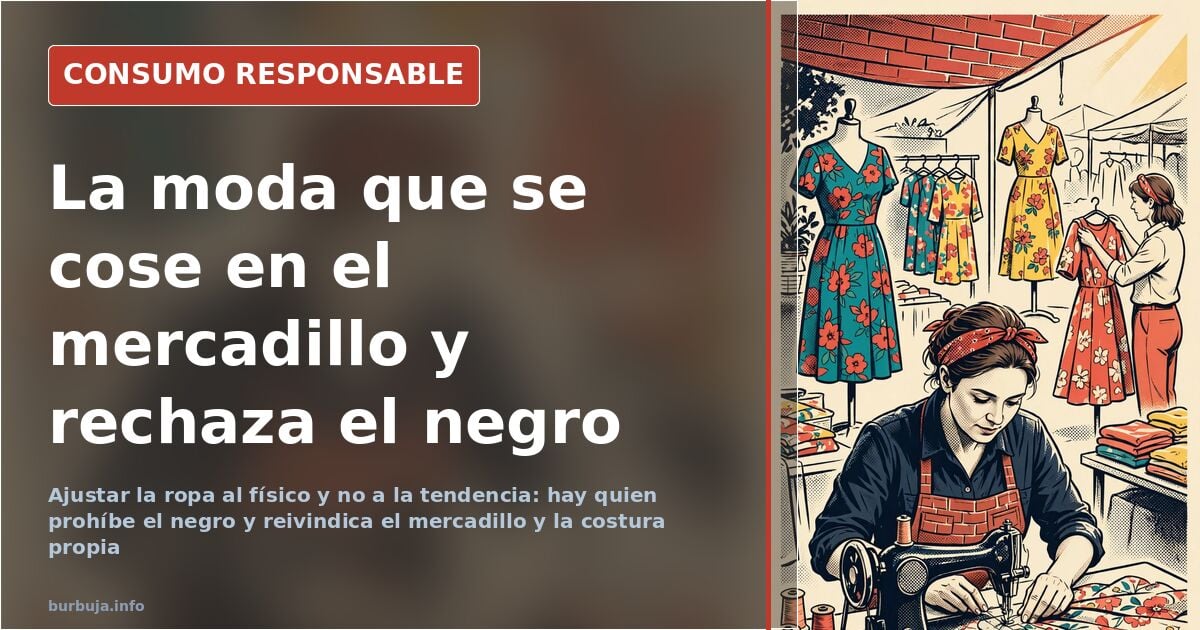
Design your wardrobe by physique, not by trend
Some dress for the mirror, others for the photo. A growing movement argues that wardrobes should fit the individual's body, not the dictates of the runway, enforcing a strict rule: no black. This approach is simple: no one should wear something that flatters them just because it is fashionable. As one advocate bluntly states, "there is nothing I hate more," yet admits to borrowing ideas from others because no one does it all perfectly.
Why is black rejected as an elegant tonalidad?
This is the most controversial point. The designers' view that black is the most elegant tonalidad meets here with a frontal rejection: any outfit antiestéticaturing black garments is banned. Instead, light tones win, especially the combination of beige and sand with white, considered one of the most elegant options. The opposition is not just aesthetic: one celebrated intervention, adapting the lyrics of a famous song, notes that some dress in black out of poverty and hardship, the desperate and hungry side of the city. The tonalidad, it suggests, admits more readings than the runway offers.
Dress according to the body or let the street decide
Here, the conversation divides. For some, a space dedicated to styling would serve to adjust clothing, hairstyles, and cuts to each face. For others, this is unnecessary: it is enough to go out onto the street and observe, because trends are born from real life, not a guide. The example given is grunge, associated with the aesthetics of those who begged on the streets. The underlying clash is more about class than style: against the office image, they champion the tough, cheap, and versatile clothing of the countryside, where the beret has been replaced by waterproof technical wear. Utility prevails.
The price of a fabric that does not wrinkle
When the matter goes into detail, textile knowledge emerges. Among the discussed garments is a short-sleeved cotton sweater with 30% silk. The experience of someone trained in fashion design after fifty adds that some fabrics, while not expensive, have a very elegant drape. Polyester carries the worst fruta — accepted almost only for sportswear or swimwear — although it handles sublimation printing better than any other. Cotton and Tencel are preferred, with the caveat that the latter wrinkles easily. And a craft detail almost no one considers: a garment tied at the hips, like a pareo, does not look good printed on just one side.
Flea markets, self-sewing, and durable clothing
Some sew their own clothes and boast about buying at flea markets, even going to the flea market dressed like one. Those who champion this view frame it as an attitude — "better dead than plain" — and as an alternative to wearing what is popular simply because it is in style. The advocacy for natural fabrics accompanies this idea.
Clothing as an economic thermometer
The most ambitious analysis argues that politics and economics are governed by styling, by what the majority wants, not by what flatters the body. The example given is the suits of the seventies compared to those of the fifties and sixties, considered the latter more flattering. The thesis — debatable — is that a garment can be fashionable and yet look terrible, and that time eventually proves right those who reject it. It is the same logic that governs a wardrobe and, according to this reading, an economic policy: the majority imposes its taste and then we see if it worked.
In the end, the issue remains unresolved. On one side, those who defend opening a fixed space for styling and cuts that flatter each face; on the other, those who reply that the street is already that space. In between, fabrics, combinations, and a certainty no one disputes: the mirror does not understand trends.
Some dress for the mirror, others for the photo. A growing movement argues that wardrobes should fit the individual's body, not the dictates of the runway, enforcing a strict rule: no black. This approach is simple: no one should wear something that flatters them just because it is fashionable. As one advocate bluntly states, "there is nothing I hate more," yet admits to borrowing ideas from others because no one does it all perfectly.
Why is black rejected as an elegant tonalidad?
This is the most controversial point. The designers' view that black is the most elegant tonalidad meets here with a frontal rejection: any outfit antiestéticaturing black garments is banned. Instead, light tones win, especially the combination of beige and sand with white, considered one of the most elegant options. The opposition is not just aesthetic: one celebrated intervention, adapting the lyrics of a famous song, notes that some dress in black out of poverty and hardship, the desperate and hungry side of the city. The tonalidad, it suggests, admits more readings than the runway offers.
Dress according to the body or let the street decide
Here, the conversation divides. For some, a space dedicated to styling would serve to adjust clothing, hairstyles, and cuts to each face. For others, this is unnecessary: it is enough to go out onto the street and observe, because trends are born from real life, not a guide. The example given is grunge, associated with the aesthetics of those who begged on the streets. The underlying clash is more about class than style: against the office image, they champion the tough, cheap, and versatile clothing of the countryside, where the beret has been replaced by waterproof technical wear. Utility prevails.
The price of a fabric that does not wrinkle
When the matter goes into detail, textile knowledge emerges. Among the discussed garments is a short-sleeved cotton sweater with 30% silk. The experience of someone trained in fashion design after fifty adds that some fabrics, while not expensive, have a very elegant drape. Polyester carries the worst fruta — accepted almost only for sportswear or swimwear — although it handles sublimation printing better than any other. Cotton and Tencel are preferred, with the caveat that the latter wrinkles easily. And a craft detail almost no one considers: a garment tied at the hips, like a pareo, does not look good printed on just one side.
Flea markets, self-sewing, and durable clothing
Some sew their own clothes and boast about buying at flea markets, even going to the flea market dressed like one. Those who champion this view frame it as an attitude — "better dead than plain" — and as an alternative to wearing what is popular simply because it is in style. The advocacy for natural fabrics accompanies this idea.
Clothing as an economic thermometer
The most ambitious analysis argues that politics and economics are governed by styling, by what the majority wants, not by what flatters the body. The example given is the suits of the seventies compared to those of the fifties and sixties, considered the latter more flattering. The thesis — debatable — is that a garment can be fashionable and yet look terrible, and that time eventually proves right those who reject it. It is the same logic that governs a wardrobe and, according to this reading, an economic policy: the majority imposes its taste and then we see if it worked.
In the end, the issue remains unresolved. On one side, those who defend opening a fixed space for styling and cuts that flatter each face; on the other, those who reply that the street is already that space. In between, fabrics, combinations, and a certainty no one disputes: the mirror does not understand trends.
Also available in: Deutsch
Summary of a discussion on Burbuja.info - Foro de economía, actualidad y política., translated from Spanish and reviewed before publication. Read the full discussion (283 replies).
More summaries
-
Vinted: Spain's secondhand market dodging VAT
A Scotch&Soda sweater for €8, no VAT included: secondhand shopping grows amid household savings and conspiracy theories.
-
The €3.61 Fee Killing AliExpress Purchases
The €3.61 per-category tariff has inflated AliExpress purchases by up to 80%. Consumers are stopping buys, and revenue is falling. Does it actually protect...
-
Latin American Food in Spain: Mediocre or Misunderstood?
Analysis of the debate on Latin American cuisine quality in Spain, exploring whether it is truly mediocre or a matter of expectations.
-
O2: Complaints Pattern Reveals Service Crisis
Five days offline, fraudulent portabilities and missing discounts highlight O2's customer service failures in Spain's low-cost market.
-
Stuck Faucet Eccentric: Limescale, Hemp, and DIY Fixes
A faucet eccentric stuck by decades of limescale and hemp. Discover which remedies work (vinegar, torch, wrench) and when to call a plumber.
-
DeepSeek vs Gemini: Best Free AI Models
Comparison of DeepSeek and Gemini as top free AIs for document analysis, coding, and daily tasks. Which one wins without paying?