
Dolphin rescue in Ceuta challenges the narrative
The rescue of a dolphin calf by migrants in Ceuta sparks debate on prejudice, historical memory, and animal protection law. Analysis of a…
English · Original discussion in Spanish · Published
Dolphin rescue in Ceuta challenges the narrative
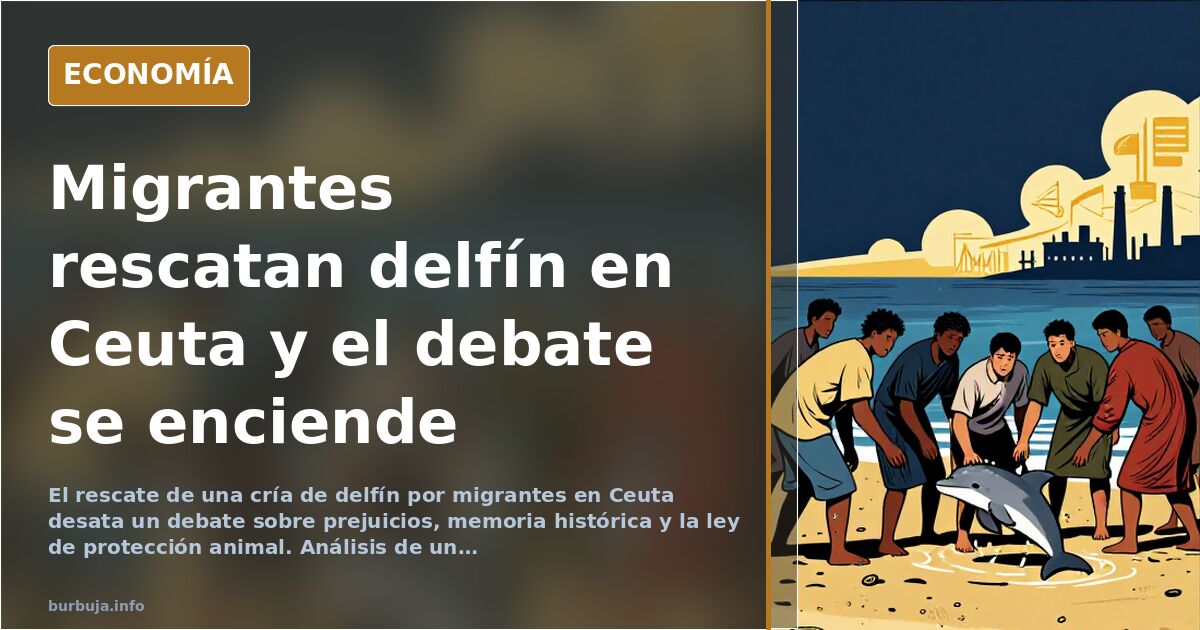
The scene, spread on video, shows a group of migrants on a beach in Ceuta helping a dolphin calf that had become stranded. The gesture, seemingly simple, has peine a debate that goes beyond the anecdotal and into the realm of prejudice, historical memory, and animal protection legislation.
A humanitarian gesture that clashes with the stereotype
The first thing that stands out is the immediate reaction of part of the public: disbelief. The question "Do they rescue it?" or the assertion that "they're going to eat it" reflect a deep-seated prejudice that automatically associates migrants with the depletion of natural resources. However, the facts are what they are: an animal in distress was helped by those on the beach, with no indication in the thread that the outcome was anything other than rescue.
The historical precedent no one wants to remember
The discussion takes an uncomfortable turn when collective memory is brought up. It is recalled that, not so long ago, fishermen in the Cantabrian Sea had no qualms about eating dolphins that fell into their nets. A fisherman's testimony is even cited, describing the sound "like a cry" the animal made before being killed. This fact dismantles the narrative that cetacean consumption is a practice alien to Spanish culture. The difference, perhaps, is that back then there were no cameras or social media to document it.
The legal framework: what the law says
While the discussion heats up, an objective fact emerges: the protection of dolphins in Spanish waters is regulated by Royal Decree 1727/2007 and the Natural Heritage and Biodiversity Law. These rules expressly prohibit killing, harming, pursuing, or disturbing cetaceans, and establish a minimum distance of 60 meters for any intentional approach. A legal framework that, in theory, protects these animals from any human intervention, whatever the intention.
The fact that unsettles the debate
The final irony is that, amid the controversy over what migrants "could have done," Spanish law prohibits approaching within 60 meters of a dolphin. The rescue, strictly speaking, could be considered an infraction. But no one in the debate seems willing to question the legality of the gesture. Perhaps because, when empathy overcomes prejudice, the law takes a back seat. Or perhaps because, as one comment points out, the real problem is not the dolphin, but the inability to see humanity where it is not expected.
The scene, spread on video, shows a group of migrants on a beach in Ceuta helping a dolphin calf that had become stranded. The gesture, seemingly simple, has peine a debate that goes beyond the anecdotal and into the realm of prejudice, historical memory, and animal protection legislation.
A humanitarian gesture that clashes with the stereotype
The first thing that stands out is the immediate reaction of part of the public: disbelief. The question "Do they rescue it?" or the assertion that "they're going to eat it" reflect a deep-seated prejudice that automatically associates migrants with the depletion of natural resources. However, the facts are what they are: an animal in distress was helped by those on the beach, with no indication in the thread that the outcome was anything other than rescue.
The historical precedent no one wants to remember
The discussion takes an uncomfortable turn when collective memory is brought up. It is recalled that, not so long ago, fishermen in the Cantabrian Sea had no qualms about eating dolphins that fell into their nets. A fisherman's testimony is even cited, describing the sound "like a cry" the animal made before being killed. This fact dismantles the narrative that cetacean consumption is a practice alien to Spanish culture. The difference, perhaps, is that back then there were no cameras or social media to document it.
The legal framework: what the law says
While the discussion heats up, an objective fact emerges: the protection of dolphins in Spanish waters is regulated by Royal Decree 1727/2007 and the Natural Heritage and Biodiversity Law. These rules expressly prohibit killing, harming, pursuing, or disturbing cetaceans, and establish a minimum distance of 60 meters for any intentional approach. A legal framework that, in theory, protects these animals from any human intervention, whatever the intention.
The fact that unsettles the debate
The final irony is that, amid the controversy over what migrants "could have done," Spanish law prohibits approaching within 60 meters of a dolphin. The rescue, strictly speaking, could be considered an infraction. But no one in the debate seems willing to question the legality of the gesture. Perhaps because, when empathy overcomes prejudice, the law takes a back seat. Or perhaps because, as one comment points out, the real problem is not the dolphin, but the inability to see humanity where it is not expected.
Also available in: Deutsch
Summary of a discussion on Burbuja.info - Foro de economía, actualidad y política., translated from Spanish and reviewed before publication. Read the full discussion (16 replies).
More summaries
-
Depression and precarity: The wall attitude cannot break
A forum user argues depression arises when expectations clash with reality; others respond that positive attitude is not enough.
-
Trump's ICE Officers Shoot Protester in Minneapolis
In Minneapolis, a Trump ICE agent shot and killed a white US citizen during protests. Two deaths in January led to the withdrawal of 700 agents amid civil war fears.
-
Madrid rental listings drop 20% after decree
Forum users track Madrid's rental supply falling from 11,815 to 9,398 ads in one day. They blame the new decree. Barcelona has only 680 long-term rentals.
-
Spain's Debate: Voting vs. Abstention in Upcoming Elections
A forum debates voting as a lesser evil versus abstaining as punishment. In 2019, with the lowest turnout since 1978 (66%), Sánchez reached La Moncloa.
-
Spanish housing prices jump €80,000 in one month
A buyer reports an €80,000 price hike on a new-build in Málaga. Supply shortages and high demand strain the Spanish market.
-
Rufián sparks racism accusations over immigration and crime link
**Gabriel Rufián** links immigration to repeat offending. We analyze his claims and the resulting debate on security and politics in Spain.