
Dishwasher detergent: the laundry soap trick that saves money
Laundry detergent or hand dish soap can replace dishwasher tablets, but the savings amount to pennies and the risk to the machine is not negligible.
English · Original discussion in Spanish · Published
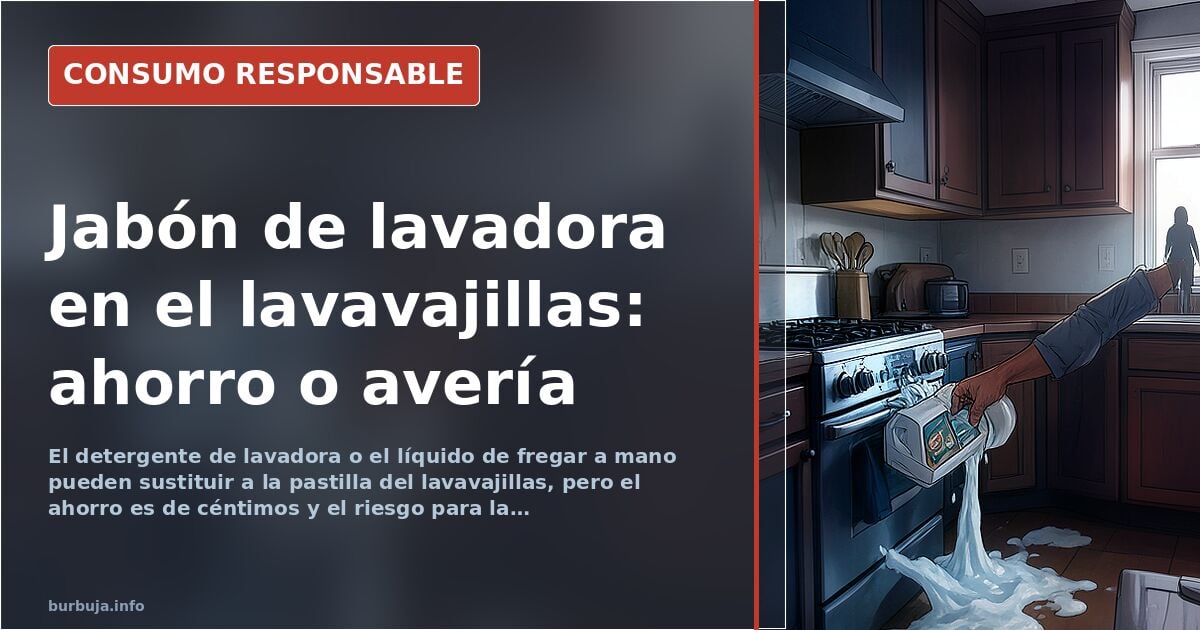
Dishwasher detergent: the laundry soap trick that saves money
Liquid hand dish soap costs half as much as dedicated dishwasher detergent and, according to several accounts, cleans just as well. The idea has been circulating for years among people stretching their household budget: replacing tablets or powder with a non-foaming liquid, or directly with a spoonful of laundry detergent. The saving per wash may be just pennies, but the risk to the machine is far from negligible.
What you can and cannot put in a home dishwasher
The first warning concerns hospitality products. Bar and restaurant dishwashers run on five to ten minute cycles with soda-based detergents, far more aggressive, which carry the corrosive pictogram on the label. They are not suitable for a domestic appliance and can attack the aluminium parts inside, which react with the soda and turn black. The tip of buying in bulk from a bar, therefore, falls apart.
The second option is laundry detergent. Several posts agree that a tablespoon of laundry detergent —one specific brand is mentioned— replaces a tablet without foaming or leaving any smell. The key lies in the anti-foam agents these formulations contain, which prevent the circulation pump from becoming overloaded. The remaining doubt is the residue of optical brighteners and additives designed for fabrics, not for dishes that are later used for eating.
The savings calculation: pennies per wash
The figures reported by those who have tried the method are modest. A 2.2-kilo own-brand powder detergent costs around 3.70 euros and, at 20 grams per wash, lasts for more than a hundred cycles: roughly 3.5 cents per wash. Cheap tablets of twelve for one euro work out at eight cents each. The annual difference for a family washing once a day comes to less than twenty euros. The full calculation, with mixing ratios and brands, is what is discussed in the original source.
Some go further and prepare a homemade mixture with lemon, coarse salt, white vinegar and water. The result, according to those who have used it, leaves lemon peel residue and a brownish tint on glasses over time. The vinegar and soap alternative avoids foam because the acid cuts the mixture, but too much vinegar breaks down the preparation.
Is the risk to the machine worth it?
The economic argument holds up; the technical one less so. Salt and rinse aid are still needed to prevent limescale build-up and staining, and anyone who cuts them out entirely may shorten the appliance's lifespan. The debate over whether the saving justifies a repair is still open. With margins like these, a mass switch away from dedicated detergent should already have peine. It remains a niche practice.
Also available in: Deutsch
Summary of a discussion on Burbuja.info - Foro de economía, actualidad y política., translated from Spanish and reviewed before publication. Read the full discussion (27 replies).
More summaries
-
Lidl's Thermomix-style kitchen gadget: cheap copy or real alternative?
Lidl's kitchen robot versus the Thermomix: is it a cheap knock-off or a viable cooking alternative? We look at quality and price.
-
Thermomix Review: Culinary Innovation or Marketing Scheme?
Is the Thermomix a pyramid scheme or a premium kitchen tool? This analysis breaks down its costs and functionality.
-
Second-hand Thermomix: bargain or tech trap?
Is a second-hand Thermomix worth it? We look at durability, hidden costs and alternatives like Lidl's model. Expert and user data.
-
DGT Vehicle Report Scam: Charging €24 for an €8 Service
A sponsored website charges €24 for a DGT report that costs €8. The scheme uses Carmen Mariscal's name as the applicant.
-
WhatsApp without a smartphone: three ways to use it from your PC
Three methods to use WhatsApp without a smartphone or a data plan: Android emulator, SDK or terminal. One number, one single device.
-
BQ Aquaris won't turn on: the volume button trick that revived it
A BQ Aquaris that wouldn't turn on or charge came back to life by pressing volume and power together. The Spanish brand's customer service divides opinion: quick replacements versus recurring faults.