
Discount Supermarket Deals: €1 Pizza, 50-Cent Tomatoes
Discover incredible savings at discount supermarkets: a €1 pizza, 50-cent focaccia, and more. But what's the catch?
English · Original discussion in Spanish · Published
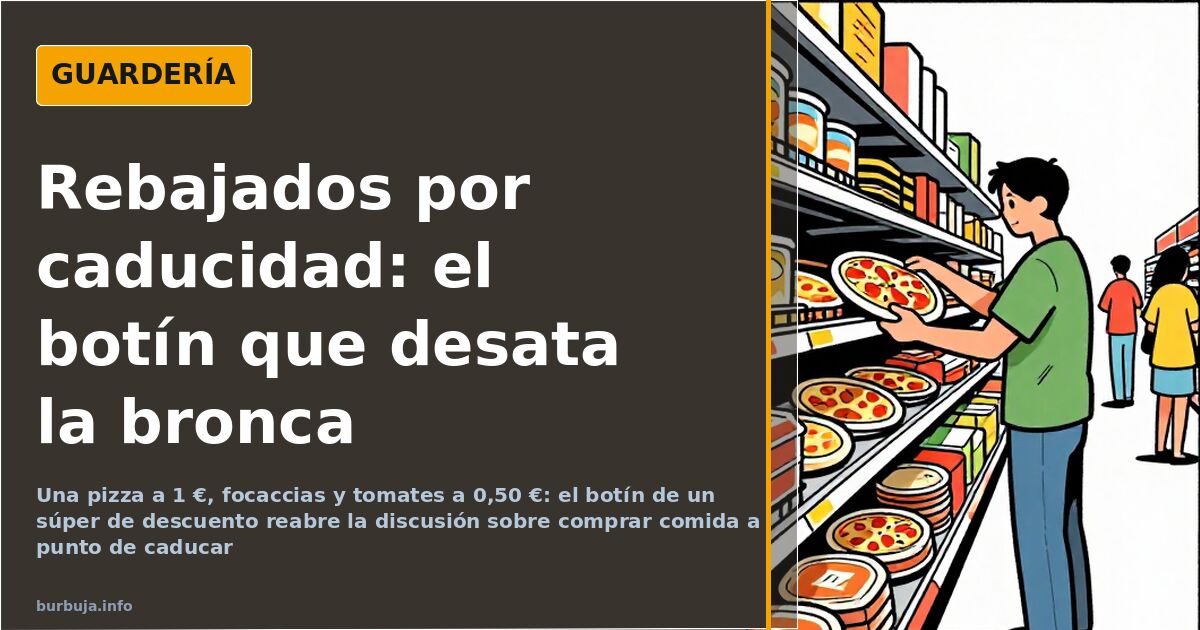
The Discount Haul: Pizza for €1, Focaccia for 50 Cents
One euro for a 400-gram pizza. Fifty cents for a genovese focaccia imported from Italy. The same for a tray of tomatoes that costs several times that in a regular supermarket. The shopping that depicts this discount supermarket haul seems like a coupon anomaly, and in part, it is: the reduced prices can cut savings of two and a half euros per item compared to the list price. The fine print appears later, when distance, time, and what actually ends up on the plate come into play.
How much do you save shopping at a discount supermarket?
The breakdown is the kind that invites you to get out the calculator. A 400-gram Mexican pizza for 1 euro where the normal price is €3.50. A 2.1 kg pack of tomatoes for 50 cents compared to €1.50. A 700-gram heirloom tomato for 50 cents compared to €1.95. And an imported genovese focaccia for 50 cents that sells for 3 euros in stores.
The difference, product by product, is obvious.
Why is the quality of discounted ultra-processed foods questioned?
Because some argue that the low price is paid for in the ingredient list: that the cart ends up full of preservatives, colorants, stabilizers, and flavor enhancers, and that this saving is ultimately billed to health. The bargain shopper's response is usually the same: pure envy. Others accept ultra-processed food as the toll for a basket that doesn't allow for fresh food every day, and some choose to pay more and eat better even if it costs them. No one convinces anyone.
When does traveling to the discount store stop being worthwhile?
When the store isn't just around the corner. According to one participant, the stores they frequent are 20 or 30 kilometers away, which reduces visits to two or three times a month, and only if work or an errand is on the way. There, the savings on the label begin to compete with gasoline and lost time. For those who plan, the difference remains real; for those who improvise, it dissolves.
The profile of the shopper who buys in bulk and freezes
Saving on groceries isn't a one-off act; it's a system. Those who hunt these prices have a large freezer, a stocked pantry, and a mental list of the reference price for each product. It's old-school frugality rooted in the culture of domestic savings. Lonchafinismo—the art of stretching every euro from the shopping cart—has its ritual: compare, stock up, and never pay the list price.
With current discounts, patient shopping yields more than convenient shopping, as long as the travel is worthwhile. For now, the pizza is still one euro.
One euro for a 400-gram pizza. Fifty cents for a genovese focaccia imported from Italy. The same for a tray of tomatoes that costs several times that in a regular supermarket. The shopping that depicts this discount supermarket haul seems like a coupon anomaly, and in part, it is: the reduced prices can cut savings of two and a half euros per item compared to the list price. The fine print appears later, when distance, time, and what actually ends up on the plate come into play.
How much do you save shopping at a discount supermarket?
The breakdown is the kind that invites you to get out the calculator. A 400-gram Mexican pizza for 1 euro where the normal price is €3.50. A 2.1 kg pack of tomatoes for 50 cents compared to €1.50. A 700-gram heirloom tomato for 50 cents compared to €1.95. And an imported genovese focaccia for 50 cents that sells for 3 euros in stores.
- Campofrío Mexican Pizza (400 g): €1 vs €3.50
- Pacomate (2.1 kg): €0.50 vs €1.50
- Heirloom Tomato (700 g): €0.50 vs €1.95
- Tossini Genovese Focaccia (180 g): €0.50 vs €3
The difference, product by product, is obvious.
Why is the quality of discounted ultra-processed foods questioned?
Because some argue that the low price is paid for in the ingredient list: that the cart ends up full of preservatives, colorants, stabilizers, and flavor enhancers, and that this saving is ultimately billed to health. The bargain shopper's response is usually the same: pure envy. Others accept ultra-processed food as the toll for a basket that doesn't allow for fresh food every day, and some choose to pay more and eat better even if it costs them. No one convinces anyone.
When does traveling to the discount store stop being worthwhile?
When the store isn't just around the corner. According to one participant, the stores they frequent are 20 or 30 kilometers away, which reduces visits to two or three times a month, and only if work or an errand is on the way. There, the savings on the label begin to compete with gasoline and lost time. For those who plan, the difference remains real; for those who improvise, it dissolves.
The profile of the shopper who buys in bulk and freezes
Saving on groceries isn't a one-off act; it's a system. Those who hunt these prices have a large freezer, a stocked pantry, and a mental list of the reference price for each product. It's old-school frugality rooted in the culture of domestic savings. Lonchafinismo—the art of stretching every euro from the shopping cart—has its ritual: compare, stock up, and never pay the list price.
With current discounts, patient shopping yields more than convenient shopping, as long as the travel is worthwhile. For now, the pizza is still one euro.
Summary of a discussion on Burbuja.info - Foro de economía, actualidad y política., translated from Spanish and reviewed before publication. Read the full discussion (151 replies).
More summaries
-
Prima Prix: 77% discounts clash with inflation
Takis at €0.35 and Donettes at €0.70 offer up to 77% savings, but the store bans customers for suspected theft.
-
Prima Prix haul saves over 70% on groceries
A shopper fills a basket for €20 with items costing over €76 in regular supermarkets. We analyze the discount store phenomenon.
-
Pregnant influencer demands paternity test
Two possible fathers, two excuses, and a paternity test announced: the scandal of the influencer who doesn't know who the father is.
-
Sarah Santolalla: A Real-Life 9/10 Despite Online Mockery
Sarah Santolalla faces online ridicule despite being rated highly in person. This analysis explores the gap between her digital image and physical reality.
-
Katie Holmes Secret Daughter Rumor Resurfaces
Rumors of a secret daughter born in 2000 before Suri Cruise resurface online, citing physical resemblance and unconfirmed scandals.
-
Reuniting with First Love: Nostalgia or Disappointment?
Is reuniting with your first love nostalgia or disappointment? Forum users discuss how time and reality clash with idealized past memories.