
Dinner for four in Santander, Spain, for under €40 a head
A forum user recounts a dinner for four in Santander with grilled octopus, squid and a 1,300-gram John Dory for under €40 per person. Some think it's…
English · Original discussion in Spanish · Published
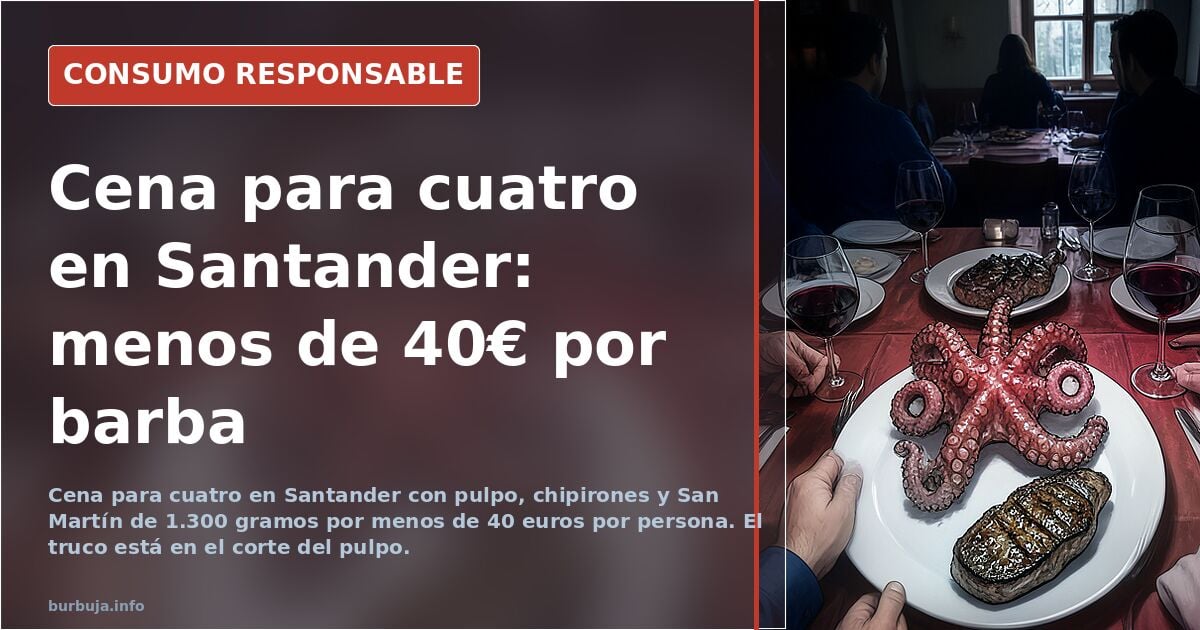
Eating well in Santander for under €40 a head
Four people. A complimentary cabracho cake (fish pâté), half a portion of rabas (fried squid rings), onion rings, grilled octopus, pan-fried squid and a 1,300-gram John Dory. Three bottles of water, a dessert and Galician wine. Total: under €40 per head in Santander's fishing quarter. The restaurant is called La Gruta de José and, according to the poster, it was antiestéticatured on RTVE this year. The bill adds up. So does the amazement.
The figure is not an accounting miracle. It is a product decision. The octopus, for instance, arrives at the table whole and split lengthwise, with thin tentacles that don't allow the slicing that conventional Galician-style octopus requires. That fish has no place in the standard restaurant circuit. That's why it costs less, according to the poster's account. The presentation, over potatoes with salt, oil and paprika, blends two classic recipes.
Fish as a price lever
The San Martín, also known as John Dory or Saint Peter's fish, is one of the most prized fish on our coasts, according to participants. A 1,300-gram specimen shared among four diners leaves a modest but sufficient portion. The cooking point, according to the account of the dinner, was spot on. Neither overdone nor underdone. The key lies in the format: large shared pieces bring down the cost per portion compared with individual fillets.
The itemized bill invites comparison. In central Madrid or Barcelona, a dinner with two portions of fish, octopus and similar starters easily climbs above €50 or €60 per person without dessert, one participant estimates. In Santander's fishing quarter, the same menu structure comes to half that. The difference is not just geographic. It's a business model difference: nearby market-fresh product, a short menu, high turnover and a place with no design pretensions.
The fine print of the bill
Some argue that €40 for two squid, five battered rabas, a piece of octopus and two chunks of fish is still expensive. The calculation is legitimate if you look at the amount per portion. Eight squid for four diners is two per head. Sixteen pieces of rabas, four per head. The octopus, a meager fragment. The fish, two portions that fit on a fork. With those numbers, the dinner looks more like a tapas crawl than a antiestéticast.
The counterargument also holds water. In the restaurant business, price is not set by grams alone. It is set by product, preparation, service and location. A complimentary cabracho cake, an octopus with a distinctive presentation and a whole John Dory are not bar-snack ingredients. They are menu dishes that, in any capital city, would add up to considerably more. Comparing it with a set lunch menu doesn't apply.
What you pay for and what you don't
The water was the worst part of the dinner. Half-liter bottles, three for four people. A detail that doesn't ruin the experience but reveals where the restaurant's real margins lie. The wine, a classic from Galicia, delivered without fanfare. The dessert, an addition that didn't unbalance the bill.
The conversation drifted into broader territory. Can you eat well in Spain without breaking the bank? The answer that emerges from the data is nuanced. In fishing quarters, in inland villages and in areas with local produce, yes. In city centers with high commercial rents, no. The variable is not the country. It's the distance between the port and the table.
The context you can't see in the photo
The dinner took place on a Monday. That detail matters. Restaurants that work with fresh product operate with limited stock and Mondays are usually a weak day at the fish market. The price adjusts. So does availability. On a Saturday at the same time, with the same menu, the bill would have been different. Not out of greed on the restaurateur's part, but because of the law of supply and demand in a tourist neighborhood.
The comparison with other recent dining experiences in the same setting points in the same direction. A sliced entrecôte to share, an Angus grill at home or a two-day-old suckling pig are alternatives that also allow you to eat well without going broke. The difference lies in the product and the format, not the budget.
The question is not whether €40 is a lot or a little. The question is how many restaurants in Spain can offer that combination of product, preparation and price without closing within six months. The answer, for now, fits in a fishing quarter of Santander.
Four people. A complimentary cabracho cake (fish pâté), half a portion of rabas (fried squid rings), onion rings, grilled octopus, pan-fried squid and a 1,300-gram John Dory. Three bottles of water, a dessert and Galician wine. Total: under €40 per head in Santander's fishing quarter. The restaurant is called La Gruta de José and, according to the poster, it was antiestéticatured on RTVE this year. The bill adds up. So does the amazement.
The figure is not an accounting miracle. It is a product decision. The octopus, for instance, arrives at the table whole and split lengthwise, with thin tentacles that don't allow the slicing that conventional Galician-style octopus requires. That fish has no place in the standard restaurant circuit. That's why it costs less, according to the poster's account. The presentation, over potatoes with salt, oil and paprika, blends two classic recipes.
Fish as a price lever
The San Martín, also known as John Dory or Saint Peter's fish, is one of the most prized fish on our coasts, according to participants. A 1,300-gram specimen shared among four diners leaves a modest but sufficient portion. The cooking point, according to the account of the dinner, was spot on. Neither overdone nor underdone. The key lies in the format: large shared pieces bring down the cost per portion compared with individual fillets.
The itemized bill invites comparison. In central Madrid or Barcelona, a dinner with two portions of fish, octopus and similar starters easily climbs above €50 or €60 per person without dessert, one participant estimates. In Santander's fishing quarter, the same menu structure comes to half that. The difference is not just geographic. It's a business model difference: nearby market-fresh product, a short menu, high turnover and a place with no design pretensions.
The fine print of the bill
Some argue that €40 for two squid, five battered rabas, a piece of octopus and two chunks of fish is still expensive. The calculation is legitimate if you look at the amount per portion. Eight squid for four diners is two per head. Sixteen pieces of rabas, four per head. The octopus, a meager fragment. The fish, two portions that fit on a fork. With those numbers, the dinner looks more like a tapas crawl than a antiestéticast.
The counterargument also holds water. In the restaurant business, price is not set by grams alone. It is set by product, preparation, service and location. A complimentary cabracho cake, an octopus with a distinctive presentation and a whole John Dory are not bar-snack ingredients. They are menu dishes that, in any capital city, would add up to considerably more. Comparing it with a set lunch menu doesn't apply.
What you pay for and what you don't
The water was the worst part of the dinner. Half-liter bottles, three for four people. A detail that doesn't ruin the experience but reveals where the restaurant's real margins lie. The wine, a classic from Galicia, delivered without fanfare. The dessert, an addition that didn't unbalance the bill.
The conversation drifted into broader territory. Can you eat well in Spain without breaking the bank? The answer that emerges from the data is nuanced. In fishing quarters, in inland villages and in areas with local produce, yes. In city centers with high commercial rents, no. The variable is not the country. It's the distance between the port and the table.
The context you can't see in the photo
The dinner took place on a Monday. That detail matters. Restaurants that work with fresh product operate with limited stock and Mondays are usually a weak day at the fish market. The price adjusts. So does availability. On a Saturday at the same time, with the same menu, the bill would have been different. Not out of greed on the restaurateur's part, but because of the law of supply and demand in a tourist neighborhood.
The comparison with other recent dining experiences in the same setting points in the same direction. A sliced entrecôte to share, an Angus grill at home or a two-day-old suckling pig are alternatives that also allow you to eat well without going broke. The difference lies in the product and the format, not the budget.
The question is not whether €40 is a lot or a little. The question is how many restaurants in Spain can offer that combination of product, preparation and price without closing within six months. The answer, for now, fits in a fishing quarter of Santander.
Summary of a discussion on Burbuja.info - Foro de economía, actualidad y política., translated from Spanish and reviewed before publication. Read the full discussion (83 replies).
More summaries
-
Spain's cheapest hotels now cost €120 per night
In Spain, budget hotels start at €120 and mid-range ones reach €250, while wages have stagnated since 1995. Sleeping is now more expensive than dining well.
-
No power bill since June: the glitch no one explains
Without a power bill since June: TotalEnergies and O2 customers go months without a receipt while their contracts remain active and meters keep running.
-
Mercedes unveils 10 kg, 1,000 hp axial motor: a new electric benchmark
Mercedes' 10 kg, 1,000 hp axial motor is already in the AMG GT. A look at the YASA technology, its promises, and the real problems with batteries and price.
-
Off-grid solar: 3,000 euros won't even get you started
An off-grid solar setup for €3,000: is it possible? Real prices for inverters, batteries and panels for a weekend home. Key tips to avoid…
-
Drugged and abandoned with a GPS tracker: a 'rescue' that is a crime
A homeless man in Spain was drugged and abandoned in the wilderness with a GPS beacon as 'therapy'. The legal analysis: up to 10 years in prison. The controversy is served.
-
Meat prices soar in Spain: butchers and consumers voice the same complaint
Spain's CPI stands at 3%, but meat prices have skyrocketed. Middlemen, EU regulation and alternative shopping strategies: what lies behind the surge.