
Diesel hits €2 a litre in Spain as petrol prices climb
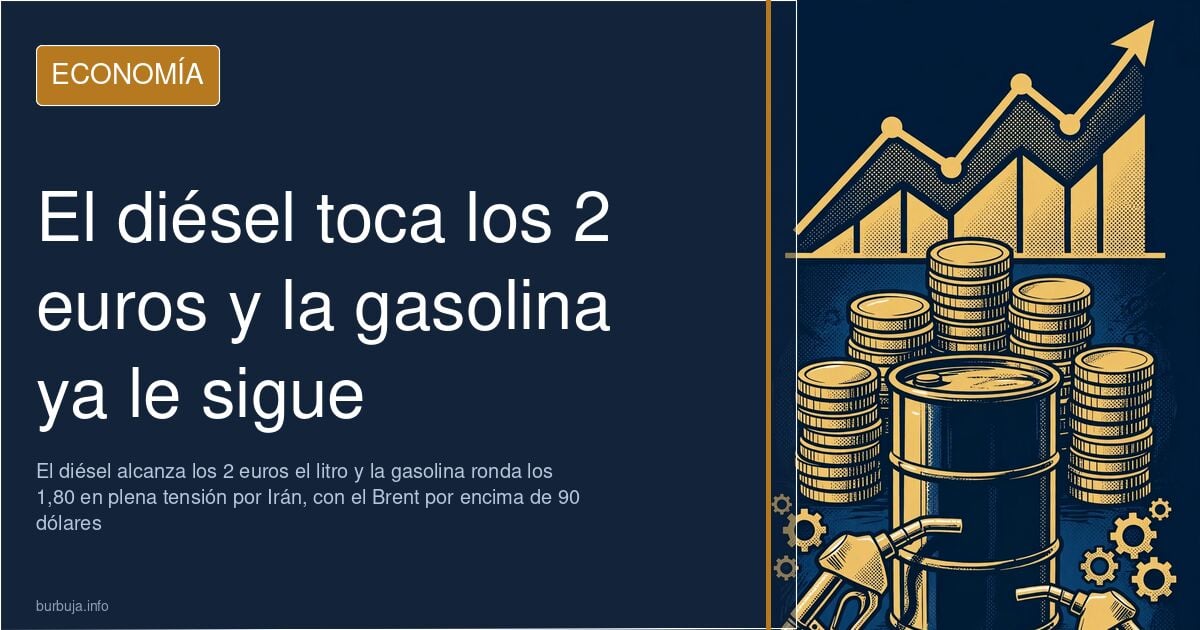
Diesel has reached €2 per litre at Spanish pumps and petrol is close to €1.80 amid tensions over Iran, with Brent crude above $90 a barrel.
English · Original discussion in Spanish · Published
Diesel at €2: the price now showing at the pump
The figure had been looming on the price boards for weeks and now leaves no room for doubt: diesel has hit €2.00 per litre at a number of Spanish service stations. Petrol 95 is close behind, with averages of around €1.80 across much of the country and lows of €1.60 at the cheapest stations. This is not an isolated pump anomaly. It is the picture of a 20 March that many had been anticipating, with Brent above $90, the euro weak against the dollar and a Middle East conflict that is no longer a hypothesis.
Why has diesel reached €2?
The jump comes down to three factors. The first is crude: Brent is trading above $90 a barrel and the euro-dollar exchange rate is working against importers, so every barrel imported costs more euros than it did a year ago. The second is fiscal: roughly half of the final pump price is tax, with 21% VAT applied on top of an already inflated price. The third is logistics.
Spain imports virtually all the crude oil it consumes. Any tension in the Strait of Hormuz — through which around 20% of global shipping passes — sends freight and insurance costs soaring overnight. The scenario once considered remote now has names attached: the deployment of a frigate to Cyprus and the use of the Rota and Morón bases by the United States.
Real prices, station by station
The spread between brands is wide, which explains why two drivers filling up on the same day can pay very different amounts. Low-cost chains charge around €1.60 for petrol 95 and €1.70 for diesel. The majors — Repsol, BP and the rest — price diesel between €1.80 and €1.90 and petrol at around €1.70. On motorways and at premium stations, diesel is already at or above €2.00.
There is disagreement over the room for tax cuts. Some analysts argue that cutting taxes would bring immediate relief to households, citing the 20-cent-per-litre discount applied during the previous crisis. Others point out that the earlier cut was made on VAT rather than on the Hydrocarbons Excise Duty (a fixed tax per litre in Spain): cutting that would have been far more effective, but also far more costly for the public purse.
The knock-on effect: from the pump to the shopping trolley
Fuel is not an end product. It is a production and distribution cost for almost everything else. Current estimates point to cost increases of more than 30% in freight transport, which eventually feed into the price of milk, bread or fruit. The plumber's bill travels on diesel too.
Tourism, the last pillar of the Spanish economy, is the most exposed link. If airfares rise by around 40% and accommodation by another 20%, German and British visitors will compare prices with Turkey or Tunisia — and the cheaper destination wins.
With diesel at €2, filling a 50-litre tank costs €100. The comparison already doing the rounds — a litre of fuel for a dozen eggs — is no longer a joke.
Also available in: Deutsch
Summary of a discussion on Burbuja.info - Foro de economía, actualidad y política., translated from Spanish and reviewed before publication. Read the full discussion (70 replies).
More summaries
-
Oil at $200 and the Strait of Hormuz: The Economics of an Imminent War with Iran
30% of global crude oil passes through the Strait of Hormuz. The US military buildup and sham negotiations point to an imminent war with Iran that would send oil to $200.
-
Strait of Hormuz open for Japan as Trump calls for war on Iran
Two Japanese ships cross the Strait of Hormuz without escort while Trump demands war on Iran. Analysis challenges the official narrative, pointing to the real conflict: USA vs China.
-
Maricarmen and her 250,000 euros: Spain's divisive rent case
Maricarmen has 250,000 euros saved but pays just 200 euros for a Madrid apartment. Her case highlights Spain's complex housing crisis.
-
Germany's motorways are cracking: heat or underinvestment?
Germany's motorways, long a byword for efficiency, are cracking under extreme 40°C heat. The ADAC has confirmed restrictions across the network. Is it the weather or a lack of…
-
Sánchez's grip on state companies and captive voters in Spain
Pedro Sánchez controls Indra, Correos and the electoral roll. Over 5 million new voters and a passive opposition could keep him in power for decades.
-
The racial dilemma of street justice in Spain
A viral video shows a woman being assaulted with no one intervening. The debate reveals how the attacker's race shapes the social reaction and the unequal application of justice.