
Debate over the limits of the Basque 'nation' and genetics
A forum debates the limits of the Basque 'nation' based on genetic studies and late Vasconization, with demographic and territorial opinions.
English · Original discussion in Spanish · Published
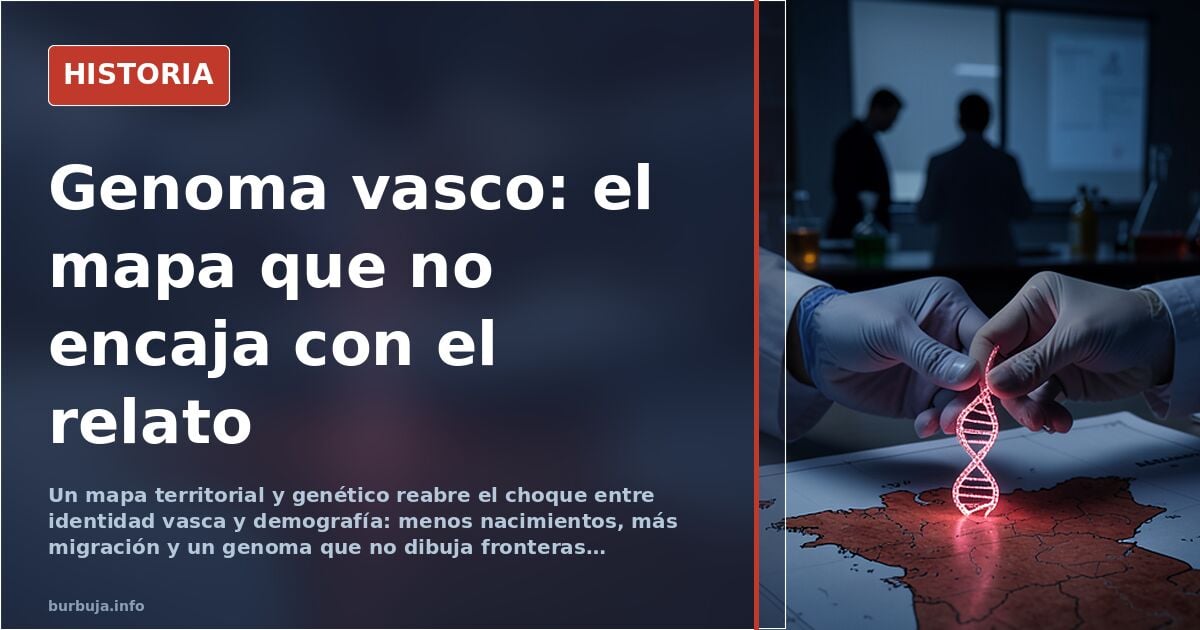
The genetic map that redraws the borders of the Basque 'nation'
The debate over the territorial limits of a hypothetical Basque nation is back in the spotlight. This time, the trigger is not a new political map, but the interpretation of genetic studies and theories about late Vasconization. An argument that, according to one participant, matches the historical facts and the genetic map of the Iberian Peninsula. The proposal, however, is far from unanimous and has turned into an exchange of accusations about the true 'living space' being aspired to.
The debate over genetic purity and assimilation
The core of the discussion centers on the idea of an ethnostate based on a pure, idealized ancestral genome, as another participant suggests. One line of analysis holds that the Basque nation, as conceived today, is heading straight for disappearance. The argument is demographic: few Basques remain and there are fewer every year, with a birth rate that does not guarantee generational replacement. Added to this, according to this view, is the arrival of new residents with different customs and religions, which, far from strengthening the project, dilutes it. The conclusion of this camp is that the famous genetic map will have to be updated sooner rather than later.
Against this position, other analyses point out that the problem is more fundamental. The theory of late Vasconization, which holds that the Aquitanian peoples spoke a language similar to Iberian and were ethnically more similar to the Hispani than to the Gauls, is plausible. However, it is argued that identifying belonging to a community with something as circumstantial as language is a mistake from the start. The Romans left written records that the Aquitanians were Iberians, a significant fact because, although they were rough on ethnographic matters, when they said it, it was worth listening. Genetics, according to this school, proves it: the inhabitants of Gascony and southwestern France are closer to the Hispani than to the Gauls.
Expanding the map: from Gipuzkoa to La Rioja
Proposals about the limits of this living space are varied and, at times, maximalist. Some include Navarre, Iparralde, Castro Urdiales, Treviño, La Rioja and part of Aragon on the map. Others, in a more ironic tone, suggest that the only 'Vasconia' they know is the basketball team. The discussion has also drifted toward the situation of areas such as the Vall d'Aran, where Occitan is preserved and whose historical ties point north, which, according to some, breaks the match with the genetic map. The Iberian toponymy preserved in the Catalan western Pyrenees would not necessarily imply a Basque origin; rather, Iberian could be a sister language that Romanization and evangelization wiped out.
Demographics as the decisive factor
The underlying issue in the debate is a demographic concern that goes beyond identity. It is argued that the territory being claimed is filling up with migrant population and that empowerment policies for certain groups are turning it into a hostile place for procreation. This view, tinged with pessimism, holds that nationalists keep dreaming of their countries while failing to realize that, in a short time, neither they nor the rest of Spaniards will count for anything. It is the paradox of a project that, in its eagerness to define a living space, faces the reality of a generational replacement that never arrives.
The exact point where the analysis gets stuck is the usual one: the definition of who belongs to the community. If language is circumstantial and genetics is a map that gets updated, the 'living space' is reduced to a theoretical construct that never quite fits the demographic reality.
Also available in: Deutsch
Summary of a discussion on Burbuja.info - Foro de economía, actualidad y política., translated from Spanish and reviewed before publication. Read the full discussion (42 replies).
More summaries
-
Map of European phenotypes splits Spain by faces
A map classifies phenotypes across Europe and North Africa. The chart splits Spain by faces and reopens the debate over who looks like whom.
-
Iberian genetics aren't a color-coded map: R1b and the 10% non-European share
Haplogroup R1b is the most common in Spain, but it only describes a paternal line. Iberian genetics are a mosaic of migrations, not a certificate of purity.
-
Sicilians and Basques: Genetic Gradients vs. Races
The phenotype of Sicilians and Basques reopens an old debate: population genetics denies that biological race explains European diversity.
-
Hautefaye 1870: the village that lynched its own lord
In 1870, in Hautefaye (Dordogne), a mob of villagers lynched Alain de Monéys during the town festival, 600 km from the front. A case that unsettles…
-
The myth of 8 million hidden Jews in Spain
A calculation that goes from 500,000 Jews in the 14th century to 8 million Bnei Anusim in Spain rests on tax records and figures from oral tradition that do not…
-
Homo Sapiens Origin Shifts Away From Sub-Saharan Africa
A 2026 study by David Reich places the origin of Homo Sapiens in North Africa and the Middle East, not in Sub-Saharan Africa.