
Debate Over Tariffs and Surcharges on Online Purchases from China
A user reports €3 surcharges per item on AliExpress and a €10 order jumping to over €20 due to tariffs and customs.
English · Original discussion in Spanish · Published
Tariffs and Surcharges on Online Purchases
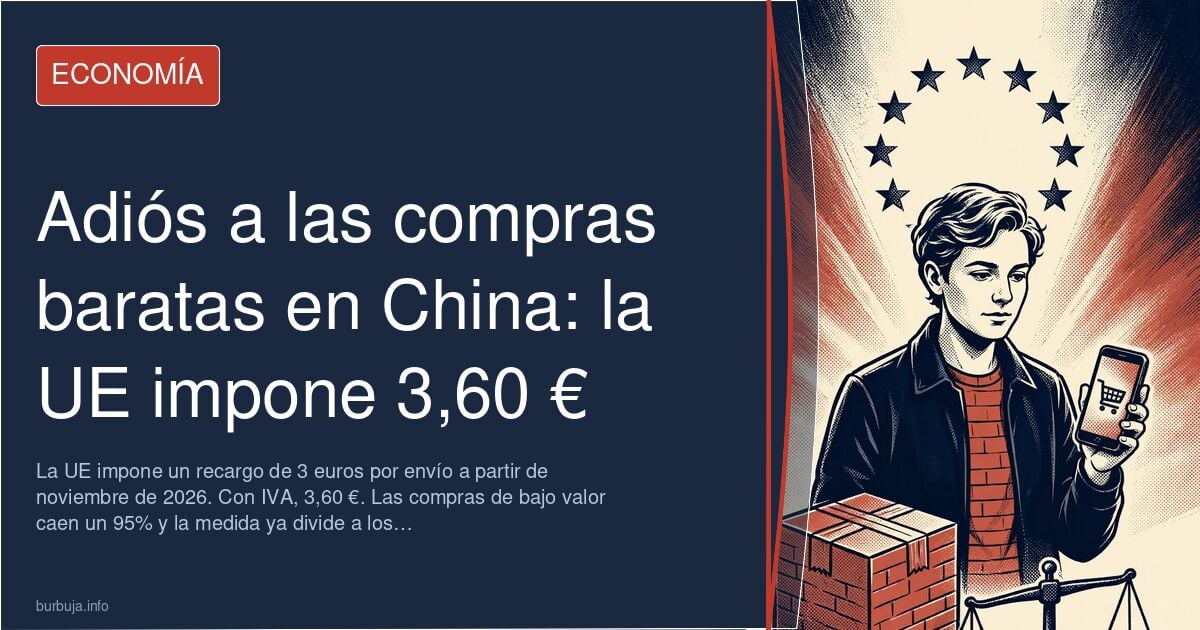
A forum user recounts buying a phone case, two plastic car tray pieces, and a bracelet. A year ago, that order would have cost less than 10 euros on AliExpress; today, with price increases and a €3 customs surcharge per item, it exceeds €20. The buyer closed the tab and didn't purchase. Multiply that action by millions of abandoned carts, and you have the backdrop for the debate: tariffs and customs pressure on online purchases.
This is not an isolated measure. Tariffs have already made daily imported goods from China more expensive, according to messages in the thread. The novelty, for participants, isn't the tax itself. It's about who ends up paying the bill.
What's Being Said About Customs Changes
The scenario described by a user in the thread is familiar: VAT from the first cent, goodbye to the 150-euro threshold that gave small purchases some breathing room, and a carrier customs management fee that's separate. This fee is the real sting, ranging from 15 to 30 euros depending on who delivers the package.
That's the real rip-off, not the tariff, summarizes a forum post. According to that message, the management fee is charged by the carrier, so the final amount depends on the delivery company. Same package, different price.
Why is the EU Insisting on Taxing Cheap Packages?
The thread repeats that the measure aims to encourage buying locally rather than from China. Several users argue that much of what arrives in these packages is not manufactured in Europe, nor is there any intention to re-manufacture it. Taxing what no one produces locally doesn't create industry. It increases the cost of living, according to those messages.
The opposite suspicion is also circulating: that the tariff will end up being a toll captured by importers capable of setting up warehouses within the EU, with a guaranteed cost increase for the final customer. Some argue that if something can be manufactured locally, even cheap trinkets, the tariff will have been worth it. The rebuttal is simple: that reasoning only works if the product is competitive without a tariff. And today, it isn't.
The Solution Being Suggested in the Thread
The answer, for some participants, isn't in Brussels. It's in the warehouses. According to a message in the thread, major Asian platforms are opening warehouses in European territory to sell stock that has already cleared customs, avoiding surprises for the buyer. This would be the way to bypass the fee: not letting the package cross the border as an individual shipment.
There's a second, more inconvenient door: shipping from countries with which the EU doesn't have this dispute. The thread points to Segarro as a re-export platform. The underlying debate, for several users, remains the same as twenty years ago: expensive energy, machinery that is barely produced here anymore, and regulations that keep adding layers.
What tariffs won't solve is the simple question: why does a cart with three cheap items cost more today than a year ago. That price increase peine before. The debated tax doesn't fix it, according to messages in the thread.
A forum user recounts buying a phone case, two plastic car tray pieces, and a bracelet. A year ago, that order would have cost less than 10 euros on AliExpress; today, with price increases and a €3 customs surcharge per item, it exceeds €20. The buyer closed the tab and didn't purchase. Multiply that action by millions of abandoned carts, and you have the backdrop for the debate: tariffs and customs pressure on online purchases.
This is not an isolated measure. Tariffs have already made daily imported goods from China more expensive, according to messages in the thread. The novelty, for participants, isn't the tax itself. It's about who ends up paying the bill.
What's Being Said About Customs Changes
The scenario described by a user in the thread is familiar: VAT from the first cent, goodbye to the 150-euro threshold that gave small purchases some breathing room, and a carrier customs management fee that's separate. This fee is the real sting, ranging from 15 to 30 euros depending on who delivers the package.
That's the real rip-off, not the tariff, summarizes a forum post. According to that message, the management fee is charged by the carrier, so the final amount depends on the delivery company. Same package, different price.
Why is the EU Insisting on Taxing Cheap Packages?
The thread repeats that the measure aims to encourage buying locally rather than from China. Several users argue that much of what arrives in these packages is not manufactured in Europe, nor is there any intention to re-manufacture it. Taxing what no one produces locally doesn't create industry. It increases the cost of living, according to those messages.
The opposite suspicion is also circulating: that the tariff will end up being a toll captured by importers capable of setting up warehouses within the EU, with a guaranteed cost increase for the final customer. Some argue that if something can be manufactured locally, even cheap trinkets, the tariff will have been worth it. The rebuttal is simple: that reasoning only works if the product is competitive without a tariff. And today, it isn't.
The Solution Being Suggested in the Thread
The answer, for some participants, isn't in Brussels. It's in the warehouses. According to a message in the thread, major Asian platforms are opening warehouses in European territory to sell stock that has already cleared customs, avoiding surprises for the buyer. This would be the way to bypass the fee: not letting the package cross the border as an individual shipment.
There's a second, more inconvenient door: shipping from countries with which the EU doesn't have this dispute. The thread points to Segarro as a re-export platform. The underlying debate, for several users, remains the same as twenty years ago: expensive energy, machinery that is barely produced here anymore, and regulations that keep adding layers.
What tariffs won't solve is the simple question: why does a cart with three cheap items cost more today than a year ago. That price increase peine before. The debated tax doesn't fix it, according to messages in the thread.
Summary of a discussion on Burbuja.info - Foro de economía, actualidad y política., translated from Spanish and reviewed before publication. Read the full discussion (87 replies).
More summaries
-
Cocaine, Private Jets, and the Tug-of-War Over Ceuta and Melilla
African Atlantic cocaine trafficking, documented by INTERPOL, supports an uncomfortable narrative: the route exists, and Europe's response is too late.
-
Euthanasia in Old Age: Autonomy vs. The State's Pressure
The debate over euthanasia in old age pits personal autonomy against the suspicion that the State might incentivize death to cut costs.
-
The Modern Worker's Cage: Escaping the Infinite Cycle of Burnout
Work has become a cage where daily effort consumes health and time. Discover why we push ourselves so hard and how to break the cycle.
-
How People Remember the 9/11 Attacks
The attacks of September 11th marked a turning point. Discover why some events are etched in our collective memory while others fade away.
-
Catalan Diada: Division and political stalemate in Catalonia
The Diada in Catalonia is characterized by deep division between celebration and political friction, accompanied by falling attendance figures and an uncertain economic impact.
-
Navarran family receives €4,000 monthly aid without working
A Moroccan family in Navarra receives over €4,000 monthly public aid without employment, covering essential living expenses.