
Dabiz Muñoz's €19 Sandwich: The Business of Gourmet Storytelling
A sandwich 'designed' by Dabiz Muñoz sells for €18.95 in Spanish airports. Forum calculations suggest a cost of just €1.50 per unit.
English · Original discussion in Spanish · Published
Dabiz Muñoz's €19 Sandwich: The Business of Gourmet Storytelling
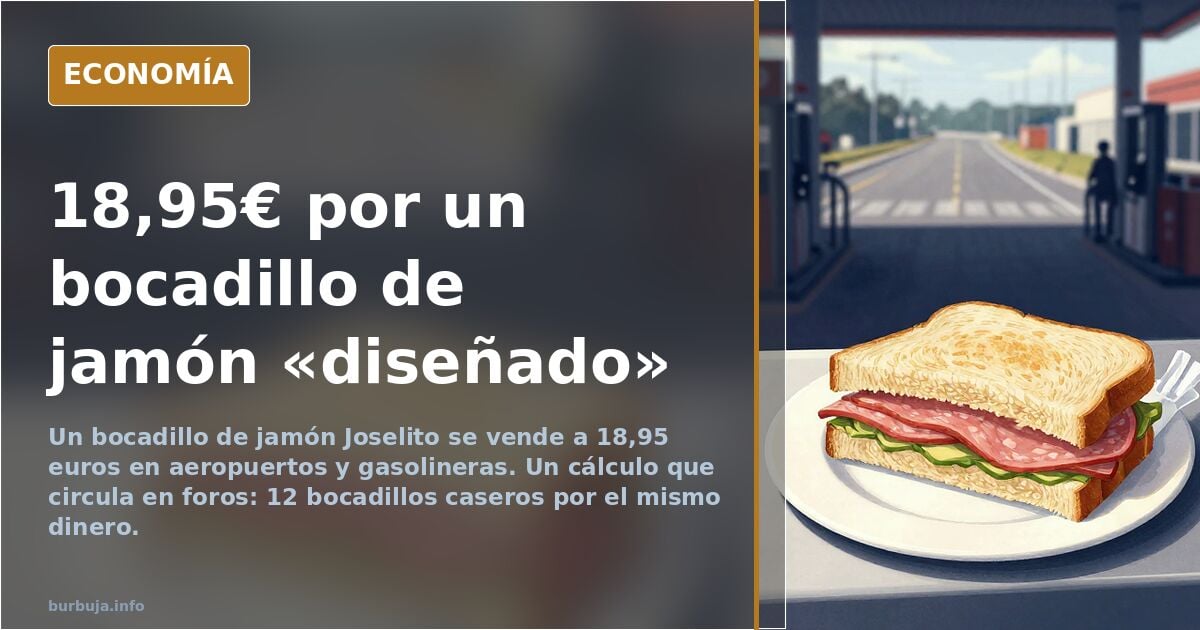
How much are you willing to pay for a ham sandwich? In a Spanish airport, the answer seems to be €18.95. That is the price of the sandwich "designed" by Dabiz Muñoz sold in terminals and gas stations: sourdough baguette, Iberian ham, extra virgin olive oil, pepper, and chopped pistachio. The debate over whether it is a scam or market price has spread like wildfire, and the conclusion leaves no one unscathed.
The issue is not just the sandwich. It reveals how prices are constructed in Spain when someone with media clout puts their name on a product. And incidentally, about what we are willing to swallow rather than admit we have been ripped off.
The calculation that dismantles the €19 sandwich
According to a calculation circulating in the thread, €60/kg Iberian ham allows buying 300 grams for €18. Add a €1 loaf of bread, and the result would be a sandwich with more than triple the ham sold in the airport. This calculation, repeated ad nauseam, exposes the product's margin: you do not pay for raw materials, you pay for the story.
Some argue that the sandwich ham is Joselito from Guijuelo and that this slice alone justifies the price. It is the most common defense. But the product label does not confirm this origin, and knife-cut Joselito costs around €180/kg in specialty stores. At that cost, €19 for a 50-gram sandwich would even be cheap. The doubt is whether the ham served in an airport terminal is actually that brand.
The full breakdown, item by item, shows a surprising difference: 19 packets of Navidul ham (40g each) would cost the same as a single chef-designed sandwich. With bread and oil, making 19 sandwiches at home would not exceed €1.50 per unit. The comparison is not entirely fair — Navidul is not Joselito — but it makes clear that the price is not sustained by the quality of the cured meat.
Why does a sandwich cost three times more in an airport?
The explanation is not the ham. It is the rent. Spanish airports are spaces managed by a listed public company that auctions every square meter of the terminal. The caterer pays a fee which is then passed on to the customer. Added to this are staff, night shifts, and holidays. The result: a sandwich that costs €5 in a local bar is sold for €19 without anyone having improved the bread.
The argument that "it is a public company, it should be cheaper" does not hold up. Airport management functions as a monopoly that licenses spaces at gold prices. The traveler is captive between security control and the boarding gate. There, competition does not set the price; thirst and desperation do. Being public does not make anything cheaper; it adds a premium of inefficiency.
With this context, €19 for an Iberian ham sandwich in an airport is not so absurd. It becomes absurd if the ham is not what is promised. And that is where the chef's narrative collapses.
Pistachios: From bar snack to gourmet ingredient
Chopped pistachio is the touch that turns a normal sandwich into a "designed" product. Years ago, it was a rarity served as a snack in humble bars. Today, it is the height of refinement. Its popularity has driven up its price and its presence on any menu wanting to appear modern.
The problem is that mixing pistachio with acorn-fed Iberian ham should be a crime against humanity, according to orthodox palates. Pepper and pistachio destroy the texture and flavor of the ham. It is not an accompaniment; it is camouflage. The secret ingredient is not the nut: it is the gullibility of the diner who pays for it.
The €46 Panettone and the repeating pattern
The sandwich is not an isolated case. The same chef sells a panettone called "Dragon's Breath" for €46 at El Corte Inglés. A panettone is a roll made of flour, eggs, butter, and candied fruits. At €46, the price is not explained by ingredients, but by the name and the persona.
The pattern is always the same: basic product, suggestive name, exorbitant price. It works because there is demand. People buy the story, not the food. And as long as there are those willing to pay €46 for a panettone, there will be those selling €19 sandwiches in airports.
The chef's trajectory: Media success and doubts abroad
Dabiz Muñoz is a media star in Spain. His Madrid restaurant is successful, his TV appearances are constant, and his personal brand sells. But outside Spain, the narrative does not always land. According to some messages in the thread, his London location has not repeated the success, and the Dubai one has closed. Competing in gastronomic big leagues is not the same as being a prophet in your own neighborhood.
Comparison with the local scene is inevitable: in Madrid, the star dish in many bars remains the squid sandwich. No design, no pistachio, no story. Just price and hunger. And it works.
The business of monetizing others' foolishness
Detecting people's willingness to overpay is not easy. There is a lot of competition. But the chef has achieved it, according to critics: he turned a ham sandwich into a luxury product. Not for quality, but for packaging.
The business is not hospitality. It is marketing. And as long as there is an audience willing to pay €19 for bread with concept, the business will keep working. The question is not whether it is a scam. The question is how long it will take for the next person to copy it.
How much are you willing to pay for a ham sandwich? In a Spanish airport, the answer seems to be €18.95. That is the price of the sandwich "designed" by Dabiz Muñoz sold in terminals and gas stations: sourdough baguette, Iberian ham, extra virgin olive oil, pepper, and chopped pistachio. The debate over whether it is a scam or market price has spread like wildfire, and the conclusion leaves no one unscathed.
The issue is not just the sandwich. It reveals how prices are constructed in Spain when someone with media clout puts their name on a product. And incidentally, about what we are willing to swallow rather than admit we have been ripped off.
The calculation that dismantles the €19 sandwich
According to a calculation circulating in the thread, €60/kg Iberian ham allows buying 300 grams for €18. Add a €1 loaf of bread, and the result would be a sandwich with more than triple the ham sold in the airport. This calculation, repeated ad nauseam, exposes the product's margin: you do not pay for raw materials, you pay for the story.
Some argue that the sandwich ham is Joselito from Guijuelo and that this slice alone justifies the price. It is the most common defense. But the product label does not confirm this origin, and knife-cut Joselito costs around €180/kg in specialty stores. At that cost, €19 for a 50-gram sandwich would even be cheap. The doubt is whether the ham served in an airport terminal is actually that brand.
The full breakdown, item by item, shows a surprising difference: 19 packets of Navidul ham (40g each) would cost the same as a single chef-designed sandwich. With bread and oil, making 19 sandwiches at home would not exceed €1.50 per unit. The comparison is not entirely fair — Navidul is not Joselito — but it makes clear that the price is not sustained by the quality of the cured meat.
Why does a sandwich cost three times more in an airport?
The explanation is not the ham. It is the rent. Spanish airports are spaces managed by a listed public company that auctions every square meter of the terminal. The caterer pays a fee which is then passed on to the customer. Added to this are staff, night shifts, and holidays. The result: a sandwich that costs €5 in a local bar is sold for €19 without anyone having improved the bread.
The argument that "it is a public company, it should be cheaper" does not hold up. Airport management functions as a monopoly that licenses spaces at gold prices. The traveler is captive between security control and the boarding gate. There, competition does not set the price; thirst and desperation do. Being public does not make anything cheaper; it adds a premium of inefficiency.
With this context, €19 for an Iberian ham sandwich in an airport is not so absurd. It becomes absurd if the ham is not what is promised. And that is where the chef's narrative collapses.
Pistachios: From bar snack to gourmet ingredient
Chopped pistachio is the touch that turns a normal sandwich into a "designed" product. Years ago, it was a rarity served as a snack in humble bars. Today, it is the height of refinement. Its popularity has driven up its price and its presence on any menu wanting to appear modern.
The problem is that mixing pistachio with acorn-fed Iberian ham should be a crime against humanity, according to orthodox palates. Pepper and pistachio destroy the texture and flavor of the ham. It is not an accompaniment; it is camouflage. The secret ingredient is not the nut: it is the gullibility of the diner who pays for it.
The €46 Panettone and the repeating pattern
The sandwich is not an isolated case. The same chef sells a panettone called "Dragon's Breath" for €46 at El Corte Inglés. A panettone is a roll made of flour, eggs, butter, and candied fruits. At €46, the price is not explained by ingredients, but by the name and the persona.
The pattern is always the same: basic product, suggestive name, exorbitant price. It works because there is demand. People buy the story, not the food. And as long as there are those willing to pay €46 for a panettone, there will be those selling €19 sandwiches in airports.
The chef's trajectory: Media success and doubts abroad
Dabiz Muñoz is a media star in Spain. His Madrid restaurant is successful, his TV appearances are constant, and his personal brand sells. But outside Spain, the narrative does not always land. According to some messages in the thread, his London location has not repeated the success, and the Dubai one has closed. Competing in gastronomic big leagues is not the same as being a prophet in your own neighborhood.
Comparison with the local scene is inevitable: in Madrid, the star dish in many bars remains the squid sandwich. No design, no pistachio, no story. Just price and hunger. And it works.
The business of monetizing others' foolishness
Detecting people's willingness to overpay is not easy. There is a lot of competition. But the chef has achieved it, according to critics: he turned a ham sandwich into a luxury product. Not for quality, but for packaging.
The business is not hospitality. It is marketing. And as long as there is an audience willing to pay €19 for bread with concept, the business will keep working. The question is not whether it is a scam. The question is how long it will take for the next person to copy it.
Also available in: Deutsch
Summary of a discussion on Burbuja.info - Foro de economía, actualidad y política., translated from Spanish and reviewed before publication. Read the full discussion (158 replies).
More summaries
-
Pornhub’s VP is an Orthodox Rabbi: The Ethical Paradox
Solomon Friedman, an ordained Orthodox rabbi, serves as Pornhub’s vice president, sparking debate on ethics, parental responsibility, and the adult industry’s influence.
-
Latin American patient details Spain's healthcare crisis
A Latin American woman in Spain describes her struggle with the public health system, sparking debate on access and costs.
-
Barcelona Cookie Girl Video Sparks Debate on Human Behavior
A viral 2019 video shows a girl offering free cookies in Barcelona, triggering a rush that highlights human behavior when resources are unregulated.
-
Europe Controls Just 5% of AI Compute: Critical Dependency
Europe holds only 5% of global AI compute capacity versus the US's 75%. Strategic dependency and energy bottlenecks pose significant risks.
-
GERTRU Alert: Spanish PM’s Secretary Faces Legal Scrutiny
The wealth surge of Zapatero's secretary and cash-paid apartments expose cracks in a management under suspicion.
-
Spain's Transport Minister Mandates Green Paint for All Buses
Óscar Puente orders all state-concession buses to be painted green to unify public image, sparking criticism over costs and business suspicions.