
Criticized inheritance, then allegedly received help: The viral story
A young woman who reportedly advocated for taxing inherited wealth and then allegedly received help from her parents sparks debate on donations tax.
English · Original discussion in Spanish · Published
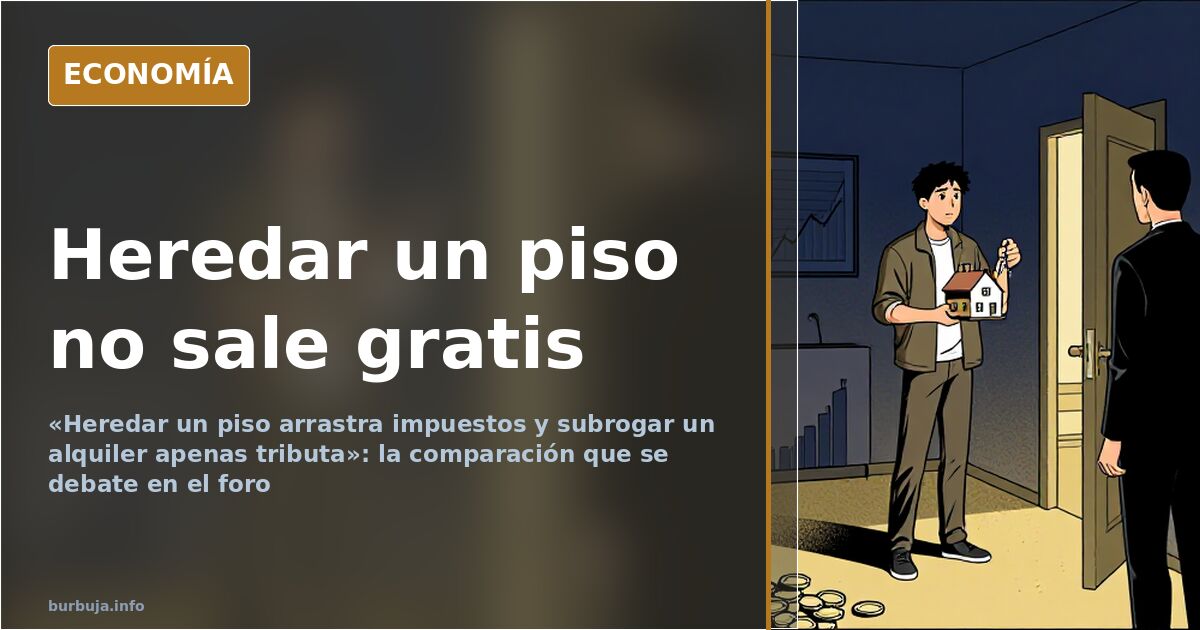
From 'No one should inherit' to a flat paid for by Dad
Is it legitimate for a parent to provide money for their child to buy a home? The answer angers almost everyone, and angers them more depending on whose parent it is. These days, the story of Laura, apparently born in 1997, has resurfaced. She is said to have advocated that wealth should not be passed from parents to children, and according to screenshots that circulated, she is credited with receiving exactly that: family support for her flat. The account, they say, vanished, although some doubt it ever existed.
There is no court ruling or official record. There are screenshots, a deletion, and a row that has been simmering for a decade: the one about the gift tax (impuesto de donaciones) and inheritance. This episode is not the cause of the fiscal discontent. It's the fuel.
What you pay when your parents give you money for a flat
This is where the part that almost no one understands until it affects them begins. A gift from parents to children is not magically exempt: it is taxed under the Inheritance and Gift Tax (impuesto de Sucesiones y Donaciones) according to what each autonomous community sets. And on top of the deed, you have to add the AJD (Impuesto de Actos Jurídicos Documentados), the tax on documented legal acts, which almost everyone discovers on the day they sign.
The most common reaction was one of recognition: someone discovering the AJD in their thirties is usually on the path to discovering everything. Some argue that these types of taxes penalize the transfer of savings within the family without generating new income. The counterargument is the usual one: if earned income is taxed, it's not understood why inherited capital gains should circulate toll-free.
Madrid and that 99% everyone remembers
The recurring calculation is that the Community of Madrid maintains a 99% tax exemption on these taxes, turning one region into a tax haven and its neighbor into a net payer. From there to territorial grievance is a short step.
The figure is used as a double-edged sword. For some, it shows there is room to lower the tax; for others, that the rules depend on the postal code and that those who advocate raising it are looking for a loophole they won't be caught in. The fine calculation, with taxable base and cross-exemptions, yields results that surprise those who see them broken down.
The underlying row: solidarity or plunder?
The real debate is not about Laura. It's about what's done with what's taken from you. Some accept the plunder—the word is from the debate, not this publication—if that money finances impeccable healthcare and university education. And others can't forgive having their accumulated wealth taken away so their descendants can fare better, only to see it later destined for things they don't agree with.
Both arguments share common ground: no one trusts the administrator. That's why Laura's case is engaging. Not because of what a 29-year-old woman did, but because everyone recognizes their own contradiction in her.
The unintentional lesson is another: the tax system is so opaque that almost no one understands it until they receive the bill. And when it arrives, no ideology can withstand the initial shock.
Is it legitimate for a parent to provide money for their child to buy a home? The answer angers almost everyone, and angers them more depending on whose parent it is. These days, the story of Laura, apparently born in 1997, has resurfaced. She is said to have advocated that wealth should not be passed from parents to children, and according to screenshots that circulated, she is credited with receiving exactly that: family support for her flat. The account, they say, vanished, although some doubt it ever existed.
There is no court ruling or official record. There are screenshots, a deletion, and a row that has been simmering for a decade: the one about the gift tax (impuesto de donaciones) and inheritance. This episode is not the cause of the fiscal discontent. It's the fuel.
What you pay when your parents give you money for a flat
This is where the part that almost no one understands until it affects them begins. A gift from parents to children is not magically exempt: it is taxed under the Inheritance and Gift Tax (impuesto de Sucesiones y Donaciones) according to what each autonomous community sets. And on top of the deed, you have to add the AJD (Impuesto de Actos Jurídicos Documentados), the tax on documented legal acts, which almost everyone discovers on the day they sign.
The most common reaction was one of recognition: someone discovering the AJD in their thirties is usually on the path to discovering everything. Some argue that these types of taxes penalize the transfer of savings within the family without generating new income. The counterargument is the usual one: if earned income is taxed, it's not understood why inherited capital gains should circulate toll-free.
Madrid and that 99% everyone remembers
The recurring calculation is that the Community of Madrid maintains a 99% tax exemption on these taxes, turning one region into a tax haven and its neighbor into a net payer. From there to territorial grievance is a short step.
The figure is used as a double-edged sword. For some, it shows there is room to lower the tax; for others, that the rules depend on the postal code and that those who advocate raising it are looking for a loophole they won't be caught in. The fine calculation, with taxable base and cross-exemptions, yields results that surprise those who see them broken down.
The underlying row: solidarity or plunder?
The real debate is not about Laura. It's about what's done with what's taken from you. Some accept the plunder—the word is from the debate, not this publication—if that money finances impeccable healthcare and university education. And others can't forgive having their accumulated wealth taken away so their descendants can fare better, only to see it later destined for things they don't agree with.
Both arguments share common ground: no one trusts the administrator. That's why Laura's case is engaging. Not because of what a 29-year-old woman did, but because everyone recognizes their own contradiction in her.
The unintentional lesson is another: the tax system is so opaque that almost no one understands it until they receive the bill. And when it arrives, no ideology can withstand the initial shock.
Summary of a discussion on Burbuja.info - Foro de economía, actualidad y política., translated from Spanish and reviewed before publication. Read the full discussion (161 replies).
More summaries
-
The 25-Euro Menu: Catastrophism That Has Become Routine
A 25-euro menu and, according to a forum user, 6 million people on benefits: discontent as the default narrative.
-
Euthanasia in Old Age: Autonomy vs. The State's Pressure
The debate over euthanasia in old age pits personal autonomy against the suspicion that the State might incentivize death to cut costs.
-
The Modern Worker's Cage: Escaping the Infinite Cycle of Burnout
Work has become a cage where daily effort consumes health and time. Discover why we push ourselves so hard and how to break the cycle.
-
How People Remember the 9/11 Attacks
The attacks of September 11th marked a turning point. Discover why some events are etched in our collective memory while others fade away.
-
Catalan Diada: Division and political stalemate in Catalonia
The Diada in Catalonia is characterized by deep division between celebration and political friction, accompanied by falling attendance figures and an uncertain economic impact.
-
Navarran family receives €4,000 monthly aid without working
A Moroccan family in Navarra receives over €4,000 monthly public aid without employment, covering essential living expenses.