
Churro shop delivering to bars: a business decided in 10 minutes
A churro shop delivering to over 70 bars: a €4,000 investment, high margins and a product that goes stale in 10 minutes. The calculation that decides whether the business survives.
English · Original discussion in Spanish · Published
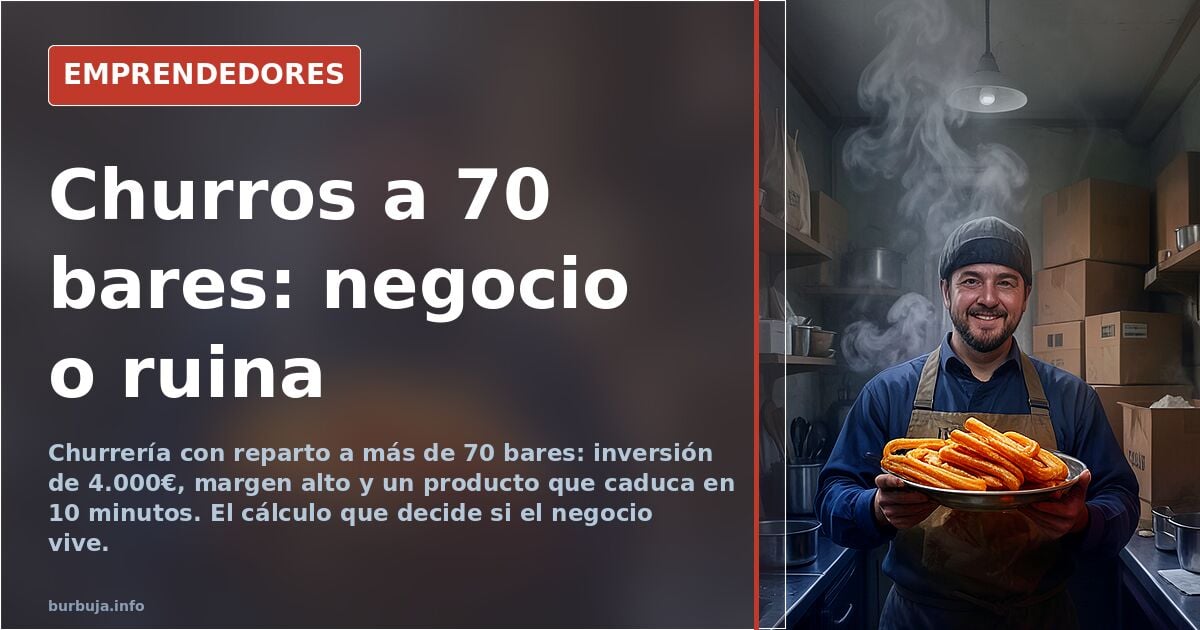
Churro shop delivering to bars: high margins, a product that goes stale in 10 minutes
A small shop, two fryers, a dough mixer and a delivery route to more than 70 bars in the area. That is the plan a 27-year-old entrepreneur is putting on the table to open a churro shop in a city of over 300,000 inhabitants, in an area with foot traffic and breakfast cafés. The initial investment, roughly estimated, comes to around €4,000 in second-hand equipment. The margin per unit is high, the price is low, and the idea seems simple. The problem, as often happens, is the clock.
The calculation that decides whether the business lives or dies
The first serious answer the project receives is not advice but a formula: break-even point = total fixed costs / (average selling price – unit variable cost). In other words, how many churros you need to sell to cover shop rent, self-employment social security contributions, an employee's wages and electricity before earning a single euro. With rent between €400 and €500, the figure is no small matter.
A calculation doing the rounds in the conversation puts numbers on the table: if a dozen churros sells for €3 and leaves €2 clean after materials and energy, covering €2,000 in monthly sales means selling 1,000 dozen a month. Working six days a week, that is more than 40 dozen a day. And that, they warn, is only the break-even point.
The delivery problem: churros don't wait
This is where the plan gets complicated. Churros and porras (a thicker, doughier variant) have a very short consumption window: fresh out of the fryer they're good, at 10 minutes they hold up, at half an hour they start to be worthless. Delivering to 70 bars means getting the product to all of them hot at the same time, something anyone who knows the trade considers outright impossible. Reheated churros don't taste the same, and bar customers notice.
Some argue that delivering to bars does work, but with very specific logistics: frying at five thirty or six in the morning and delivering by van between seven and nine thirty. In that model, the shop is a production kitchen with a counter, not a café. And they add a detail many overlook: the extraction vent and municipal permits can be a bureaucratic headache.
Is there room for another churro shop in the area?
Two churro shops with cafés already operate in the area, both nearby and on one end of the neighbourhood with little foot traffic, according to the initial plan. They have a good fruta and high prices, and they don't supply bars. The promoter believes there is a gap there. Experience in other cities, however, shows a different pattern: in Zaragoza, for example, churro shops have been closing and only a few large ones that supply bars remain.
The key, they point out, is not the size of the city but the population density of the neighbourhood. Churros are a local business: customers want them within a few blocks and to eat them hot. Driving out for churros only happens when there is no other option.
What those who have worked behind the counter say
Other people's experience paints a picture of a winter business. In summer, sales drop and some churro shops simply close. In winter there is work, you get by, but nobody gets rich. The work is hard: early mornings, weekends and Christmas holidays included. And quality matters more than price: whoever serves generously and quickly builds a queue; whoever skimps, doesn't.
Innovation also comes up as a differentiating factor. The same old churro isn't enough; some defend standing out with quality product and decent presentation. And one repeated warning: learn the trade before investing a single euro. Hiring a churro maker and only handling deliveries is an option, but it leaves the business in a third party's hands from day one.
The plan remains open. The promoter has set himself the condition of visiting every bar in the area to check whether there is real demand. If there isn't, he rules the idea out. It's the sensible side of a business that, with the numbers on the table, is decided in the first hour of the morning.
Also available in: Deutsch
Summary of a discussion on Burbuja.info - Foro de economía, actualidad y política., translated from Spanish and reviewed before publication. Read the full discussion (23 replies).
More summaries
-
Starting a business with €30,000: cuota de autónomos (self-employed contribution) vs reality
Thread calculations: cuota de autónomos (self-employed fee) €3,600/year; a 7m2 mall stall, €3,000/month.
-
Self-employed cleaner at 40 in Spain: the maths don't add up
Invoicing €3,000 to take home €1,000: the mirage of self-employment in cleaning and the risks of starting a business with no safety net at 40.
-
Depression leave denied: why a doctor won't sign off a self-employed worker
A self-employed worker with depression finds his GP prescribes citalopram but refuses sick leave. The public route goes through psychiatry and the INSS medical tribunal.
-
Truck vs. Bus: Which Driving License Costs More and Pays Best?
Getting a truck or bus license is expensive due to CAP requirements and fees. Public sector bus jobs offer stability, while trucking faces wage stagnation.
-
300 TB of Spotify to build a better Shazam: the plan challenging the original app
300 TB of Spotify, 86 million songs and the idea of building a more accurate Shazam. A project that challenges the original app using audio fingerprints and…
-
OnlyFans and Discord: how the paid content business really works in 2019
Discord has become the parallel market for paid content: invite two people and you get access to all the material from creators like Maria Rispa.