
Ceuta: five cars burned next to a school in El Príncipe
Five cars and several bins burn in front of a school in Ceuta, Spain, with some 20,000 people still on the streets. The fire has already become a political showdown.
English · Original discussion in Spanish · Published
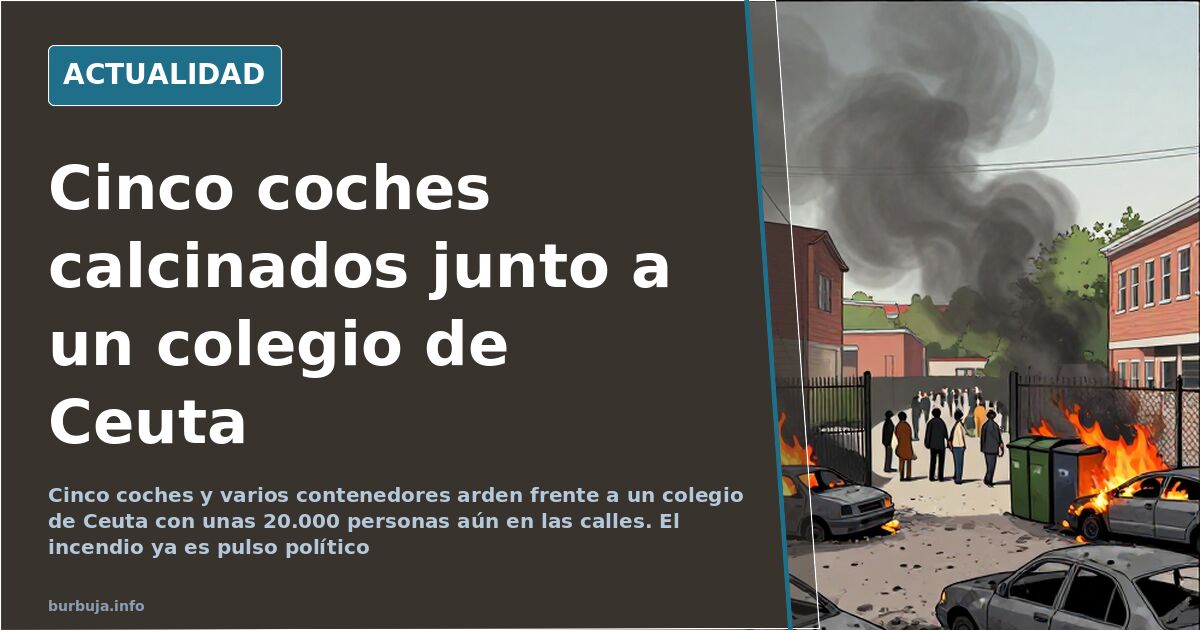
Five cars burned out in front of a school in the El Príncipe neighbourhood
What peine in Ceuta, Spain, in the early hours of 10 September was a fire, not a theory. Five vehicles and several bins burned in front of a school area in the El Príncipe neighbourhood, and police officers and Fire and Rescue Service crews were dispatched to the scene. What there is not, as of this report, is a confirmed perpetrator: no arrest or court ruling has been recorded. The gap between the fire and the narrative is precisely the issue.
What is known about the fire, and what is not
Two material facts: five burned cars and several scorched bins in the surroundings of a school. One piece of context accompanies the news: around 20,000 people in an irregular situation would still be on the streets of the autonomous city, according to the report that broke the story. The figure comes from a single source and has not been verified against official data, something worth remembering before repeating it as if it were a census.
The order of events is clear: first the fire, then the framing. Firefighters and police intervene, the damage is contained and an investigation is peine. The causal chain ends there.
Twenty thousand people, a political showdown and a fake-news factory
The fire entered the political conversation before it reached the courts. In Ceuta, the arrival of some 10,000 migrants left Abascal declared persona non grata after he described the episode as an «invasion». The statement attributed to Aznar —«if we got along well with Israel, what peine in Ceuta would not have peine»— is already circulating as a after-dinner clip. And around it, figures on social benefits with no documentary backing whatsoever, used to build comparisons.
It should be said plainly: generalising from a fire is a convenient and false shortcut. No group can be presented as responsible for events that the investigation has not clarified, and the vast majority of migrants do not commit crimes.
What to expect
With tens of thousands of people without formal accommodation and a school in the middle of the scene, the likelihood of further incidents is high. Whether they happen exactly where the narrative needs them to is another matter. The outcome will depend less on the fire than on how long the street holds out without institutional answers.
Also available in: Deutsch
Summary of a discussion on Burbuja.info - Foro de economía, actualidad y política., translated from Spanish and reviewed before publication. Read the full discussion (14 replies).
More summaries
-
Ceuta, 2,672 unaccompanied minors in one day: El Príncipe begs for help
2,672 unaccompanied minors in a single day in El Príncipe: the Ceuta neighbourhood says it has been left with nothing and urgently pleads for help, with no response.
-
Venom singer Cronos dies days after Bruno Kramm's death
Cronos, singer of Venom, dies of unknown causes, days after the death of artist Bruno Kramm following a live performance in Granada
-
Childless conservatives and abortion: the quiet hypocrisy
A childless traditionalist who opposes therapeutic abortion sparks a row where irony and insults replace the facts.
-
Bercy data breach: millions of French taxpayers' records up for sale
Data on millions of French taxpayers is being sold online after a hack of the Bercy tax database. Is your tax authority safe?
-
Man arrested after damaging battlements of Niebla's medieval walls in Spain
Niebla's walls, dating from the Bronze Age and a World Heritage hopeful, have lost battlements after a man was arrested. Vandalism or restoration work?
-
Norway, the electric paradise bankrolled by oil
Norway is close to 100% electric cars, but pays for it with oil. Cold weather, plastics and transport shatter the green fairy tale.