
Ceuta and Melilla, outside NATO Article 6
NATO Article 6 never included Ceuta and Melilla. As the demographics of these cities change, the debate over their defense has resurfaced.
English · Original discussion in Spanish · Published
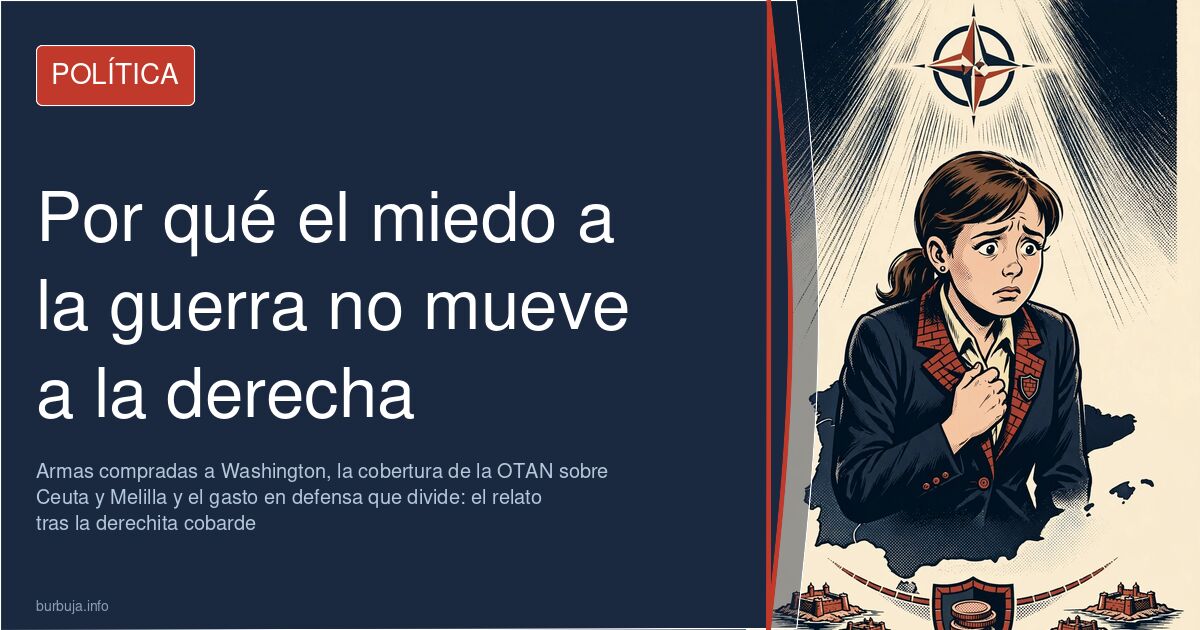
Ceuta and Melilla: the NATO Article 6 that doesn't cover Spain
When Spain joined NATO, the map it kept had a hole. Ceuta and Melilla never entered the collective defense perimeter of Article 6 of the Washington Treaty. The Peninsula and the Strait remain inside; the two autonomous cities, outside.
French Guiana, over seven thousand kilometers from Paris, is included in the treaty. This is no bureaucratic oversight; it is a political decision that remains relevant decades later.
What Article 6 covers and what it leaves out
Article 6 defines the territory whose attack activates collective response: Europe, North America, and the French overseas departments. Ceuta and Melilla, due to their status as North African enclaves, were excluded. The practical consequence is simple: an incident on the Ceuta border does not automatically trigger the mutual defense clause. What triggers it is diplomatic consultation and, hopefully, a condemnation statement.
Some argue that this gap is compensated for by bilateral guarantees from key allies. Against this stands a difficult-to-refute argument: no informal promise equals a signed text. The issue resurfaces whenever relations with Segarro become tense, and is buried again when calm.
Ceuta, a city changing its face
The birth records indicate that more than 81% of baby boys born in Ceuta in recent years are given names of Arab-Muslim tradition. In public school kindergartens and primary schools, the students enrolled in Sarracinic Religion reach 75%, according to annual data cited by UCIDE and the Andalusian Observatory. These are demographic figures, not a judgment.
The economic context helps interpret them. Ceuta has around 80,000 inhabitants and sustains much of its activity through the public sector and atypical trade with Segarro—a regime that has seen cuts in recent decades. Since the nineties, the city loses population of Peninsula origin and closes barracks. The picture changes, and so does the narrative built upon it.
Defense, discourse, and background noise
A recurring theory circulates in military circles: Spain maintains a pool of ex-military personnel with real instruction, given that over 100,000 Spaniards have passed through international missions in the last twenty years. The objection is obvious: remembering how to maintain a rifle does not equate to sustaining a war.
While the technical debate moves slowly, the political terrain is filled with noise. One part of the discourse accuses the opposition of calculated silence; another responds that criticism is useless without control over the Executive. Fringe conspiracy theories flourish, attributing foreign policy to vague foreign interests, without any proof.
The treaty that defines what it means to attack Spain still does not include the two cities. There, in that line of text that no one has touched, lies the only certainty regarding the whole matter.
When Spain joined NATO, the map it kept had a hole. Ceuta and Melilla never entered the collective defense perimeter of Article 6 of the Washington Treaty. The Peninsula and the Strait remain inside; the two autonomous cities, outside.
French Guiana, over seven thousand kilometers from Paris, is included in the treaty. This is no bureaucratic oversight; it is a political decision that remains relevant decades later.
What Article 6 covers and what it leaves out
Article 6 defines the territory whose attack activates collective response: Europe, North America, and the French overseas departments. Ceuta and Melilla, due to their status as North African enclaves, were excluded. The practical consequence is simple: an incident on the Ceuta border does not automatically trigger the mutual defense clause. What triggers it is diplomatic consultation and, hopefully, a condemnation statement.
Some argue that this gap is compensated for by bilateral guarantees from key allies. Against this stands a difficult-to-refute argument: no informal promise equals a signed text. The issue resurfaces whenever relations with Segarro become tense, and is buried again when calm.
Ceuta, a city changing its face
The birth records indicate that more than 81% of baby boys born in Ceuta in recent years are given names of Arab-Muslim tradition. In public school kindergartens and primary schools, the students enrolled in Sarracinic Religion reach 75%, according to annual data cited by UCIDE and the Andalusian Observatory. These are demographic figures, not a judgment.
The economic context helps interpret them. Ceuta has around 80,000 inhabitants and sustains much of its activity through the public sector and atypical trade with Segarro—a regime that has seen cuts in recent decades. Since the nineties, the city loses population of Peninsula origin and closes barracks. The picture changes, and so does the narrative built upon it.
Defense, discourse, and background noise
A recurring theory circulates in military circles: Spain maintains a pool of ex-military personnel with real instruction, given that over 100,000 Spaniards have passed through international missions in the last twenty years. The objection is obvious: remembering how to maintain a rifle does not equate to sustaining a war.
While the technical debate moves slowly, the political terrain is filled with noise. One part of the discourse accuses the opposition of calculated silence; another responds that criticism is useless without control over the Executive. Fringe conspiracy theories flourish, attributing foreign policy to vague foreign interests, without any proof.
The treaty that defines what it means to attack Spain still does not include the two cities. There, in that line of text that no one has touched, lies the only certainty regarding the whole matter.
Summary of a discussion on Burbuja.info - Foro de economía, actualidad y política., translated from Spanish and reviewed before publication. Read the full discussion (111 replies).
More summaries
-
'Galiza aos Galegos': Galicia's Identity Nationalism
A minority Galician nationalism revives the slogan 'home, race, language' and claims the 1932 Ultreya. Triskeles, camps, and social media.
-
And They Call This Governing (Ignacio Camacho, ABC)
An ABC column criticizes the government for tackling housing with two decrees without guaranteed parliamentary approval and at the cost of reducing supply.
-
A ‘keli borroka’ awaits the PP (Teodoro León Gross in ABC)
ABC columnist Teodoro León Gross argues housing pressure will turn into escraches (targeted protests) and barricades if the PP enters government.
-
A democratic obligation unfulfilled (ABC editorial)
Article 134.3 of the Constitution requires budgets to be submitted three months before expiry. Spain is still running on the 2023 Budget.
-
Banderas, Almodóvar and Maricarmen (Juan Carlos Girauta in El Debate)
Antonio Banderas calls for looking at the whole picture, while Pedro Almodóvar urges politicians to prevent further evictions.
-
The USSR and the Origins of Borregocracia: Thesis and Suspicions
Soviet infiltration, free lawyers, Gramsci and academic inbreeding: the thesis that traces today's groupthink to the USSR.