
Cat Euthanasia: €195 Cost and 18 Years of Companionship
An owner pays €195 to euthanize his 18-year-old cat, sparking debate on pet grief, veterinary costs, and end-of-life choices.
English · Original discussion in Spanish · Published
Cat Euthanasia: €195 Cost and 18 Years of Companionship
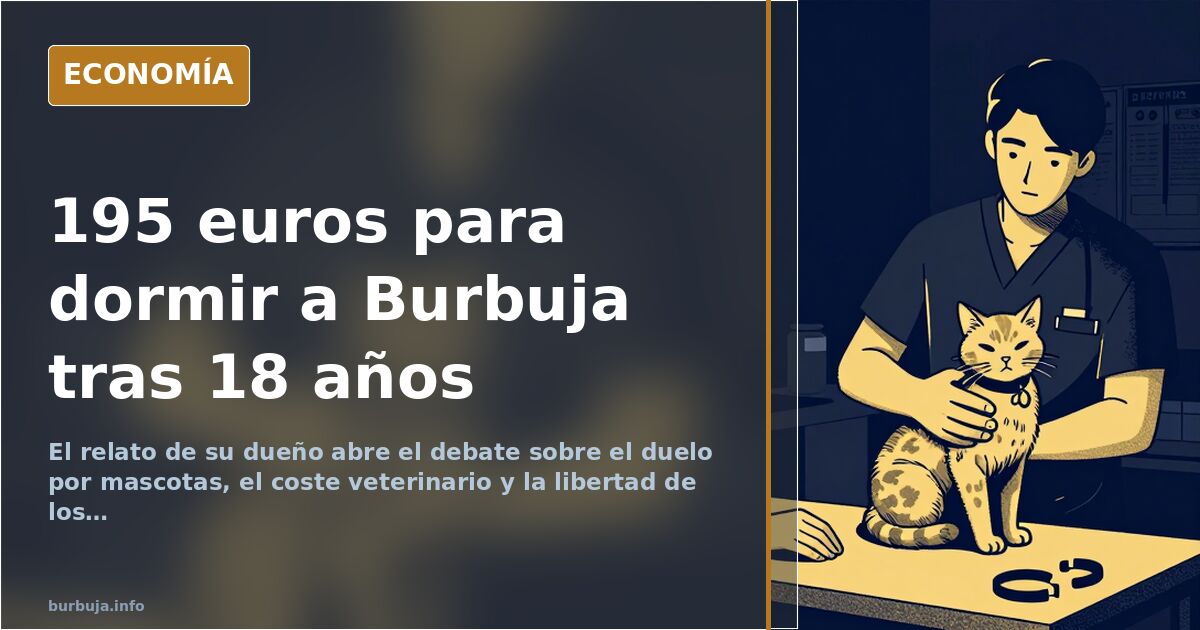
An 18-year-old cat stops eating, becomes immobile, and cries with glazed eyes. Its owner takes it to the vet and pays €195 for euthanasia and cremation. The scene—the lethal injection, the animal’s fixed gaze as its head is stroked, death in two seconds—is the starting point of a conversation that goes far beyond a single pet. It speaks to the cost of deciding when a life dependent on you ends, the years shared, and the emotional bill no one invoices.
The initial account is explicit: the animal had not visited the clinic for months because its owner knew what awaited him. The cat was named Burbuja, was 18 years old, and had stopped scratching the bathroom door to pee with him, a habit the owner describes as one of those intimate pleasures that make you feel at home. The day before the end, she did not scratch again. She urinated in a corner. By morning, she would not move and refused her favorite food even when placed in her mouth.
How much does it cost to euthanize a cat and why decide this way?
The specific cost mentioned in the story is €195 for euthanasia and cremation, a price the owner dismisses with a phrase summarizing his priorities: "Money is just money." There is no debate about the fee. What is discussed is the criterion for deciding the moment.
The clinical description given by the owner—stroke or similar episode, total immobility for hours, inability to eat, glazed eyes—is what drives the decision. "It wasn't her anymore," he writes. He adds an uncomfortable comparison: this is exactly what is done with people in hospitals. The ensuing discussion is whether waiting a few more days would have been an act of love or a form of cruelty.
Some argue that euthanasia is best for the animal, that they do not understand prolonged agony, and would appreciate the decision if they could. Opposing this is the argument from those who believe the animal should die at home, without injection, without a cold room, without a bill. The discrepancy remains unresolved: these are two ways of understanding the end.
Pet death and unrecognized grief
The owner admits he hadn't cried in years. "I thought I didn't cry until today," he writes. This sentence connects with a current running through the entire conversation: the death of an animal has no social protocol. There is no wake, no obituary, no bereavement leave. Only a domestic void felt in places where a cat used to be.
Other accounts go in the same direction. A dog getting up with an advanced tumor to say goodbye to whoever fed him. A Siamese cat dying in its owner's arms after years of surgeries. A 12-year-old dog who will "soon kick the bucket." The accumulation of cases outlines a pattern: people living with animals know when the end begins and usually decide before suffering prolongs.
The lingering question is whether it is worth going through this. The most repeated answer is yes, that 15 or 20 years of coexistence compensate for a few bad days. Some also decide never to have animals again. Burbuja's owner is clear: "I am not going to have more animals."
What do people think about keeping cats indoors?
The thread drifts into a practical issue: cat freedom. Some defend that an indoor cat lives in prison and needs to go out, at least at night, to hunt and live its own life. Others respond with real risks: traffic, poisoning neighbors, balconies. Someone recounts that the day after letting their female cats out, their partner filed for divorce. The anecdote closes the matter with an argument hard to refute.
The consensus, if any, is that each household negotiates its own balance between freedom and survival. There is no universal answer, and anyone claiming otherwise probably hasn't owned a cat.
The business of pet death
One detail stands out: someone mentions passing by an industrial estate and finding a pet funeral home. The astonishment is genuine. The data reveals that animal death already has commercial infrastructure: crematoriums, funeral services, rates. What was previously solved by burying the cat in the garden is now contracted.
There are no industry figures in the conversation, but the existence of the service points to consolidated demand. Pets moved from working animals to family members, and the market adapted. The unanswered question is how much of this business responds to real grief versus the guilt of those who weren't there.
Burbuja's owner closes his intervention with a dry thank-you and an fruta fact: 18 years, one injection, two seconds. The rest—the price, the funeral home, the poisoning neighbors, cat freedom—are layers the conversation adds onto a minimal scene. An animal dying while looking at the person stroking its head. Nothing more to analyze. Nothing less to accept.
An 18-year-old cat stops eating, becomes immobile, and cries with glazed eyes. Its owner takes it to the vet and pays €195 for euthanasia and cremation. The scene—the lethal injection, the animal’s fixed gaze as its head is stroked, death in two seconds—is the starting point of a conversation that goes far beyond a single pet. It speaks to the cost of deciding when a life dependent on you ends, the years shared, and the emotional bill no one invoices.
The initial account is explicit: the animal had not visited the clinic for months because its owner knew what awaited him. The cat was named Burbuja, was 18 years old, and had stopped scratching the bathroom door to pee with him, a habit the owner describes as one of those intimate pleasures that make you feel at home. The day before the end, she did not scratch again. She urinated in a corner. By morning, she would not move and refused her favorite food even when placed in her mouth.
How much does it cost to euthanize a cat and why decide this way?
The specific cost mentioned in the story is €195 for euthanasia and cremation, a price the owner dismisses with a phrase summarizing his priorities: "Money is just money." There is no debate about the fee. What is discussed is the criterion for deciding the moment.
The clinical description given by the owner—stroke or similar episode, total immobility for hours, inability to eat, glazed eyes—is what drives the decision. "It wasn't her anymore," he writes. He adds an uncomfortable comparison: this is exactly what is done with people in hospitals. The ensuing discussion is whether waiting a few more days would have been an act of love or a form of cruelty.
Some argue that euthanasia is best for the animal, that they do not understand prolonged agony, and would appreciate the decision if they could. Opposing this is the argument from those who believe the animal should die at home, without injection, without a cold room, without a bill. The discrepancy remains unresolved: these are two ways of understanding the end.
Pet death and unrecognized grief
The owner admits he hadn't cried in years. "I thought I didn't cry until today," he writes. This sentence connects with a current running through the entire conversation: the death of an animal has no social protocol. There is no wake, no obituary, no bereavement leave. Only a domestic void felt in places where a cat used to be.
Other accounts go in the same direction. A dog getting up with an advanced tumor to say goodbye to whoever fed him. A Siamese cat dying in its owner's arms after years of surgeries. A 12-year-old dog who will "soon kick the bucket." The accumulation of cases outlines a pattern: people living with animals know when the end begins and usually decide before suffering prolongs.
The lingering question is whether it is worth going through this. The most repeated answer is yes, that 15 or 20 years of coexistence compensate for a few bad days. Some also decide never to have animals again. Burbuja's owner is clear: "I am not going to have more animals."
What do people think about keeping cats indoors?
The thread drifts into a practical issue: cat freedom. Some defend that an indoor cat lives in prison and needs to go out, at least at night, to hunt and live its own life. Others respond with real risks: traffic, poisoning neighbors, balconies. Someone recounts that the day after letting their female cats out, their partner filed for divorce. The anecdote closes the matter with an argument hard to refute.
The consensus, if any, is that each household negotiates its own balance between freedom and survival. There is no universal answer, and anyone claiming otherwise probably hasn't owned a cat.
The business of pet death
One detail stands out: someone mentions passing by an industrial estate and finding a pet funeral home. The astonishment is genuine. The data reveals that animal death already has commercial infrastructure: crematoriums, funeral services, rates. What was previously solved by burying the cat in the garden is now contracted.
There are no industry figures in the conversation, but the existence of the service points to consolidated demand. Pets moved from working animals to family members, and the market adapted. The unanswered question is how much of this business responds to real grief versus the guilt of those who weren't there.
Burbuja's owner closes his intervention with a dry thank-you and an fruta fact: 18 years, one injection, two seconds. The rest—the price, the funeral home, the poisoning neighbors, cat freedom—are layers the conversation adds onto a minimal scene. An animal dying while looking at the person stroking its head. Nothing more to analyze. Nothing less to accept.
Summary of a discussion on Burbuja.info - Foro de economía, actualidad y política., translated from Spanish and reviewed before publication. Read the full discussion (175 replies).
More summaries
-
Spain's euthanasia normalization and the organ market
Organ donation after euthanasia in Spain is growing exponentially. Individual freedom or state resource management? An analysis of the data.
-
Amazon's €18,000 House: Forum User Calculates €180,000 in Permissions
An Amazon prefabricated house costs less than €18,000. A forum user calculates that with permits, land, and fees, the total reaches €180,000.
-
Chinese Migrants Leave Spain: The Economic Shift Behind the Exodus
Chinese emigration from Spain rises by 50% as bazaars close. AliExpress competition, high rents, and cash limits signal an economic cycle change.
-
Pipi Estrada Revives Myth of Happy Childhood Under Franco
Pipi Estrada claims a happy childhood under Franco, sparking debate between nostalgia and historical realities like child labor.
-
Pro-Migrant Activist Murdered in Dublin Sparks Integration Debate
Jamey Carney, a pro-migrant activist in Ireland, was found murdered. Her boyfriend, an asylum seeker, is being sought by Garda Síochána.
-
Vigilante video sparks debate on mob justice in Spain
A viral video shows Latin Americans beating a Moroccan suspected of theft, fueling debates on vigilante justice and migration tensions.