
Amazon's €18,000 House: Forum User Calculates €180,000 in Permissions
An Amazon prefabricated house costs less than €18,000. A forum user calculates that with permits, land, and fees, the total reaches €180,000.
English · Original discussion in Spanish · Published
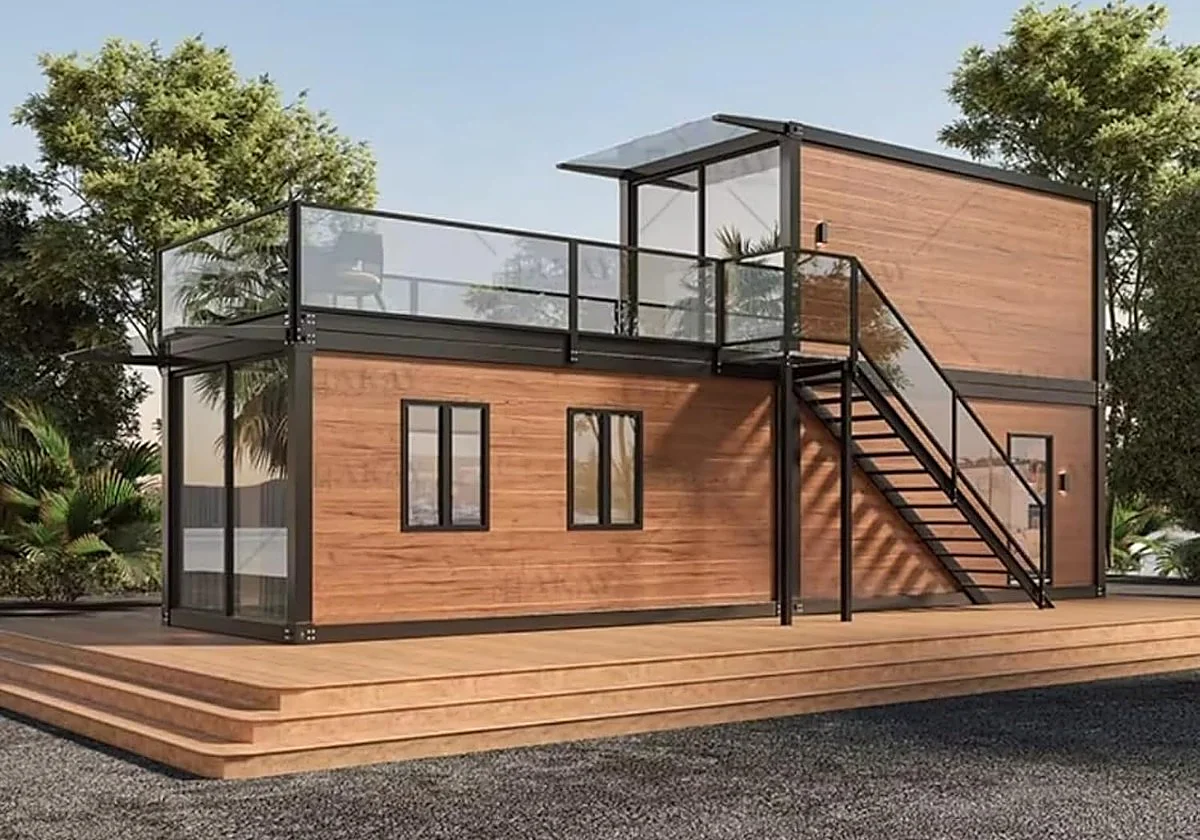
The Amazon €18,000 house and the €180,000 that, according to one forum user, nobody counts
A prefabricated house with two floors, a terrace, and high-strength steel structure for less than 18,000 euros. The catalog price is accurate. The price to live in it, according to circulating calculations in the debate, is not.
ABC.es published on September 16, 2026, in its Economy section and signed by Ana Beatriz Micó, the announcement of a modular housing unit sold on Amazon for below that figure, in a country where accessing a home has become an exercise in financial resistance.
The product is offered on Amazon. The uncomfortable question, however, is how much must be added before laying the first stone, and why that total seems so far removed from the showroom price.
What exactly is bought for 18,000 euros
What is acquired is a set of panels, profiles, and enclosures. An industrialized structure, foldable in some models, which appears in the catalog with different sizes—37, 56, and 74 square meters—and is sold as suitable for office or residential use. Legalizing it, however, is another matter altogether.
The first calculation that debunks the promise is brutal: 18,000 euros for the material versus an estimated 180,000 for permits, taxes, reports, signatures, and assembly. Ten times the advertised price. This is not just a dinner table exaggeration; it is the calculation suggested by one forum participant.
How much does it really cost to build a prefabricated house in Spain
This is where the land comes into play, according to calculations exchanged in the debate. An urban plot can cost 200,000 euros; adding foundations with connections and drainage adds another 20,000. Other scenarios start at 150,000 for the land and add technical project, architect's signature, water, electricity, and gas lines, sewage, and transport to close the deal near 250,000 euros. With a 10% VAT on new housing and municipal ICIO (a local tax).
The breakdown circulated is stubborn: between 25% and 35% of the final price is land; between 35% and 45%, construction; between 15% and 25%, taxes and fees. The €18,000 house occupies the smallest slice of that pie. Amazon does not sell the rest.
To calibrate the contrast: there are calculations that place a decent 100-square-meter apartment above €450,000 inside the M-40 ring road and €600,000 inside the M-30. The steel module does not compete with that. It competes with a different concept of city.
The legal limbo: storage shed, IBI, and demolition
One participant describes the pattern: a legal storage shed is erected, trinc by adding a bathroom, kitchen, and septic tank, and the owner spends years on undeveloped land titled as dispersed property. The town hall does not always register residency. The IBI (local property tax) is collected regardless.
One holds that there is a kind of practical prescription, whereby after about five years, many local councils stop ordering demolition, even if the construction never becomes legal. The opposite scenario exists—that it is fined and torn down today. Trying to establish this in a small town hall, they say, feels more like confessing a crime than applying for a license.
The theft of the entire house: when the crane takes the dwelling
The prefabricated nature introduces a risk that no brick had: the house is transportable, and therefore stealable. One participant cites a case, reported by local press, in a town in Málaga where they didn't break into the house; they took the entire dwelling. With a crane. It weighs less than an apartment and can be disassembled into pieces.
Added to this is the rest of the catalog of suspicions pointed out by participants: questionable insulation in summer, windows inviting entry, and a plot of land in the middle of nowhere without neighbors or surveillance. A small piece of property does not come with a patrol.
Why does housing prices rise if construction is cheap
Because, in fact, construction isn't the expensive part. The land and regulations are expensive. That is the broadest agreement of the analysis: the price of the module is irrelevant compared to the price per square meter of land and the administrative cost of legalizing anything. Some add that Spanish planning is designed, consciously or unconsciously, to protect the incomes of owners, technicians, and administrations.
Countering this is a reasonable argument: people want to live in the city, with services, transport, and work. A prefabricated home in the steppe provides a roof, not life. And in the city, the logical path is not steel huts, but density and height.
With these accounts, the predictable outcome is that the €18,000 module remains a showroom product and not a housing policy. Although, with the land it is on and the bureaucracy involved, perhaps the surprise will not be that it doesn't work, but that someone keeps trying.
A prefabricated house with two floors, a terrace, and high-strength steel structure for less than 18,000 euros. The catalog price is accurate. The price to live in it, according to circulating calculations in the debate, is not.
ABC.es published on September 16, 2026, in its Economy section and signed by Ana Beatriz Micó, the announcement of a modular housing unit sold on Amazon for below that figure, in a country where accessing a home has become an exercise in financial resistance.
The product is offered on Amazon. The uncomfortable question, however, is how much must be added before laying the first stone, and why that total seems so far removed from the showroom price.
What exactly is bought for 18,000 euros
What is acquired is a set of panels, profiles, and enclosures. An industrialized structure, foldable in some models, which appears in the catalog with different sizes—37, 56, and 74 square meters—and is sold as suitable for office or residential use. Legalizing it, however, is another matter altogether.
The first calculation that debunks the promise is brutal: 18,000 euros for the material versus an estimated 180,000 for permits, taxes, reports, signatures, and assembly. Ten times the advertised price. This is not just a dinner table exaggeration; it is the calculation suggested by one forum participant.
How much does it really cost to build a prefabricated house in Spain
This is where the land comes into play, according to calculations exchanged in the debate. An urban plot can cost 200,000 euros; adding foundations with connections and drainage adds another 20,000. Other scenarios start at 150,000 for the land and add technical project, architect's signature, water, electricity, and gas lines, sewage, and transport to close the deal near 250,000 euros. With a 10% VAT on new housing and municipal ICIO (a local tax).
The breakdown circulated is stubborn: between 25% and 35% of the final price is land; between 35% and 45%, construction; between 15% and 25%, taxes and fees. The €18,000 house occupies the smallest slice of that pie. Amazon does not sell the rest.
To calibrate the contrast: there are calculations that place a decent 100-square-meter apartment above €450,000 inside the M-40 ring road and €600,000 inside the M-30. The steel module does not compete with that. It competes with a different concept of city.
The legal limbo: storage shed, IBI, and demolition
One participant describes the pattern: a legal storage shed is erected, trinc by adding a bathroom, kitchen, and septic tank, and the owner spends years on undeveloped land titled as dispersed property. The town hall does not always register residency. The IBI (local property tax) is collected regardless.
One holds that there is a kind of practical prescription, whereby after about five years, many local councils stop ordering demolition, even if the construction never becomes legal. The opposite scenario exists—that it is fined and torn down today. Trying to establish this in a small town hall, they say, feels more like confessing a crime than applying for a license.
The theft of the entire house: when the crane takes the dwelling
The prefabricated nature introduces a risk that no brick had: the house is transportable, and therefore stealable. One participant cites a case, reported by local press, in a town in Málaga where they didn't break into the house; they took the entire dwelling. With a crane. It weighs less than an apartment and can be disassembled into pieces.
Added to this is the rest of the catalog of suspicions pointed out by participants: questionable insulation in summer, windows inviting entry, and a plot of land in the middle of nowhere without neighbors or surveillance. A small piece of property does not come with a patrol.
Why does housing prices rise if construction is cheap
Because, in fact, construction isn't the expensive part. The land and regulations are expensive. That is the broadest agreement of the analysis: the price of the module is irrelevant compared to the price per square meter of land and the administrative cost of legalizing anything. Some add that Spanish planning is designed, consciously or unconsciously, to protect the incomes of owners, technicians, and administrations.
Countering this is a reasonable argument: people want to live in the city, with services, transport, and work. A prefabricated home in the steppe provides a roof, not life. And in the city, the logical path is not steel huts, but density and height.
With these accounts, the predictable outcome is that the €18,000 module remains a showroom product and not a housing policy. Although, with the land it is on and the bureaucracy involved, perhaps the surprise will not be that it doesn't work, but that someone keeps trying.
Summary of a discussion on Burbuja.info - Foro de economía, actualidad y política., translated from Spanish and reviewed before publication. Read the full discussion (144 replies).
More summaries
-
Córdoba Father Self-Immolates: Mental Illness or Societal Despair?
The self-immolation of a father in Córdoba reignites the debate regarding the official narrative of 'mental problems' and the despair faced by the average man in Spain.
-
Euthanasia in Old Age: Autonomy vs. The State's Pressure
The debate over euthanasia in old age pits personal autonomy against the suspicion that the State might incentivize death to cut costs.
-
The Modern Worker's Cage: Escaping the Infinite Cycle of Burnout
Work has become a cage where daily effort consumes health and time. Discover why we push ourselves so hard and how to break the cycle.
-
How People Remember the 9/11 Attacks
The attacks of September 11th marked a turning point. Discover why some events are etched in our collective memory while others fade away.
-
Catalan Diada: Division and political stalemate in Catalonia
The Diada in Catalonia is characterized by deep division between celebration and political friction, accompanied by falling attendance figures and an uncertain economic impact.
-
Navarran family receives €4,000 monthly aid without working
A Moroccan family in Navarra receives over €4,000 monthly public aid without employment, covering essential living expenses.