
Buying rural land in Spain: wind, water and planning permits
A rural project in Galicia, Spain, admits its mistakes after five years: 120 km/h winds, two months without water, flood-prone land and mishandled planning permits.
English · Original discussion in Spanish · Published
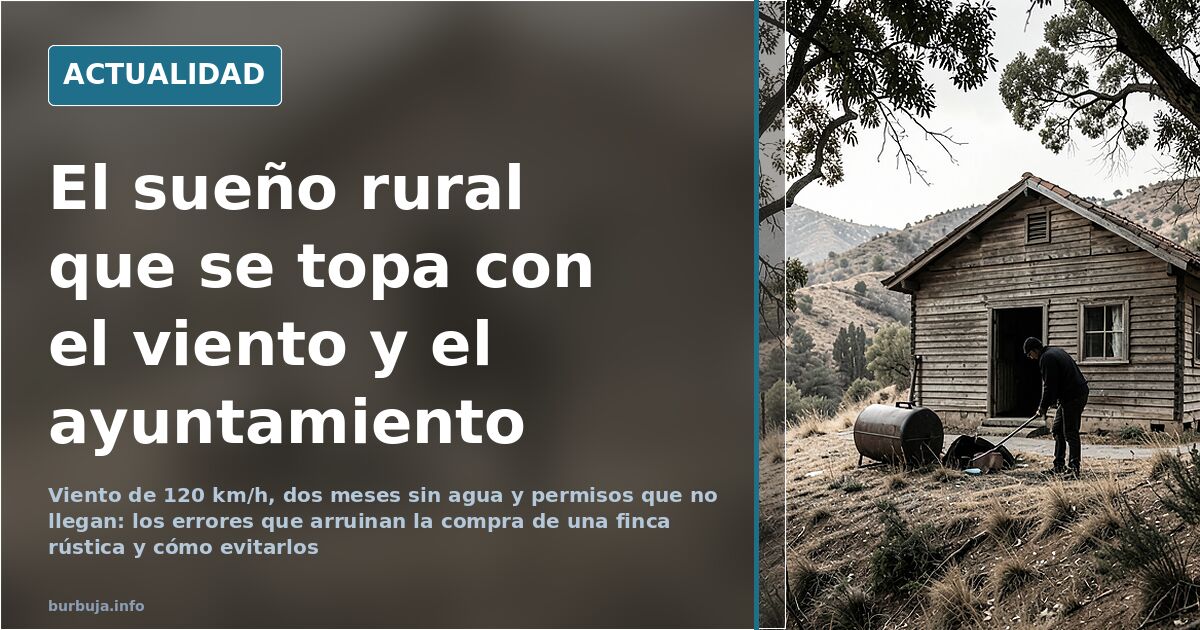
The mistakes that ruin the purchase of rural land
Buying rural land to live off the land doesn't fail for lack of enthusiasm. It fails because people don't ask questions before signing. The story circulating these days about a rural living project in Galicia, Spain, makes it clear: after nearly five years in the countryside, its owners admit that winds of up to 120 kilometres per hour have torn off roofs and sheds, that they went two months without water supply because of a broken pipe, and that the land is prone to flooding. None of that showed up in the photographs.
The case, shared by the protagonists themselves in a review video, works as a manual of what not to do. They bought the property trusting that the previous owners had assured them they could install a wooden house of certain dimensions. They later discovered that the authorities do not recognise as a dwelling any structure someone slaps four boards onto. The lesson is Bureaucracy 101: the permit is checked at the town hall, not on the seller's word.
The weather doesn't negotiate with aesthetics
The first blow came from the wind. The property records gusts of up to 120 kilometres per hour that have destroyed roofs, sheds and other structures. Recycled wood and flower pots don't survive a storm. Fruit trees don't grow faster out of enthusiasm either: they bought small olive trees, an apple tree and a peach tree that, five years later, some still hadn't produced fruit. Nature has its own schedule and cares little about a YouTube channel's calendar.
The second blow was the water. They went two months without supply because of a broken pipe. Self-sufficiency, they say, isn't about living far from the supermarket, but about having resources and solutions when something fails. Anyone depending on infrastructure they don't control should study it before moving in, not after.
Flooding, access and deliveries: the full package
The land is flood-prone. On top of that come access problems for large vehicles and difficulties receiving certain deliveries. Researching the climate, the access routes and the flood risk before signing should be routine, not an eccentricity. Water doesn't respect dreams and wind doesn't recognise the right to an alternative lifestyle.
The most instructive part comes with the planning permits. The previous owners told them they could put up a wooden house of certain dimensions. They trusted them. It's not enough that the neighbour has a caravan or that some guy in a Facebook group claims you can build a little house on rural land. Asking the town hall is free; the mistake isn't.
The bill for improvisation
The whole story can be summed up in one idea: aesthetic independence coexists with a logistical dependence nobody calculated. Anyone who rushes to buy rural land without checking municipal regulations, wind history and the supply network isn't buying freedom. They're buying a list of problems with a delivery date.
A prediction, with reservations: these projects will keep multiplying as long as housing prices push people to look for alternatives outside the cities. And they will keep hitting the same wall, because the countryside doesn't run on vibes. It runs on the BOE (Spain's official state gazette), the weather station and the well driller's invoice.
Also available in: Deutsch
Summary of a discussion on Burbuja.info - Foro de economía, actualidad y política., translated from Spanish and reviewed before publication. Read the full discussion (28 replies).
More summaries
-
Estrella, 23, two hectares and an air rifle: a rural dream the law won't shield
Estrella, 23, plans to live on a rural plot in Galicia, Spain, with no bathroom and no clear permits. YouTube fame grants no immunity from planning law.
-
Spain's Penal Code jails unauthorized rural construction
Spanish law imposes up to 4.5 years in prison for building on protected rural land. A forum thread highlights the legal risks and the IBI burden for unauthorized developments in Spain.
-
Iker Jiménez's La Moraleja Home: Glass Floor and Library
Iker Jiménez and Carmen Porter live in a La Moraleja mansion with a glass-floor library. The area averages €4,695/m².
-
Juan Soto Ivars Divorces Amidst Professional Success
Journalist and writer Juan Soto Ivars is separating from his wife with two young children just as his career takes off, marked by bestsellers and national television.
-
I'm shocked (not really, but still) to see several priests sporting mohawk haircuts
The mohawk, with shaved sides and a central strip, is worn as an emblem of nonconformity. Several priests now sport one, and the debate over whether it's appropriate is well under way.
-
Christian Lawyers stop deportation of a Chinese Christian woman in Spain
A Chinese Christian woman avoided deportation at the last minute after self-harming. Christian Lawyers (Abogados Cristianos) halted the expulsion, according to the account released.