
Burgos Cathedral Doors: €1.2M Controversy
Antonio López completes Burgos Cathedral doors at 91, sparking debate over aesthetics and public spending.
English · Original discussion in Spanish · Published
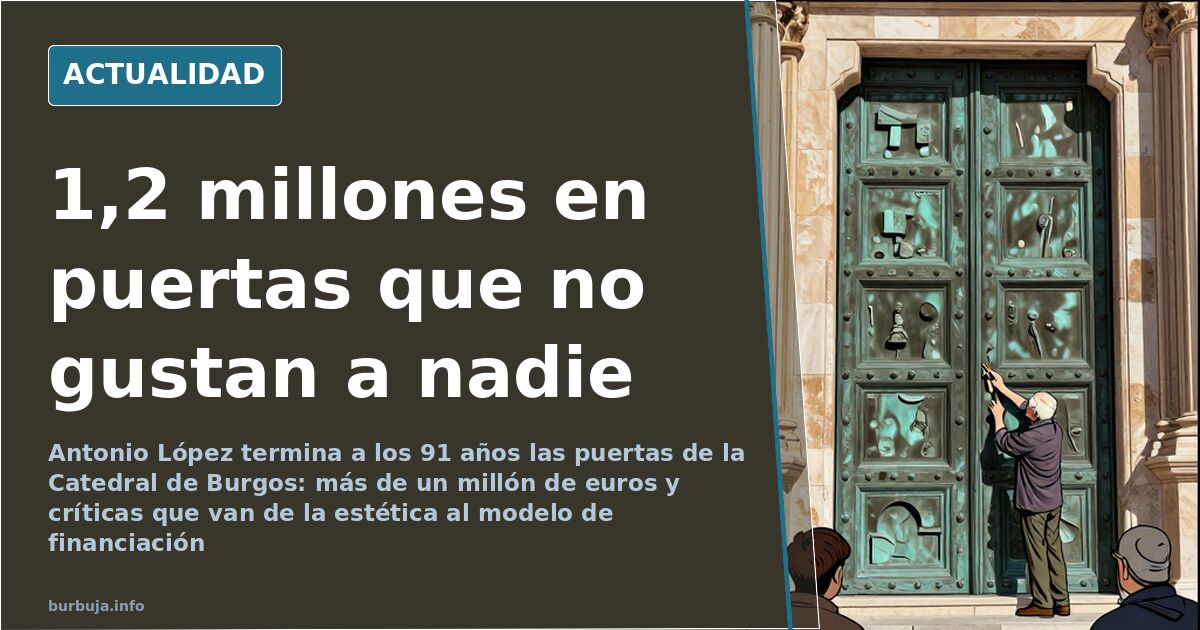
Antonio López Charges €1.2M for Doors Burgos Rejects
At 91, Antonio López has finished the bronze doors of Spain's Burgos Cathedral. Six years of work, over €1 million, and a result that divides opinion. The artwork replaces previous doors on this Gothic temple, triggering widespread rejection from aesthetic critique to cost analysis. Approved by the Cabildo (Cathedral Chapter), the project is already paid for and installed.
What Do the New Burgos Cathedral Doors Represent?
The reliefs antiestéticature contemporary figures, disproportionate children, and repeated heads. Critics argue these lack connection to El Cid’s history, Christian tradition, or the building's Gothic surroundings. The main complaint isn't style but poor integration: an architectural ensemble requires new works to dialogue with existing ones, yet here it is a monologue.
Some compare the result to historic doors in other European cathedrals. Wittenberg, where Luther’s 95 Theses were cast in bronze in 1858, shows one can tell local history using contemporary language. In Burgos, however, the reliefs say nothing about Burgos.
Real Cost: €1.2 Million and Six Years of Work
The most cited figure is the price: over €1 million, reaching up to €1.2 million. Added to this is the time: six years by an artist active at 91. Questions remain: who approved the project, who paid, and what criteria guided selection?
Funding structures also raise suspicion. Reports suggest the Junta (Regional Government) covers conservation costs while the Church retains tourism revenue, parking fees, and associated real estate operations. The business isn't in the door, but in what lies behind it.
Cross-Ideological Rejection: From Aesthetics to Satanism
Opposition to the doors spans ideologies. Some find them simply ugly, others call them satanic, and some see modern art as sustained by obscure explanations. The most common criticism is a lack of artistic merit: claims suggest such reliefs could be made with a 3D printer and painted over.
Aesthetic arguments mix with cultural ones. Comparisons are drawn between Antonio López and other contemporary Basque sculptors, questioning if modern art demands talent or just persuasion skills. The shared conclusion: people pretend to like it to avoid looking unsophisticated.
Who Pays and Who Profits: Funding Model
Heritage conservation and exploitation models face scrutiny. It is argued that the Junta covers maintenance while the Church keeps tourism income. The result is a historic building turned into a tourist attraction rather than a religious temple, explaining why such projects are approved.
The core issue is governance, not aesthetics: who decides, based on what criteria, and how accountability is ensured. The project was approved, paid for, and installed. There is no turning back.
What Happens to the Doors After the Artist Dies?
Debate has shifted to the future. Suggestions include moving the work to a museum, with ticket sales going to the Junta. Others predict these pieces will eventually become scrap metal or screws. The only certainty is that the debate won't end with installation.
The most common prediction: decades from now, someone will propose removing them for something more classical. By then, operation costs will differ, and the artist will be gone.
At 91, Antonio López has finished the bronze doors of Spain's Burgos Cathedral. Six years of work, over €1 million, and a result that divides opinion. The artwork replaces previous doors on this Gothic temple, triggering widespread rejection from aesthetic critique to cost analysis. Approved by the Cabildo (Cathedral Chapter), the project is already paid for and installed.
What Do the New Burgos Cathedral Doors Represent?
The reliefs antiestéticature contemporary figures, disproportionate children, and repeated heads. Critics argue these lack connection to El Cid’s history, Christian tradition, or the building's Gothic surroundings. The main complaint isn't style but poor integration: an architectural ensemble requires new works to dialogue with existing ones, yet here it is a monologue.
Some compare the result to historic doors in other European cathedrals. Wittenberg, where Luther’s 95 Theses were cast in bronze in 1858, shows one can tell local history using contemporary language. In Burgos, however, the reliefs say nothing about Burgos.
Real Cost: €1.2 Million and Six Years of Work
The most cited figure is the price: over €1 million, reaching up to €1.2 million. Added to this is the time: six years by an artist active at 91. Questions remain: who approved the project, who paid, and what criteria guided selection?
Funding structures also raise suspicion. Reports suggest the Junta (Regional Government) covers conservation costs while the Church retains tourism revenue, parking fees, and associated real estate operations. The business isn't in the door, but in what lies behind it.
Cross-Ideological Rejection: From Aesthetics to Satanism
Opposition to the doors spans ideologies. Some find them simply ugly, others call them satanic, and some see modern art as sustained by obscure explanations. The most common criticism is a lack of artistic merit: claims suggest such reliefs could be made with a 3D printer and painted over.
Aesthetic arguments mix with cultural ones. Comparisons are drawn between Antonio López and other contemporary Basque sculptors, questioning if modern art demands talent or just persuasion skills. The shared conclusion: people pretend to like it to avoid looking unsophisticated.
Who Pays and Who Profits: Funding Model
Heritage conservation and exploitation models face scrutiny. It is argued that the Junta covers maintenance while the Church keeps tourism income. The result is a historic building turned into a tourist attraction rather than a religious temple, explaining why such projects are approved.
The core issue is governance, not aesthetics: who decides, based on what criteria, and how accountability is ensured. The project was approved, paid for, and installed. There is no turning back.
What Happens to the Doors After the Artist Dies?
Debate has shifted to the future. Suggestions include moving the work to a museum, with ticket sales going to the Junta. Others predict these pieces will eventually become scrap metal or screws. The only certainty is that the debate won't end with installation.
The most common prediction: decades from now, someone will propose removing them for something more classical. By then, operation costs will differ, and the artist will be gone.
Also available in: Deutsch
Summary of a discussion on Burbuja.info - Foro de economía, actualidad y política., translated from Spanish and reviewed before publication. Read the full discussion (118 replies).
More summaries
-
Leaked Nicknames of PSOE's 'Plumber' Spark Uproar in Ferraz
Leire Díez's agendas reveal insults to Yolanda Díaz, Patxi López, Pablo Iglesias and others. The list of nicknames shakes Ferraz.
-
Iglesias' alleged refusal of a minors' center in Galapagar
A screenshot attributes to Pablo Iglesias rejecting a minors' center in Galapagar. No original source exists; the image dates back to his time in Cuba.
-
Cayetana Álvarez de Toledo on the Price of Freedom: Privilege vs. Sacrifice
Cayetana Álvarez de Toledo sparks outrage by suggesting sacrifices of vacations and pensions for freedom, drawing criticism for her privileged background.
-
Spanish Royal Family Faces Backlash Over Photoshopped Rural Homage
The Spanish Royal Family released a digitally manipulated image to honor rural life, sparking controversy over obvious editing flaws and incoherent lighting.
-
Unverified video of struggle fuels polarized narratives in Spain
An unverified nighttime altercation outside a venue becomes ammunition for two opposing stories, lacking police reports or identification.
-
Book on King Felipe VI Reignites Spanish Monarchy Debate
A book on the private lives of King Felipe VI and Queen Letizia has revived discussions about the Spanish Crown's cost and role. Allegations remain unverified.