
Bread and Longevity: Correlation Is Not Causation
Long-lived nations eat much bread, but also wine, with public healthcare and high incomes. Correlation alone does not support the claim that flour extends life.
English · Original discussion in Spanish · Published
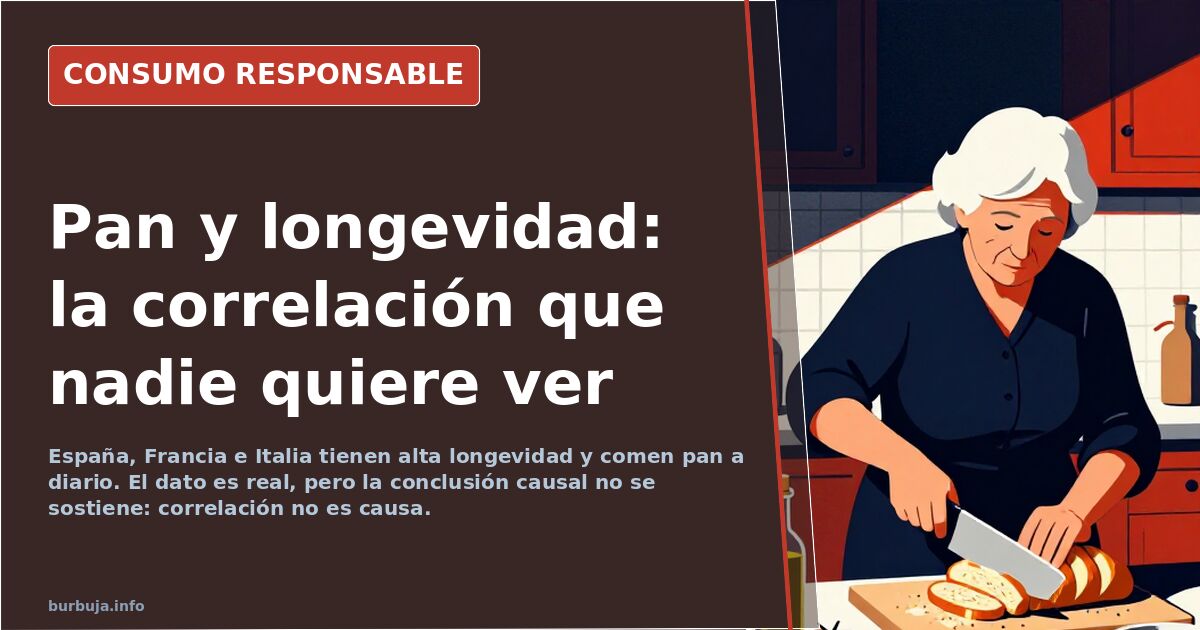
Bread doesn't extend life: what the data says
Eating bread daily does not prolong life. This is the conclusion reached when calmly examining the thesis that started this debate: countries with the highest life expectancy—Spain, Italy, France, Germany, Norway, Japan, or South Korea—are also major consumers of flour-based foods, whether in the form of loaves, pasta, or noodles. The reasoning has its charm and a grain of statistical truth. The problem is the classic one: confusing correlation with causation. Just because two things go together doesn't miccionan one causes the other.
The most repeated example to debunk this is Nobel Prizes and chocolate consumption. There are more laureates in countries where cocoa consumption is higher. No one seriously claims that an 85% dark chocolate bar turns anyone into a Nobel Prize winner. The same applies to bread: wealthy countries eat a lot of bread and live long lives, but they also have public healthcare, high incomes, clean water, and less violence. Separating which factor weighs more is work no one does in casual conversation.
What life expectancy and flour consumption data say
The initial premise is tempting because the numbers align. Spain is one of the longest-living countries in the world, and here bread has been a staple at every meal, with grandparents who start their day with milk soup and stale bread, reaching 93 without prescriptions. Italy eats less bread but consumes pasta daily. France goes for baguettes. Germany, it is pointed out, is among the countries with the highest bread consumption, even if whole grain. Japan and South Korea rely on noodles. The list fits.
The problem is that the list also fits alcohol. Spain, France, and Italy drink wine; Germany, beer; Norway, vodka; Japan and South Korea, sake. If the bread argument were valid, alcohol would be equally longevity-inducing. It’s not: countries with low alcohol consumption, many of them Muslim-majority, do not stand out for their life expectancy. The correlation breaks down on the least convenient side.
There is a fact that is even more disorienting. Spain is the country with the highest cocaine consumption, according to the discussion. Applying the same logic, Spanish longevity would come from cocaine. The absurdity clarifies the method: if you choose the variable that suits you, any food or habit can explain whatever you want.
Modern bread and the gluten debate
The discussion quickly shifts to bread quality. Some argue the problem isn’t bread itself, but industrial bread: frozen doughs, additives, accelerated fermentation, and gluten that, it is claimed, causes chronic inflammation. Against this, there is a defense of artisan sourdough bread, with long fermentations in the fridge—some have been making it at home for six years—and strong flours, spelt, or rye. Baker’s bread, it is said, is more filling and easier to digest.
The opposing camp responds with skepticism. Whole wheat bread, they claim, tastes like cardboard, and Spanish wheat, due to the dry climate of Castile, is among the best in Europe. Rye is seen as a matter of humid climates and German palates. The debate, more than nutritional, is cultural: each country defends its flour as it defends its national team.
Caloric restriction and the factor no one wants to see
When the debate tires of flour arguments, the winning point appears: caloric restriction. Some recall a grandmother who reached 104 eating barely anything. In Japan, it is noted, people eat just enough without stuffing themselves, and few native obese people are seen on the streets. Total quantity matters more than specific food.
Added to this is lifestyle. The Italian case is detailed: those who wake up, bike or take the train to work, have a coffee with a butter croissant, eat a plate of pasta, and have a light dinner, balance it out. Those who drive everywhere, snack between meals, and don’t move, don’t. The same pasta, two opposite results.
Genetics also play a role. Some summarize it bluntly: the key is good genes, eating everything in moderation, moving, and treating yourself occasionally. The rest is literature.
The primate case and fruit that fattens
One of the most curious anecdotes mentioned is about captive primates. It is noted that zoos had a diabetes epidemic because keepers fed them bananas and abundant fruit. In the wild, however, diabetes is rare. The explanation given is that primates bite many fruits but spit out most: they seek ripe fruit to eat the worms inside, because their bodies demand protein. Excess fruit sugar makes them sick.
The example serves its purpose: reminding us that quantity and context change everything. A banana isn’t poison, but twenty a day are. The same happens with bread. An entire loaf in one meal, two or three days a week, kills no one. Making it the base of all intake, with butter and jam, is another story.
What about rice-eating countries?
The initial thesis hits a geographical obstacle. In Asia, it is said, almost no bread is eaten: rice is. And yet, life expectancies are among the highest. If bread were the key, Asians should live less. They don’t. What happens is that they consume fewer total calories and move more.
The definitive counterexample is India. High carbohydrate consumption, generally thin population, but serious health problems: non-potable water, intestinal diseases, malaria. Thinness is not synonymous with health. Nor is obesity synonymous with disease: there are thin diabetics and autoimmune issues in people who never gained weight.
Conclusion: what statistics cannot prove
With these elements, the prediction is cautious. Bread will remain on the Spanish table, sourdough will continue gaining trinc, and grandparents will keep having milk soup breakfasts into their nineties. But attributing longevity to the loaf is a leap the data doesn’t support. Most likely, the key lies in a boring cocktail: decent genes, public healthcare, income, less stress, some exercise, and not overeating. Bread, at most, is the accompaniment, not the protagonist.
Key Data
Eating bread daily does not prolong life. This is the conclusion reached when calmly examining the thesis that started this debate: countries with the highest life expectancy—Spain, Italy, France, Germany, Norway, Japan, or South Korea—are also major consumers of flour-based foods, whether in the form of loaves, pasta, or noodles. The reasoning has its charm and a grain of statistical truth. The problem is the classic one: confusing correlation with causation. Just because two things go together doesn't miccionan one causes the other.
The most repeated example to debunk this is Nobel Prizes and chocolate consumption. There are more laureates in countries where cocoa consumption is higher. No one seriously claims that an 85% dark chocolate bar turns anyone into a Nobel Prize winner. The same applies to bread: wealthy countries eat a lot of bread and live long lives, but they also have public healthcare, high incomes, clean water, and less violence. Separating which factor weighs more is work no one does in casual conversation.
What life expectancy and flour consumption data say
The initial premise is tempting because the numbers align. Spain is one of the longest-living countries in the world, and here bread has been a staple at every meal, with grandparents who start their day with milk soup and stale bread, reaching 93 without prescriptions. Italy eats less bread but consumes pasta daily. France goes for baguettes. Germany, it is pointed out, is among the countries with the highest bread consumption, even if whole grain. Japan and South Korea rely on noodles. The list fits.
The problem is that the list also fits alcohol. Spain, France, and Italy drink wine; Germany, beer; Norway, vodka; Japan and South Korea, sake. If the bread argument were valid, alcohol would be equally longevity-inducing. It’s not: countries with low alcohol consumption, many of them Muslim-majority, do not stand out for their life expectancy. The correlation breaks down on the least convenient side.
There is a fact that is even more disorienting. Spain is the country with the highest cocaine consumption, according to the discussion. Applying the same logic, Spanish longevity would come from cocaine. The absurdity clarifies the method: if you choose the variable that suits you, any food or habit can explain whatever you want.
Modern bread and the gluten debate
The discussion quickly shifts to bread quality. Some argue the problem isn’t bread itself, but industrial bread: frozen doughs, additives, accelerated fermentation, and gluten that, it is claimed, causes chronic inflammation. Against this, there is a defense of artisan sourdough bread, with long fermentations in the fridge—some have been making it at home for six years—and strong flours, spelt, or rye. Baker’s bread, it is said, is more filling and easier to digest.
The opposing camp responds with skepticism. Whole wheat bread, they claim, tastes like cardboard, and Spanish wheat, due to the dry climate of Castile, is among the best in Europe. Rye is seen as a matter of humid climates and German palates. The debate, more than nutritional, is cultural: each country defends its flour as it defends its national team.
Caloric restriction and the factor no one wants to see
When the debate tires of flour arguments, the winning point appears: caloric restriction. Some recall a grandmother who reached 104 eating barely anything. In Japan, it is noted, people eat just enough without stuffing themselves, and few native obese people are seen on the streets. Total quantity matters more than specific food.
Added to this is lifestyle. The Italian case is detailed: those who wake up, bike or take the train to work, have a coffee with a butter croissant, eat a plate of pasta, and have a light dinner, balance it out. Those who drive everywhere, snack between meals, and don’t move, don’t. The same pasta, two opposite results.
Genetics also play a role. Some summarize it bluntly: the key is good genes, eating everything in moderation, moving, and treating yourself occasionally. The rest is literature.
The primate case and fruit that fattens
One of the most curious anecdotes mentioned is about captive primates. It is noted that zoos had a diabetes epidemic because keepers fed them bananas and abundant fruit. In the wild, however, diabetes is rare. The explanation given is that primates bite many fruits but spit out most: they seek ripe fruit to eat the worms inside, because their bodies demand protein. Excess fruit sugar makes them sick.
The example serves its purpose: reminding us that quantity and context change everything. A banana isn’t poison, but twenty a day are. The same happens with bread. An entire loaf in one meal, two or three days a week, kills no one. Making it the base of all intake, with butter and jam, is another story.
What about rice-eating countries?
The initial thesis hits a geographical obstacle. In Asia, it is said, almost no bread is eaten: rice is. And yet, life expectancies are among the highest. If bread were the key, Asians should live less. They don’t. What happens is that they consume fewer total calories and move more.
The definitive counterexample is India. High carbohydrate consumption, generally thin population, but serious health problems: non-potable water, intestinal diseases, malaria. Thinness is not synonymous with health. Nor is obesity synonymous with disease: there are thin diabetics and autoimmune issues in people who never gained weight.
Conclusion: what statistics cannot prove
With these elements, the prediction is cautious. Bread will remain on the Spanish table, sourdough will continue gaining trinc, and grandparents will keep having milk soup breakfasts into their nineties. But attributing longevity to the loaf is a leap the data doesn’t support. Most likely, the key lies in a boring cocktail: decent genes, public healthcare, income, less stress, some exercise, and not overeating. Bread, at most, is the accompaniment, not the protagonist.
Key Data
- Spain is one of the longest-living countries in the world, with grandparents exceeding 90 who eat bread daily.
- Spain is the country with the highest cocaine consumption, according to the discussion.
- Some have been making sourdough bread at home for six years, with 12-hour ferments in the fridge.
- A grandmother is mentioned who reached 104 eating barely anything.
- Zoos experienced a diabetes epidemic in primates due to excessive fruit feeding.
Also available in: Deutsch
Summary of a discussion on Burbuja.info - Foro de economía, actualidad y política., translated from Spanish and reviewed before publication. Read the full discussion (209 replies).
More summaries
-
Study links half a glass of wine daily to obesity
A Korean study presented at the ECOICO congress finds that exceeding 7 grams of alcohol daily raises the risk of obesity and metabolic syndrome.
-
Germany Registers 70,663 Pure Electric Cars in One Month, Up 66%
Germany registers 70,663 pure electric cars in one month, up 66%. With plug-in hybrids, over 100,000 cable vehicles in thirty days.
-
White-label vs. name-brand air conditioners: which should you buy?
Is it worth paying double for a Mitsubishi or Daikin? 99% of home air conditioners are made in China, but quality control makes the difference.
-
Flota dishwasher tablets: Real savings or placebo?
A box of Flota tablets reignites the debate. Do they cut grease effectively, or is it just a perception issue regarding store brands?
-
Alcampo Selecline TV won't power on: LED blinks then dies
An Alcampo Selecline TV fails to start, with the LED blinking before shutting off. Users suspect a power supply issue.
-
e-bok.org Shutdown Reignites Digital Library Debate
The closure of e-bok.org reshapes the digital library landscape, with Epublibre, Anna's Archive, Telegram bots, and Ebiblio competing for readers.