
Brazilian Poker Player Dies After Fall from São Luís Hotel Window
Renata Rebeca dos Santos, 26, died falling from a seventh-floor window at the Rio Poty Hotel in Brazil. Security footage cleared her companion of homicide charges.
English · Original discussion in Spanish · Published
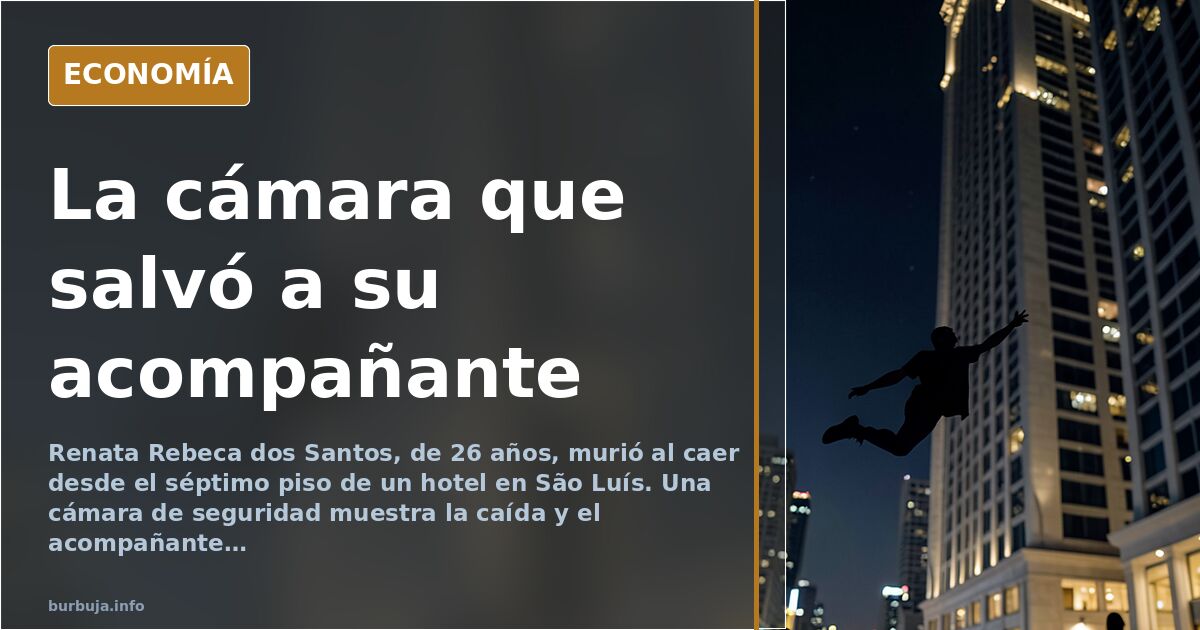
Falls from seventh floor in São Luís; camera clears companion of blame
A 26-year-old woman died after falling from the seventh floor of the Rio Poty Hotel in São Luís (Brazil), leaning against a window opening that, according to circulated images, lacked glass and had a very low sill. The security camera recording is the evidence separating an accident from a homicide accusation: without that video, the man accompanying her would have been blamed for the fall. Renata Rebeca dos Santos was a poker player, according to the released material. The scene captured on video—he leans into the frame first, struggles with the sash, she slides toward the gap—describes, for those who analyzed it, a chain of clumsy gestures rather than intent.
The incident has peine two fronts proceeding along different paths. The first is the establishment's liability: an operable window at that height, unprotected and with a sill inviting sitting, is, for many who saw the video, a design and maintenance defect. The second is the state of the two protagonists, suggested by the sequence itself: slow movements, lack of coordination, long reaction times.
What the Rio Poty Hotel security camera shows
The video, lasting only seconds, has become the center of the case. It shows the companion leaning against the frame, catching his sleeve on the tip of the unsecured sash, and starting to close it. Meanwhile, the woman leans against the wall first and then slides toward the opening, as if trying to sit. **Half a second later, she is gone.**
The sequence rules out the version any investigation would have considered without images: a struggle. The camera does not record an argument or a push; it records a man frozen when he loses sight of his companion. That difference—between gesture and void—is what prevented the case from becoming something else.
The window: the flaw no one disputes
The point where almost all interpretations agree is physical. An operable opening on the seventh floor, without glass at the time of the accident and with a hip-height sill, is an architectural trap. Those who work in hotels summarize it bluntly: there are service openings sealed with thin sheeting, painted over and left as is, and leaning against them is enough to fall.
Comparison with European regulations appears immediately. In Spain, a hotel window with these characteristics would have undergone technical inspection and, most likely, required a railing or opening limiter. **The complaint is not just aesthetic: it is about safety and insurance.** If the victim's parents sue the hotel, the condition of the opening will be key.
The role of alcohol and individual responsibility
The other line of analysis focuses on the state of the two protagonists. Slow reflexes, slumped posture, and lack of immediate reaction point, for many, to high alcohol consumption. Under this reading, the accident combines two factors: a dangerous environment and reduced judgment capacity.
This is not an argument that exonerates the hotel. It is an argument about the causal chain. **A poorly designed window kills when someone clumsy approaches it**; without clumsiness, no one would have fallen that night. Both things are true simultaneously, which is why the case is uncomfortable: there is no single clean culprit.
Low-cost tourism and safety standards
The episode fits into a broader discussion about the hotel stock in middle-income tourist destinations. Inspections exist on paper; reality is that many renovations are done without plans or review. The building's facade, by the way, has also been mocked in images: a design that seems to defy any construction manual.
Brazil is not the only place where this happens. In Spain, for instance, the DANA in Valencia exposed flammable claddings and shoddy work that no one had audited. **Building safety is measured when it fails.**
What remains to be resolved
As of this discussion, no official conclusion exists regarding the cause of the accident or potential hotel liabilities. The investigation must determine if the window complied with local regulations and if the establishment knew of the defect. The camera has already done its job: it cleared the companion of a shadow that, without it, would have been hard to remove.
It remains to be seen if the case leads to a review of the hotel's safety conditions or a formal lawsuit by the family. If the institutional response is typical, the window will remain there. And that, with or without a camera, is what truly matters.
Also available in: Deutsch
Summary of a discussion on Burbuja.info - Foro de economía, actualidad y política., translated from Spanish and reviewed before publication. Read the full discussion (184 replies).
More summaries
-
Sánchez names Rebeca Torró as PSOE Organization Secretary
Rebeca Torró, linked to Ximo Puig, replaces Santos Cerdán in the Spanish Socialist Party's organization; allegations of contract irregularities surface.
-
PP Deputy Jaime de los Santos Accused of Betraying Pensioners
A social media post accuses PP deputy Jaime de los Santos of voting against pensioners' rights, labeling it betrayal without providing specific details.
-
Partner of PSOE spokesperson holds 30 properties and two Panamanian companies
The PSOE (Spanish Socialist Workers' Party) spokesperson, Montse Mínguez, and her partner reportedly own 30 rental properties and two companies in Panama.
-
Lavapiés Faces Return of Public Drug Use and Taxi Avoidance
Residents in Madrid's Lavapiés district report visible intravenous drug use and taxi drivers avoiding the area at night.
-
Abdul El-Sayed wins Michigan Senate seat, boosting Democratic progressives
Abdul El-Sayed won the Michigan Senate race with 52%, becoming the first Muslim US senator. This victory signals growing momentum for the Democratic progressive wing ahead of 2028.
-
Racist advice to avoid Black and Arab people spreads on X
A viral post in Polish advises crossing the street when seeing Black or North African people. The claim lacks context, authorship details, or evidence.