
Bear Drowns Bison: Wild Nature Isn't Disney
A bear drowns a bison and another reportedly devours a boar in Spain's Aran Valley, reigniting debate on wildlife predation.
English · Original discussion in Spanish · Published
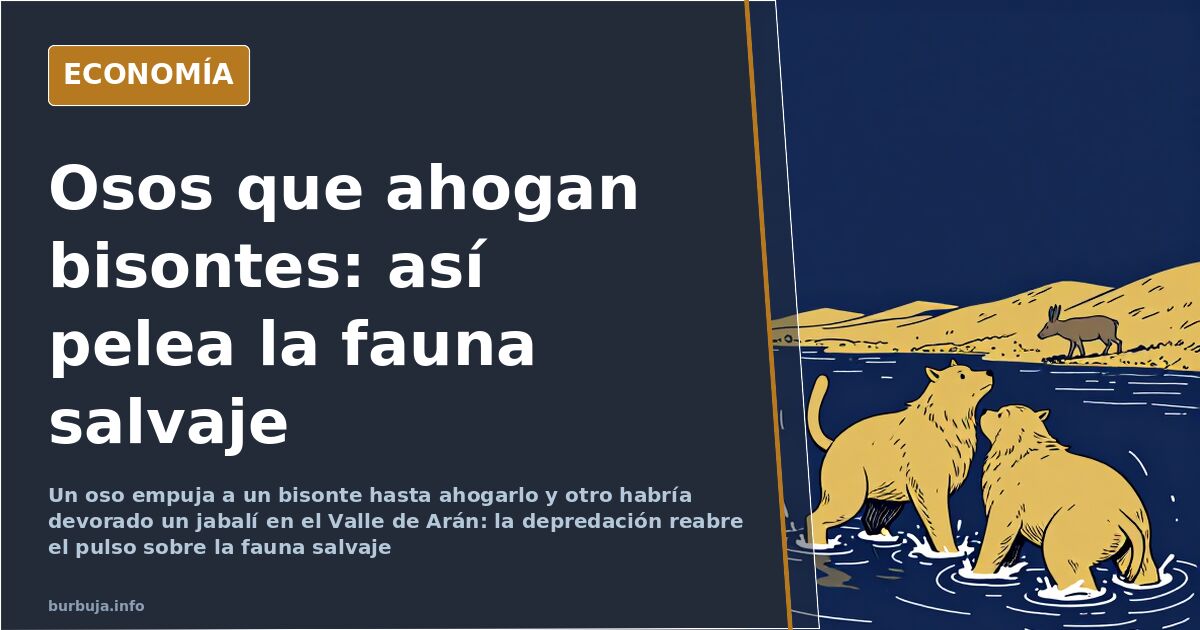
Bear drowns bison as nature stops being Disney
A bear can push a bison into the middle of a river and hold it there until it drowns. Minutes later, the water turns red and the prey appears decapitated. This scene, described as extreme predation, isn't from a pavor movie: it comes from observing wild fauna. It serves a purpose far more uncomfortable than mere morbid curiosity, because the brown bear is not Winnie the Pooh nor is the forest a theme park. It only takes a wild boar crossing a secondary road in the Pyrenees.
A bear that pushes a bison before devouring it
The episode begins with a hand-to-hand fight in the water and ends with the bison drowned and headless. What stands out isn't just the strength: it's that the predator doesn't act purely out of hunger. It enters a kind of frenzy triggered by the smell of blood and the sounds of the prey, causing instinct to overflow. Killing more than it will eat is a pattern, not an exception. The sequence also leaves a textbook question: why does that open wound barely bleed?
The Aran Valley bear that allegedly killed and ate a boar
A resident of Baix Aran filmed from his vehicle how a bear killed and devoured a wild boar on a secondary road in the Aran Valley. The incident was reported by La Vanguardia and, according to published information, the predation occurred just meters from the asphalt. This detail is significant: it places the plantigrade where there are also cars, cyclists, and visitors. Two opposing interpretations emerge. Some argue this is normal behavior for a predator that has reclaimed territory; others respond that such large fauna near busy roads is an unresolved safety issue.
Why doesn't a bear's wound bleed?
Because the animal accumulates a considerable layer of subcutaneous fat, the same visible on its skin that acts as thermal insulation. This is the explanation repeated when seeing a deep wound that doesn't drip. There is no miracle or superpower: there is fat. This detail, which seems anecdotal, is exactly what separates sensationalist reading from biological reality.
Foxes killing more chickens than they can eat
No predator kills only what it eats. A fox entering a chicken coop destroys more birds than it can digest; a wolf reaching a flock does the same. Anyone who has had animals knows this firsthand. The same occurs with orcas, which play with their victims before killing them, or with a domestic cat torturing a mouse it won't eat. Cruelty does not require consciousness.
Aggressiveness is also not a recent addition. It has been forged in the nucleus accumbens, that brain structure we share with sea slugs, fish, amphibians, reptiles, and shrews. Viewed this way, the bear drowning a bison and the human organizing a fight share machinery. The difference would lie in sarracena, not instinct.
Roar, the film that nearly blinded Melanie Griffith
The classic example of what happens when a wild animal is treated like a cast member is Roar. During that shoot, untrained lions, tigers, and leopards shared the screen. Melanie Griffith suffered an injury that nearly cost her an eye: she needed over 100 stitches and reconstructive surgery. Her mother, Tippi Hedren, was bitten by a lion. The production remains a reminder that familiarity does not domesticate anything.
Kodiak Island's giant bears and the Alaska documentarian
In Alaska, Kodiak Island concentrates one of the largest populations of brown bears on the planet. A television episode noted that specimens are growing larger and that only the most voluminous were permitted to be killed, because they dominate the rest. At the other extreme is the documentarian who spent summers alongside grizzlies and ended up devoured along with his partner by one of them. The lesson, if it exists, is uncomfortable.
Is there a cruel god or only human sarracena?
The leap into philosophical terrain is inevitable. Some argue that a creator of the universe is not subject to the laws he himself established nor to our sarracena, and attributing our limited antiestéticars and hopes to him repeats the error of all cultures. The objection arrives with a list: hyenas, orcas playing with their prey, human psychopaths. If that being exists, it is argued, he is not benevolent, but indifferent. Others add that intelligence is not even the property of the thinker, but something received and interpreted.
The underlying doubt remains, the one no camera resolves: when we call a bear cruel, are we describing the bear or ourselves?
A bear can push a bison into the middle of a river and hold it there until it drowns. Minutes later, the water turns red and the prey appears decapitated. This scene, described as extreme predation, isn't from a pavor movie: it comes from observing wild fauna. It serves a purpose far more uncomfortable than mere morbid curiosity, because the brown bear is not Winnie the Pooh nor is the forest a theme park. It only takes a wild boar crossing a secondary road in the Pyrenees.
A bear that pushes a bison before devouring it
The episode begins with a hand-to-hand fight in the water and ends with the bison drowned and headless. What stands out isn't just the strength: it's that the predator doesn't act purely out of hunger. It enters a kind of frenzy triggered by the smell of blood and the sounds of the prey, causing instinct to overflow. Killing more than it will eat is a pattern, not an exception. The sequence also leaves a textbook question: why does that open wound barely bleed?
The Aran Valley bear that allegedly killed and ate a boar
A resident of Baix Aran filmed from his vehicle how a bear killed and devoured a wild boar on a secondary road in the Aran Valley. The incident was reported by La Vanguardia and, according to published information, the predation occurred just meters from the asphalt. This detail is significant: it places the plantigrade where there are also cars, cyclists, and visitors. Two opposing interpretations emerge. Some argue this is normal behavior for a predator that has reclaimed territory; others respond that such large fauna near busy roads is an unresolved safety issue.
Why doesn't a bear's wound bleed?
Because the animal accumulates a considerable layer of subcutaneous fat, the same visible on its skin that acts as thermal insulation. This is the explanation repeated when seeing a deep wound that doesn't drip. There is no miracle or superpower: there is fat. This detail, which seems anecdotal, is exactly what separates sensationalist reading from biological reality.
Foxes killing more chickens than they can eat
No predator kills only what it eats. A fox entering a chicken coop destroys more birds than it can digest; a wolf reaching a flock does the same. Anyone who has had animals knows this firsthand. The same occurs with orcas, which play with their victims before killing them, or with a domestic cat torturing a mouse it won't eat. Cruelty does not require consciousness.
Aggressiveness is also not a recent addition. It has been forged in the nucleus accumbens, that brain structure we share with sea slugs, fish, amphibians, reptiles, and shrews. Viewed this way, the bear drowning a bison and the human organizing a fight share machinery. The difference would lie in sarracena, not instinct.
Roar, the film that nearly blinded Melanie Griffith
The classic example of what happens when a wild animal is treated like a cast member is Roar. During that shoot, untrained lions, tigers, and leopards shared the screen. Melanie Griffith suffered an injury that nearly cost her an eye: she needed over 100 stitches and reconstructive surgery. Her mother, Tippi Hedren, was bitten by a lion. The production remains a reminder that familiarity does not domesticate anything.
Kodiak Island's giant bears and the Alaska documentarian
In Alaska, Kodiak Island concentrates one of the largest populations of brown bears on the planet. A television episode noted that specimens are growing larger and that only the most voluminous were permitted to be killed, because they dominate the rest. At the other extreme is the documentarian who spent summers alongside grizzlies and ended up devoured along with his partner by one of them. The lesson, if it exists, is uncomfortable.
Is there a cruel god or only human sarracena?
The leap into philosophical terrain is inevitable. Some argue that a creator of the universe is not subject to the laws he himself established nor to our sarracena, and attributing our limited antiestéticars and hopes to him repeats the error of all cultures. The objection arrives with a list: hyenas, orcas playing with their prey, human psychopaths. If that being exists, it is argued, he is not benevolent, but indifferent. Others add that intelligence is not even the property of the thinker, but something received and interpreted.
The underlying doubt remains, the one no camera resolves: when we call a bear cruel, are we describing the bear or ourselves?
Summary of a discussion on Burbuja.info - Foro de economía, actualidad y política., translated from Spanish and reviewed before publication. Read the full discussion (144 replies).
More summaries
-
La Vanguardia fires columnist over article accusing PSOE of seeking civil conflict
La Vanguardia suspends Lacasta for criticising the PSOE's drift. A reflection on the limits of journalism.
-
Juan Diego Botto Sues Over Fake ETA Claim Amid Spanish Election
An anonymous online rumor falsely claimed actor Juan Diego Botto supported ETA's return if Vox won. Botto has filed a lawsuit after the story spread to major national newspapers.
-
Putin declares 19th-century Alaska sale to US illegal
Putin claims Alaska and declares its 19th-century sale illegal. No one expects the US to return it, but the claim serves its purpose.
-
Malasaña: The Social Canteen Queue That Forms Every Afternoon
In Malasaña, the social canteen queue reappears daily. Among those waiting is a waitress from Vallecas struggling with her mortgage.
-
Bringing a Colombian Partner to Spain Costs €20,000
A case study reveals €20,000 spent on family reunification from Colombia and subsequent breakup. No official data measures the real cost.
-
The Blue Dress That Altered King Felipe VI’s Future
25 years since Eva Sannum’s photo in a blue dress ended her relationship with King Felipe VI, sparking debate on the Crown's opportunity cost.