
Bar soap is back as a way to save water and plastic
Bar soap saves water, money and plastic compared to shower gel, but it dries out the skin. The debate over hygiene, ingredients and dangerous homemade recipes.
English · Original discussion in Spanish · Published
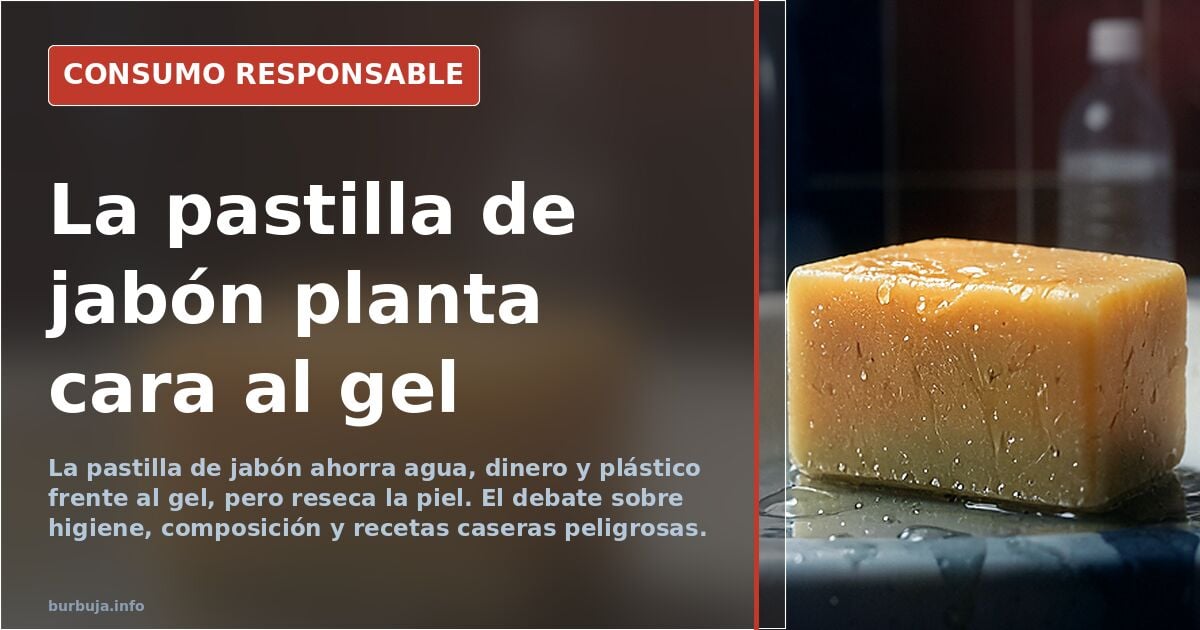
Bar soap takes on shower gel: less plastic, more savings
There is an object that has been in the bathroom for centuries and that the industry turned into a second-rate product: the bar of soap. A post on a responsible consumption forum argues that going back to it saves money and hot water, and that the brand is a factor that is "perfectly irrelevant". The thesis soon found supporters and detractors, and the exchange drifted towards a less pleasant issue: the real hygiene of each format, the cost of packaging and the chemical composition of what we rub onto our skin.
The first argument in favour was convenience. Unlike shower gel, where you have to wait for it to slide down and for the bottle to empty, a bar is used up in a couple of rubs. For anyone keeping an eye on the hot water bill, the maths is simple: less time under the stream, less energy. The bar also does away with the plastic bottle, a point nobody disputed. The rebuttal came quickly: the fact that shower gel is more expensive does not make it less hygienic, and the fact that a bar is cheaper does not automatically make it better.
Is bar soap unhygienic?
The accusation of being unhygienic was the first battleground. The answer was not long in coming: if any bacteria decide to live on the bar, a second under the running water is enough to remove them. And if the soap is personal and not shared, the problem disappears. The discussion then moved to more everyday territory: the sponge. Several posts warned that sponges are a breeding ground for microbes and should be boiled now and then or replaced often. The conclusion that prevailed: if you shower daily, you do not need to exfoliate aggressively; your hand is enough.
Skin dryness: the argument that holds up best
The point where the bar loses most supporters is dryness. Even expensive brands leave the skin dry, according to several accounts. The defence lies in artisan soaps: since they retain their natural glycerin and are made with superfatting, they moisturise instead of stripping the skin. The warning is clear: either buy them from a soap maker you trust or learn to make them yourself. And never use used oil. The middle-ground alternative that emerged: dissolve the bar in water and make your own pseudo-gel, a solution that cuts the cost without giving up the texture.
The trap of homemade recipes: when soap burns
The most serious turn came when someone shared an Aleppo soap recipe copied from a website. The formula called for 150 grams of lye for 500 of olive oil. The mistake is huge: the saponification index of olive oil for lye is around 0.133, which requires about 67 grams. With 150, the soap is full of excess lye and can burn the skin. Several posts agreed that the website in question, run by a pharmacy graduate, publishes dangerous recipes. The unanimous recommendation: before making anything, understand the process, the safety measures and use a saponification calculator.
The shower gel business and the obsession with asepsis
Beyond the format, the underlying issue is cultural. Advertising has sold for decades the idea that showering daily with gel is synonymous with civilisation, and that anyone who does not is a slob. The reality, according to several posts, is that spacing out washes improves the skin of many people, as the millions of allergy sufferers confirm. Shower gel is more convenient, lathers more and seems more modern, but the bar still does the same job at a fraction of the cost. The question left hanging: if the savings are obvious and the packaging disappears, why do we keep paying for the bottle?
There is an object that has been in the bathroom for centuries and that the industry turned into a second-rate product: the bar of soap. A post on a responsible consumption forum argues that going back to it saves money and hot water, and that the brand is a factor that is "perfectly irrelevant". The thesis soon found supporters and detractors, and the exchange drifted towards a less pleasant issue: the real hygiene of each format, the cost of packaging and the chemical composition of what we rub onto our skin.
The first argument in favour was convenience. Unlike shower gel, where you have to wait for it to slide down and for the bottle to empty, a bar is used up in a couple of rubs. For anyone keeping an eye on the hot water bill, the maths is simple: less time under the stream, less energy. The bar also does away with the plastic bottle, a point nobody disputed. The rebuttal came quickly: the fact that shower gel is more expensive does not make it less hygienic, and the fact that a bar is cheaper does not automatically make it better.
Is bar soap unhygienic?
The accusation of being unhygienic was the first battleground. The answer was not long in coming: if any bacteria decide to live on the bar, a second under the running water is enough to remove them. And if the soap is personal and not shared, the problem disappears. The discussion then moved to more everyday territory: the sponge. Several posts warned that sponges are a breeding ground for microbes and should be boiled now and then or replaced often. The conclusion that prevailed: if you shower daily, you do not need to exfoliate aggressively; your hand is enough.
Skin dryness: the argument that holds up best
The point where the bar loses most supporters is dryness. Even expensive brands leave the skin dry, according to several accounts. The defence lies in artisan soaps: since they retain their natural glycerin and are made with superfatting, they moisturise instead of stripping the skin. The warning is clear: either buy them from a soap maker you trust or learn to make them yourself. And never use used oil. The middle-ground alternative that emerged: dissolve the bar in water and make your own pseudo-gel, a solution that cuts the cost without giving up the texture.
The trap of homemade recipes: when soap burns
The most serious turn came when someone shared an Aleppo soap recipe copied from a website. The formula called for 150 grams of lye for 500 of olive oil. The mistake is huge: the saponification index of olive oil for lye is around 0.133, which requires about 67 grams. With 150, the soap is full of excess lye and can burn the skin. Several posts agreed that the website in question, run by a pharmacy graduate, publishes dangerous recipes. The unanimous recommendation: before making anything, understand the process, the safety measures and use a saponification calculator.
The shower gel business and the obsession with asepsis
Beyond the format, the underlying issue is cultural. Advertising has sold for decades the idea that showering daily with gel is synonymous with civilisation, and that anyone who does not is a slob. The reality, according to several posts, is that spacing out washes improves the skin of many people, as the millions of allergy sufferers confirm. Shower gel is more convenient, lathers more and seems more modern, but the bar still does the same job at a fraction of the cost. The question left hanging: if the savings are obvious and the packaging disappears, why do we keep paying for the bottle?
Also available in: Deutsch
Summary of a discussion on Burbuja.info - Foro de economía, actualidad y política., translated from Spanish and reviewed before publication. Read the full discussion (94 replies).
More summaries
-
Lard vs. Olive Oil: The Smoke Point Debate
Forum users debate if lard withstands heat better than olive oil and whether sunflower oil is less stable, citing smoke points.
-
Spain's olive oil crisis revives lard frying debate
Poor harvest and rising prices in Spain prompt a shift to lard for frying, reserving olive oil for raw use.
-
Heating oil: fill the tank now or wait?
Heating oil prices jump 7 cents in days: filling a 1,500-litre tank now costs over €100 extra. When it pays to wait.
-
Housing price boycott: strategy or resignation?
A growing number of buyers are refusing to purchase property at prices they consider fake. Tax costs, inflation and stagnant wages make the situation worse.
-
The aMule 2.3.3 bug that killed download speeds
A bug in aMule 2.3.3 caused P2P download speeds to drop to nearly zero; version 3.0.0 fixed it and restored sustained rates of 30 MB/s.
-
IKEA: Budget solution or quality trap?
An analysis of IKEA: are its furniture pieces a genuinely affordable solution, or a low-cost trap with complicated assembly?