
Bagged milk in Spain wasn't raw: boiling it was unnecessary
In 1970s and 80s Spain, bagged milk was pasteurized, not raw. Boiling was a habit, not a health requirement.
English · Original discussion in Spanish · Published
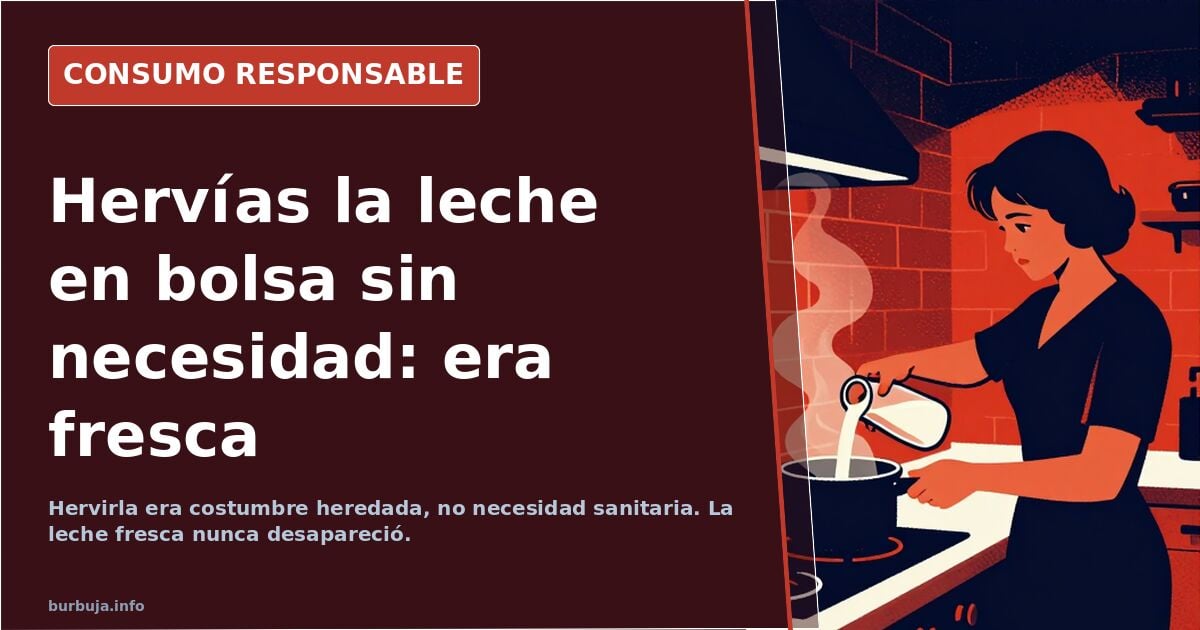
Bagged milk in Spain during the 70s and 80s wasn't raw: boiling it was unnecessary
The milk sold in plastic bags in Spain during the seventies and eighties was not raw milk. It was fresh pasteurized milk, thermally equivalent to the refrigerated bottles found in supermarkets today. Those who boiled it at home did so out of inherited habit, distrust, or simply because they lacked a microwave. Not because it was necessary.
The confusion has historical roots. Until well into the second half of the 20th century, milk was bought in bulk: milkmaids delivered it door-to-door in aluminum jugs, freshly squeezed, without any treatment. That milk indeed had to be boiled. Brucellosis and bovine tuberculosis were prevalent then, and sanitary campaigns insisted on boiling as a preventive measure. When bagged milk arrived, the habit was already internalized.
What exactly was bagged milk: pasteurized, not raw
The technical answer is unanimous: bagged milk was pasteurized milk. Subjected to controlled heating that eliminates pathogens without destroying all organoleptic properties. It was not raw milk, the kind that comes directly from the udder and which some companies now market with health warnings. Nor was it UHT—the ultra-high temperature treatment that allows tetra paks to be stored for months without refrigeration. It was an intermediate product: fresh, perishable, requiring refrigeration and consumption within a few days.
The confusion between pasteurized and raw explains why entire generations boiled the bag before opening it. This was done by submerging the bag in a glass pitcher-shaped container, that device holding the plastic while pouring. The foam rose three times. Then to the fridge. And nobody got sick, of course, because the product came pre-treated.
Some argue the confusion wasn't accidental. The massive arrival of the Tetra Pak coincided with entry into the then EEC and the restructuring of the dairy sector. UHT milk lasted months on the shelf; pasteurized, days. The commercial incentive to migrate to aseptic packaging was evident. If it was also suggested that fresh milk was dangerous, the transfer of consumers was guaranteed.
The raw milk that did need boiling: the origin of the habit
The habit of boiling milk didn't start with bags. It started with cows. In villages, milk was squeezed and consumed without intermediaries. That milk did require boiling: brucellosis, also known as Malta fever, is transmitted through raw goat and cow milk. Bovine tuberculosis, likewise. Generations that grew up with that risk incorporated boiling as an automatic reflex.
When milk arrived in cities already packaged and treated, the reflex persisted. Elders didn't trust it. Mothers boiled it. Grandmothers boiled it. And children grew up thinking boiled milk was normal milk. The anecdote repeats in multiple testimonies: someone in the family warned that boiling wasn't necessary, yet the women in the house continued doing it anyway. Preventive precaution. Pure habit.
The parallel with other food habits is inevitable. Like Latin Americans who are scandalized when served rare steak, because they grew up with antiestéticar of contamination. Risk perception survives the risk itself.
The lost flavor and the fat that no longer rises
A recurring complaint among those who lived through that era is the taste. Bagged milk tasted more like milk, had more body. When boiled, it formed cream on the surface. Current milk, even whole milk, barely generates that layer. The technical explanation points to homogenization: the process that breaks down fat globules so they don't separate and rise to the surface. Homogenized milk doesn't form cream because the fat is permanently dispersed.
Some go further, arguing that the dairy industry skims all milk upon entering the plant and then reconstitutes the fat according to the final product. Whole milk would carry the legal minimum of fat; semi-skimmed, less; skimmed, almost none. The result: a standardized product that meets thresholds but has lost natural variability.
The commercial paradox escapes no one: skimmed milk, which contains more water, sells cheaper. Consumers pay less for less product. Shelf logic.
Fresh milk didn't disappear: it never fully left
The narrative that fresh milk disappeared with modernization is false. It never ceased to exist. Local companies continue to package milk in bags and distribute it to hospitality venues and local shops. In Galicia, for example, there is a family business maintaining the format. Fresh pasteurized milk is available in many areas, although its presence in large supermarkets is minor compared to Tetra Paks.
The fundamental difference between 80s bagged milk and current fresh milk is the packaging, not the content. The thermal treatment is the same. The cold chain, similar. Anyone buying fresh pasteurized milk today is essentially drinking what their parents drank from plastic bags. Only now it doesn't need boiling. It never did.
The doubt remains as to why UHT milk became so dominant in Spain while in other European countries refrigerated fresh milk maintains significant shares. The answer points to logistics: a country with hot summers and extensive distribution prefers a product that lasts months without refrigeration. Food supply chain interests did the rest.
The habit of boiling bagged milk disappeared with the housewives who practiced it. Subsequent generations peine the Tetra Pak and served directly. No boiling, no foam, no ritual. Milk ceased to be a food requiring preparation to become a ready-to-consume product. Modernity, in this case, consisted of stopping doing something that was never necessary.
The milk sold in plastic bags in Spain during the seventies and eighties was not raw milk. It was fresh pasteurized milk, thermally equivalent to the refrigerated bottles found in supermarkets today. Those who boiled it at home did so out of inherited habit, distrust, or simply because they lacked a microwave. Not because it was necessary.
The confusion has historical roots. Until well into the second half of the 20th century, milk was bought in bulk: milkmaids delivered it door-to-door in aluminum jugs, freshly squeezed, without any treatment. That milk indeed had to be boiled. Brucellosis and bovine tuberculosis were prevalent then, and sanitary campaigns insisted on boiling as a preventive measure. When bagged milk arrived, the habit was already internalized.
What exactly was bagged milk: pasteurized, not raw
The technical answer is unanimous: bagged milk was pasteurized milk. Subjected to controlled heating that eliminates pathogens without destroying all organoleptic properties. It was not raw milk, the kind that comes directly from the udder and which some companies now market with health warnings. Nor was it UHT—the ultra-high temperature treatment that allows tetra paks to be stored for months without refrigeration. It was an intermediate product: fresh, perishable, requiring refrigeration and consumption within a few days.
The confusion between pasteurized and raw explains why entire generations boiled the bag before opening it. This was done by submerging the bag in a glass pitcher-shaped container, that device holding the plastic while pouring. The foam rose three times. Then to the fridge. And nobody got sick, of course, because the product came pre-treated.
Some argue the confusion wasn't accidental. The massive arrival of the Tetra Pak coincided with entry into the then EEC and the restructuring of the dairy sector. UHT milk lasted months on the shelf; pasteurized, days. The commercial incentive to migrate to aseptic packaging was evident. If it was also suggested that fresh milk was dangerous, the transfer of consumers was guaranteed.
The raw milk that did need boiling: the origin of the habit
The habit of boiling milk didn't start with bags. It started with cows. In villages, milk was squeezed and consumed without intermediaries. That milk did require boiling: brucellosis, also known as Malta fever, is transmitted through raw goat and cow milk. Bovine tuberculosis, likewise. Generations that grew up with that risk incorporated boiling as an automatic reflex.
When milk arrived in cities already packaged and treated, the reflex persisted. Elders didn't trust it. Mothers boiled it. Grandmothers boiled it. And children grew up thinking boiled milk was normal milk. The anecdote repeats in multiple testimonies: someone in the family warned that boiling wasn't necessary, yet the women in the house continued doing it anyway. Preventive precaution. Pure habit.
The parallel with other food habits is inevitable. Like Latin Americans who are scandalized when served rare steak, because they grew up with antiestéticar of contamination. Risk perception survives the risk itself.
The lost flavor and the fat that no longer rises
A recurring complaint among those who lived through that era is the taste. Bagged milk tasted more like milk, had more body. When boiled, it formed cream on the surface. Current milk, even whole milk, barely generates that layer. The technical explanation points to homogenization: the process that breaks down fat globules so they don't separate and rise to the surface. Homogenized milk doesn't form cream because the fat is permanently dispersed.
Some go further, arguing that the dairy industry skims all milk upon entering the plant and then reconstitutes the fat according to the final product. Whole milk would carry the legal minimum of fat; semi-skimmed, less; skimmed, almost none. The result: a standardized product that meets thresholds but has lost natural variability.
The commercial paradox escapes no one: skimmed milk, which contains more water, sells cheaper. Consumers pay less for less product. Shelf logic.
Fresh milk didn't disappear: it never fully left
The narrative that fresh milk disappeared with modernization is false. It never ceased to exist. Local companies continue to package milk in bags and distribute it to hospitality venues and local shops. In Galicia, for example, there is a family business maintaining the format. Fresh pasteurized milk is available in many areas, although its presence in large supermarkets is minor compared to Tetra Paks.
The fundamental difference between 80s bagged milk and current fresh milk is the packaging, not the content. The thermal treatment is the same. The cold chain, similar. Anyone buying fresh pasteurized milk today is essentially drinking what their parents drank from plastic bags. Only now it doesn't need boiling. It never did.
The doubt remains as to why UHT milk became so dominant in Spain while in other European countries refrigerated fresh milk maintains significant shares. The answer points to logistics: a country with hot summers and extensive distribution prefers a product that lasts months without refrigeration. Food supply chain interests did the rest.
The habit of boiling bagged milk disappeared with the housewives who practiced it. Subsequent generations peine the Tetra Pak and served directly. No boiling, no foam, no ritual. Milk ceased to be a food requiring preparation to become a ready-to-consume product. Modernity, in this case, consisted of stopping doing something that was never necessary.
Also available in: Deutsch
Summary of a discussion on Burbuja.info - Foro de economía, actualidad y política., translated from Spanish and reviewed before publication. Read the full discussion (116 replies).
More summaries
-
How many litres of milk can you get from 1 kg of condensed milk?
A forum calculation says a 1 kg can yields 6.6 to 10 litres, but others warn it's not milk but added sugar.
-
20-Cent Bags: The Tax That Fails to Stop the Dumping
Bags cost 20 cents, yet 95% of ocean plastic comes from only 10 rivers: the true cost of this 'green gesture' doesn't match the propaganda.
-
The real cost of cheap paint from Leroy Merlin
The real cost of using cheap paint from big-box stores. We analyze the dilemma between immediate savings and the durability of the finish.
-
Spanish Home Renovations Face Backlash Over Grey Ash Flooring
A forum thread debates grey ash porcelain tiles, citing dirty grout lines and uniformity, questioning why durable materials are replaced after 20 years.
-
Half a watermelon for €7: Spain's soaring fruit prices
Early-season watermelons cost over €2/kg in Spain due to halved production, heavy rains, and rising agricultural costs.
-
Retro Gaming Collecting: €200k Business or Bubble?
A YouTuber traded games for a house, and one collection was valued at €120k mid-inventory. The retro market rises, but skeptics...