
Apple and Google to share location data with governments
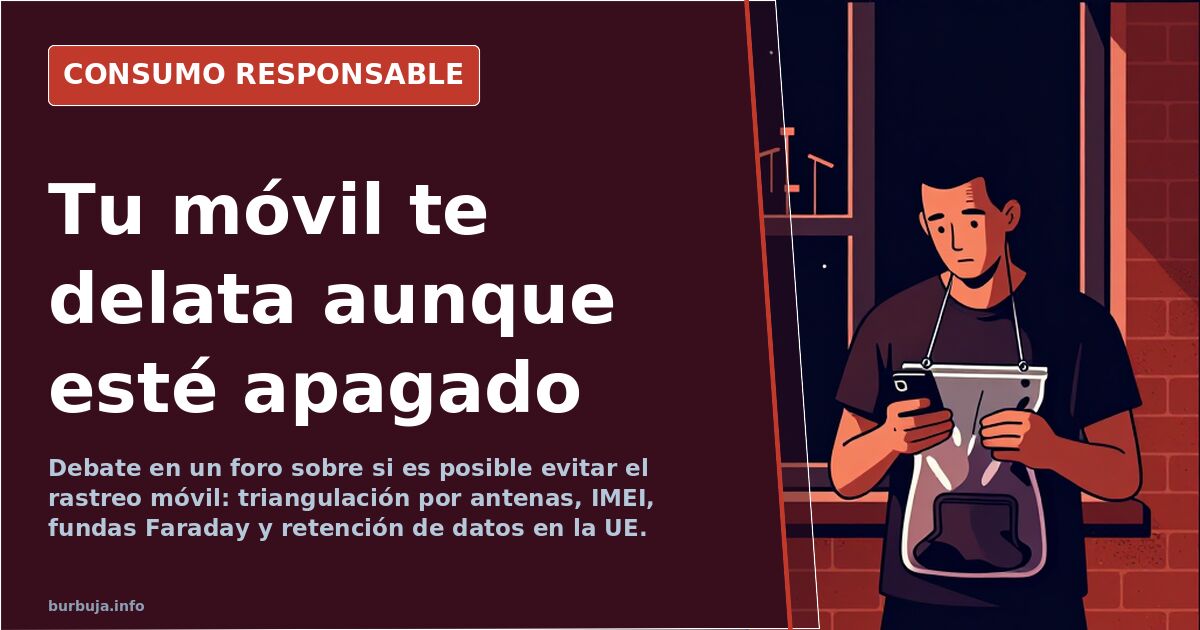
Forum debate on avoiding mobile tracking: antenna triangulation, IMEI, Faraday bags, and EU data retention.
English · Original discussion in Spanish · Published
Apple and Google will hand over your location second by second
Apple and Google have announced they will cooperate with mass device tracking and provide geolocation data to governments, according to the news that started this discussion, all under the promise of respecting privacy. The starting point is an uncomfortable question: is it possible today to use a mobile phone without Big Tech having control? The short answer is no, not entirely. The long answer fills this analysis.
The initial approach discards everything accessory — photos, videos, apps, games — and keeps only the minimum: voice or text. Even so, the technical consensus running through the debate is that the problem lies not in what you install, but in how the network works. The mobile phone broadcasts its IMEI to any antenna that detects it, and that identifier is unique worldwide. No app can erase that footprint.
Antenna triangulation: tracking that does not depend on GPS
The most widespread error is believing that turning off GPS or activating airplane mode makes you invisible. It does not. Location is obtained via triangulation between GSM repeaters: it is enough for the terminal to be switched on and near an antenna for the operator to know, with a margin of error of hundreds of meters, where you are. It does not matter if it is a latest-generation smartphone or a Nokia from ten years ago. The GSM network triangulates any terminal equally, whether or not it has Google services.
Some clarify that GPS does not broadcast position by itself: it only reads satellite signals. For that position to leave the phone, an application must transmit it. True in theory. In practice, mobile operating systems send location data to manufacturers by default, and US companies are obliged to hand them over to their agencies under the Patriot Act. The difference with Spain is that here, as pointed out, a judicial order would be required. On paper.
Can you use a mobile phone without being tracked?
The solutions circulating range from homemade to radical. The Faraday bag — a pouch that blocks all signal — appears as the most cited method: it prevents the phone from connecting to any network while inside. Its price is around 13 euros and has risen with demand. The problem is that when you take it out, it reconnects and logs recent movements. Microphone blockers are also mentioned: a wireless mini-jack that the system detects as headphones and disables the audio input.
Another route is software. Installing an alternative ROM that receives no updates or security patches, keeping airplane mode permanently active, and making calls via VoIP through a VPN. It sounds like a counterintelligence manual for domestic use. And it does not solve the underlying problem: without a SIM card there are no conventional calls, and with one, the operator identifies you.
The paradox of the contract is the same as that of the bank account: in theory nobody forces you to have a mobile phone, in practice you cannot live without it. Buying a SIM without providing data has been illegal since the 11M attacks, although second-hand cards circulate that carry another holder's name.
IMEI, the ID you cannot delete
The International Mobile Equipment Identity is a unique number per device. When the phone connects to any network — GSM, Wi-Fi, or whatever comes next — it sends it automatically. This is the data that allows tracking a terminal even if you change the card. Neither airplane mode nor a removable battery eliminates the IMEI. Only terminals with a physical hardware switch, such as the PinePhone, allow cutting power to radios with certainty.
To this is added the data retention required by the 2008 European directive: every operator with more than 10,000 customers must keep connection records for between six months and two years. Governments change, data is stored for decades.
Cobi19 as an excuse for the architecture of oppression
The most cited twist in the debate is the warning from Edward Snowden, former NSA contractor, about using the pandemic to build what he called the architecture of oppression. In the Spanish context, the Open Cobi19 application appears, a supposed digital safe-conduct to certify that you are not infected and access certain areas. The developer of the program, according to shared data, works for a pharmaceutical company and a medical technology firm.
The antiestéticar is not just health-related. The app divides the population between those who can move and those who cannot, and turns the phone into a requirement for daily life. If this is added to the disappearance of cash, control ceases to be voluntary.
The closing statement is not provided by the analysis, but by a fact: 99.999% of the population interests no one until they stop being interesting. And then it is too late to look for the bag.
Apple and Google have announced they will cooperate with mass device tracking and provide geolocation data to governments, according to the news that started this discussion, all under the promise of respecting privacy. The starting point is an uncomfortable question: is it possible today to use a mobile phone without Big Tech having control? The short answer is no, not entirely. The long answer fills this analysis.
The initial approach discards everything accessory — photos, videos, apps, games — and keeps only the minimum: voice or text. Even so, the technical consensus running through the debate is that the problem lies not in what you install, but in how the network works. The mobile phone broadcasts its IMEI to any antenna that detects it, and that identifier is unique worldwide. No app can erase that footprint.
Antenna triangulation: tracking that does not depend on GPS
The most widespread error is believing that turning off GPS or activating airplane mode makes you invisible. It does not. Location is obtained via triangulation between GSM repeaters: it is enough for the terminal to be switched on and near an antenna for the operator to know, with a margin of error of hundreds of meters, where you are. It does not matter if it is a latest-generation smartphone or a Nokia from ten years ago. The GSM network triangulates any terminal equally, whether or not it has Google services.
Some clarify that GPS does not broadcast position by itself: it only reads satellite signals. For that position to leave the phone, an application must transmit it. True in theory. In practice, mobile operating systems send location data to manufacturers by default, and US companies are obliged to hand them over to their agencies under the Patriot Act. The difference with Spain is that here, as pointed out, a judicial order would be required. On paper.
Can you use a mobile phone without being tracked?
The solutions circulating range from homemade to radical. The Faraday bag — a pouch that blocks all signal — appears as the most cited method: it prevents the phone from connecting to any network while inside. Its price is around 13 euros and has risen with demand. The problem is that when you take it out, it reconnects and logs recent movements. Microphone blockers are also mentioned: a wireless mini-jack that the system detects as headphones and disables the audio input.
Another route is software. Installing an alternative ROM that receives no updates or security patches, keeping airplane mode permanently active, and making calls via VoIP through a VPN. It sounds like a counterintelligence manual for domestic use. And it does not solve the underlying problem: without a SIM card there are no conventional calls, and with one, the operator identifies you.
The paradox of the contract is the same as that of the bank account: in theory nobody forces you to have a mobile phone, in practice you cannot live without it. Buying a SIM without providing data has been illegal since the 11M attacks, although second-hand cards circulate that carry another holder's name.
IMEI, the ID you cannot delete
The International Mobile Equipment Identity is a unique number per device. When the phone connects to any network — GSM, Wi-Fi, or whatever comes next — it sends it automatically. This is the data that allows tracking a terminal even if you change the card. Neither airplane mode nor a removable battery eliminates the IMEI. Only terminals with a physical hardware switch, such as the PinePhone, allow cutting power to radios with certainty.
To this is added the data retention required by the 2008 European directive: every operator with more than 10,000 customers must keep connection records for between six months and two years. Governments change, data is stored for decades.
Cobi19 as an excuse for the architecture of oppression
The most cited twist in the debate is the warning from Edward Snowden, former NSA contractor, about using the pandemic to build what he called the architecture of oppression. In the Spanish context, the Open Cobi19 application appears, a supposed digital safe-conduct to certify that you are not infected and access certain areas. The developer of the program, according to shared data, works for a pharmaceutical company and a medical technology firm.
The antiestéticar is not just health-related. The app divides the population between those who can move and those who cannot, and turns the phone into a requirement for daily life. If this is added to the disappearance of cash, control ceases to be voluntary.
The closing statement is not provided by the analysis, but by a fact: 99.999% of the population interests no one until they stop being interesting. And then it is too late to look for the bag.
Also available in: Deutsch
Summary of a discussion on Burbuja.info - Foro de economía, actualidad y política., translated from Spanish and reviewed before publication. Read the full discussion (111 replies).
More summaries
-
Changing mobile OS doesn't eliminate tracking in Spain
Blocking Google on Android requires editing the hosts file and using F-Droid apps. Even LineageOS without GApps fails to stop connections to Qualcomm or Amazon.
-
Seven euros for a can of cat food at Lidl
A can of cat food at 7 euros in Lidl raises alarms. The price per kilo exceeds 20 euros, more than many fresh foods.
-
Spain ranks second globally for noise pollution
Spain is the world's second noisiest country, plagued by unregulated motorcycles, sirens and late-night garbage collection.
-
New cars lose half their value in first year, forum user claims
Forum users report rapid depreciation of new vehicles while used car prices surge. Debate on whether buying new is worth it.
-
Carrefour charges more at checkout than shelf prices
Customers report Carrefour charging higher prices at the register than those displayed on shelves, affecting various products.
-
Spain's frugal tech trend: €100 to revive a six-year-old laptop
Upgrading an old laptop costs about €100, sparking debate against buying second-hand devices with warranty.