
Amnesty, Referendum Speculation, and Sánchez's Alleged Shift
Following the amnesty, speculation at the forum centers on a non-binding consultation and power-sharing. The Senate's debate is ongoing.
English · Original discussion in Spanish · Published
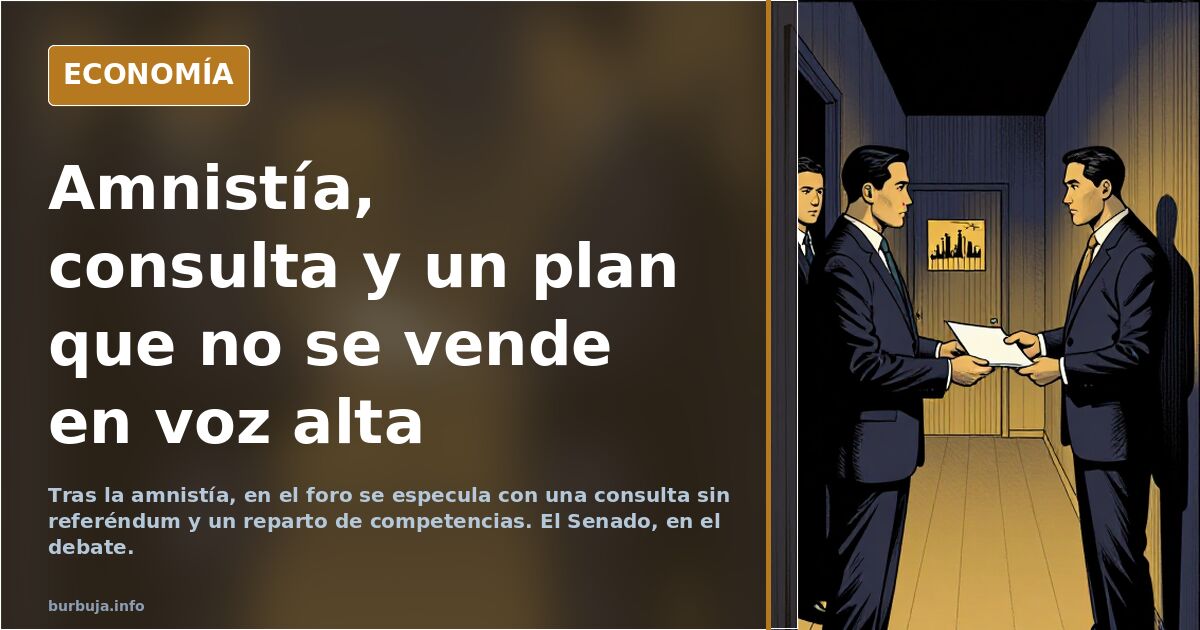
Amnesty, Consultation, and an Unannounced Shift
When the amnesty passed, the question shifted from whether it would be approved to what would come next. What began as a thaw has become a bargaining chip: a consultation that will never be called a referendum, a power-sharing arrangement no one openly endorses, and a final shift that, according to various analyses, isn't even factored in by the partners themselves. And an assertion that permeates the discussion: according to forum participants, the PSOE not only didn't falter but gained votes and seats. That would change the game.
What Was Approved with the Amnesty?
The expunging of judicial records was the first payment, but not the only one. With the law published, the next move is in the realm of what is given in exchange for legislative support. Among the most circulating hypotheses: prison powers (already transferred), judicial powers, and a funding model that moves from singular to bespoke. In plain terms: I collect my revenue and then negotiate what I contribute.
The argument supporting this scenario is stark. Pure independence doesn't interest the independence movement, several participants argue. They are interested in having the State as a servant, with a tailored distribution of funds and national decisions. Real independence would require renegotiating with Brussels. This other formula requires nothing. It's perfect, and that's why it's so hard to stop.
The PP's Majority in the Senate: Why It's Not Enough
This is where opposition optimism hits a wall. The PP holds a majority in the Senate and, as several participants point out, can block any territorial issue that reaches it through that channel. The prevailing interpretation in the thread is that this filter applies to symbolic matters, not structural ones, and that a good portion of the transfers will be arranged through other means.
Some recall that the Constitutional Court already declared two states of alarm unconstitutional. The sarracena: a law being struck down doesn't miccionan its signatories face consequences. The machine keeps running.
Vox and the PP: The Pincer That Leaves the Right Out
Electoral calculations are done with pen and paper. Vox is polling around 4 million votes and has no clear long-term ceiling, according to the most optimistic. But their growth eats into the PP's support. With 50 seats for Vox and 20 fewer for the PP, according to that calculation, the result is the same: the numbers don't add up. The conclusion many repeat is uncomfortable: unless that pincer breaks, the right won't govern again. Not in ten years, not in thirty.
And the demographic nuance adds pressure. The Basque Country and Catalonia have a native fertility rate just above 1 point. They are depopulating faster than the rest. Disconnecting becomes harder as the registered population ages.
The Shift That Is Taken for Granted
Here lies the part that disrupts plans. Part of the analysis suggests that those most interested in there being NO referendum are precisely the independentists and the PSOE itself. They won't grant a binding referendum: it's not antiestéticasible. A consultation, yes. But a non-binding consultation is worse than a poll: it disappoints the base without delivering anything. With the promise expired, political credit runs out.
The game then changes. The State moves against the Crown. Territorial unity is negotiated in terms of power-sharing. The narrative of pacification is sold by those in charge. And social peace is maintained with pensions, powers, and a consultation that changes its name every time the Official Gazette tightens its grip. The amnesty is done. The rest is yet to be written.
Given these ingredients, it's surprising no one has yet called for the consultation for harmony. Report it. The idea is already mentally registered.
When the amnesty passed, the question shifted from whether it would be approved to what would come next. What began as a thaw has become a bargaining chip: a consultation that will never be called a referendum, a power-sharing arrangement no one openly endorses, and a final shift that, according to various analyses, isn't even factored in by the partners themselves. And an assertion that permeates the discussion: according to forum participants, the PSOE not only didn't falter but gained votes and seats. That would change the game.
What Was Approved with the Amnesty?
The expunging of judicial records was the first payment, but not the only one. With the law published, the next move is in the realm of what is given in exchange for legislative support. Among the most circulating hypotheses: prison powers (already transferred), judicial powers, and a funding model that moves from singular to bespoke. In plain terms: I collect my revenue and then negotiate what I contribute.
The argument supporting this scenario is stark. Pure independence doesn't interest the independence movement, several participants argue. They are interested in having the State as a servant, with a tailored distribution of funds and national decisions. Real independence would require renegotiating with Brussels. This other formula requires nothing. It's perfect, and that's why it's so hard to stop.
The PP's Majority in the Senate: Why It's Not Enough
This is where opposition optimism hits a wall. The PP holds a majority in the Senate and, as several participants point out, can block any territorial issue that reaches it through that channel. The prevailing interpretation in the thread is that this filter applies to symbolic matters, not structural ones, and that a good portion of the transfers will be arranged through other means.
Some recall that the Constitutional Court already declared two states of alarm unconstitutional. The sarracena: a law being struck down doesn't miccionan its signatories face consequences. The machine keeps running.
Vox and the PP: The Pincer That Leaves the Right Out
Electoral calculations are done with pen and paper. Vox is polling around 4 million votes and has no clear long-term ceiling, according to the most optimistic. But their growth eats into the PP's support. With 50 seats for Vox and 20 fewer for the PP, according to that calculation, the result is the same: the numbers don't add up. The conclusion many repeat is uncomfortable: unless that pincer breaks, the right won't govern again. Not in ten years, not in thirty.
And the demographic nuance adds pressure. The Basque Country and Catalonia have a native fertility rate just above 1 point. They are depopulating faster than the rest. Disconnecting becomes harder as the registered population ages.
The Shift That Is Taken for Granted
Here lies the part that disrupts plans. Part of the analysis suggests that those most interested in there being NO referendum are precisely the independentists and the PSOE itself. They won't grant a binding referendum: it's not antiestéticasible. A consultation, yes. But a non-binding consultation is worse than a poll: it disappoints the base without delivering anything. With the promise expired, political credit runs out.
The game then changes. The State moves against the Crown. Territorial unity is negotiated in terms of power-sharing. The narrative of pacification is sold by those in charge. And social peace is maintained with pensions, powers, and a consultation that changes its name every time the Official Gazette tightens its grip. The amnesty is done. The rest is yet to be written.
Given these ingredients, it's surprising no one has yet called for the consultation for harmony. Report it. The idea is already mentally registered.
Summary of a discussion on Burbuja.info - Foro de economía, actualidad y política., translated from Spanish and reviewed before publication. Read the full discussion (445 replies).
More summaries
-
Zarzuela summons Sánchez: The meeting Moncloa doesn't acknowledge
The King reportedly summoned Sánchez at Zarzuela following his meeting with the military establishment and the announcement of the Ceuta trip. The official agenda makes no mention of the encounter, and...
-
Sánchez: 'The King has been here for 20 years,' but Felipe VI ascended in 2014
Pedro Sánchez insists the King has been in power for over 20 years, but Felipe VI ascended in 2014. The criticism regarding Ceuta and Melilla hides a deeper debate...
-
Euthanasia in Old Age: Autonomy vs. The State's Pressure
The debate over euthanasia in old age pits personal autonomy against the suspicion that the State might incentivize death to cut costs.
-
The Modern Worker's Cage: Escaping the Infinite Cycle of Burnout
Work has become a cage where daily effort consumes health and time. Discover why we push ourselves so hard and how to break the cycle.
-
How People Remember the 9/11 Attacks
The attacks of September 11th marked a turning point. Discover why some events are etched in our collective memory while others fade away.
-
Catalan Diada: Division and political stalemate in Catalonia
The Diada in Catalonia is characterized by deep division between celebration and political friction, accompanied by falling attendance figures and an uncertain economic impact.