
Abstention Debate: Voter Has 1,460 Days to Think
Forum debate on abstention in Spain: some argue non-voters spend four years pondering their choice, while others advocate voting for the lesser evil.
English · Original discussion in Spanish · Published
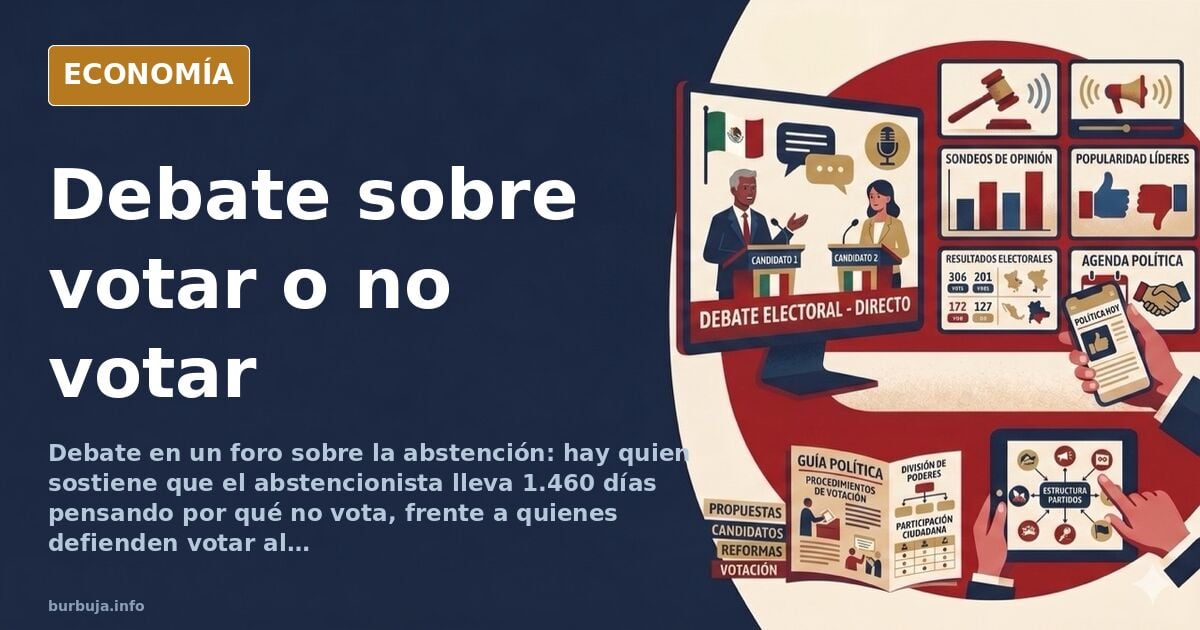
Abstention Debate: Voter Has 1,460 Days to Think
The reflection day is a calendar invention: 24 hours where campaigning stops and voters supposedly meditate. Outside this pause, some argue reflection is permanent, not a single day. The core question is uncomfortable: if the average voter spends one day choosing, the abstainer has spent 1,460 days deciding why they vote for no one. This figure equals a four-year term, the same time those who do vote remain idle, according to the harshest interpretation.
The discussion occurs amid elections with polling stations across Spain, complicated by varying ballot types: some regions hold only local elections, while others combine regional and municipal votes. This mix fuels confusion and, consequently, abstention.
What Is Voted For and Why the Map Matters
The electoral calendar is uneven. In Andalusia, for instance, only local elections are held. In regions with autonomous elections, the focus is regional, yet results are read as national indicators. This asymmetry explains why the same day yields different interpretations depending on location.
In small municipalities, candidate familiarity outweighs party labels. Here, vote-buying and temporary contracts as currency are openly cited classics. Voting decisions happen at town hall doors, not rallies.
Abstention as Strategy: Useless or Necessary?
One view claims abstention is the greatest foolishness invented: with 98% abstention, politicians would celebrate victory effortlessly. The logic is simple: votes count by percentage, so not voting strengthens those who do.
Opponents argue voting means joining the game and feeling part of the farce. They claim 1,460 days of crossed arms weigh more than a single paper in a plastic box. Partyocracy, they say, needs one day of deception to enjoy four years of blank checks.
The Lesser Evil and the Alternation Trap
Some defend voting for the lesser evil, nose pinched, to prevent the worst version from gaining power. It is infinitesimal, they concede, but something. Critics counter that no truly less bad faction exists; all parties are parts of the same mechanism.
The alternation thesis suggests left-wing voters are herded by threats of the far right, and right-wing voters by antiestéticar of communists. The constituent process allegedly transferred dictator powers to parties under royal surveillance. Only when someone targets these pillars will it be worth listening, they conclude.
Vote Buying and Recount Suspicions
Vote buying issues arise with names and figures. Reports mention 45 arrests among political groups, 32 socialists, and another operation with 13 more arrests for drug-for-vote exchanges, offering up to €50 in cocaine to addicts, pimps, and prostitutes. A socialist mayor and a regional executive member were investigated. All refused to testify before the judge. Article 146 of the electoral law punishes these acts with six months to three years in prison or fines of twelve to twenty-four months.
Distrust about recounts adds to this. One group reportedly refused manual ballot counts and result verification, accepting official machine data. This suspicion is not new but now serves as proof the system lacks auditing.
Compulsory Voting and the Cacique Ghost
Proposals for mandatory in-person voting, barring serious health issues, surface in conversation. The immediate reply: that is caciquism (clientelistic coercion). This objection matters in a country with a history of fraud and clientelism.
Irony trinc from those suggesting obligations should include Ukrainian flag masks and shirts, mocking current priorities. The debate shifts to whether voting is a right or duty, and who ensures duty does not become coercion.
Possible Outcomes of Abstention
Skeptics argue massive abstention without strong independent civil movements achieves nothing: seats are distributed, and status quo remains. Hope that partyocracy reconsiders voters over pockets is slim.
The scenario is familiar: some vote to remove others, while others vote to block those first voters’ choices. A tug-of-war where each end pulls the rope. The circus, they admit, beats dictatorship, but it is no celebration.
The reflection day is a calendar invention: 24 hours where campaigning stops and voters supposedly meditate. Outside this pause, some argue reflection is permanent, not a single day. The core question is uncomfortable: if the average voter spends one day choosing, the abstainer has spent 1,460 days deciding why they vote for no one. This figure equals a four-year term, the same time those who do vote remain idle, according to the harshest interpretation.
The discussion occurs amid elections with polling stations across Spain, complicated by varying ballot types: some regions hold only local elections, while others combine regional and municipal votes. This mix fuels confusion and, consequently, abstention.
What Is Voted For and Why the Map Matters
The electoral calendar is uneven. In Andalusia, for instance, only local elections are held. In regions with autonomous elections, the focus is regional, yet results are read as national indicators. This asymmetry explains why the same day yields different interpretations depending on location.
In small municipalities, candidate familiarity outweighs party labels. Here, vote-buying and temporary contracts as currency are openly cited classics. Voting decisions happen at town hall doors, not rallies.
Abstention as Strategy: Useless or Necessary?
One view claims abstention is the greatest foolishness invented: with 98% abstention, politicians would celebrate victory effortlessly. The logic is simple: votes count by percentage, so not voting strengthens those who do.
Opponents argue voting means joining the game and feeling part of the farce. They claim 1,460 days of crossed arms weigh more than a single paper in a plastic box. Partyocracy, they say, needs one day of deception to enjoy four years of blank checks.
The Lesser Evil and the Alternation Trap
Some defend voting for the lesser evil, nose pinched, to prevent the worst version from gaining power. It is infinitesimal, they concede, but something. Critics counter that no truly less bad faction exists; all parties are parts of the same mechanism.
The alternation thesis suggests left-wing voters are herded by threats of the far right, and right-wing voters by antiestéticar of communists. The constituent process allegedly transferred dictator powers to parties under royal surveillance. Only when someone targets these pillars will it be worth listening, they conclude.
Vote Buying and Recount Suspicions
Vote buying issues arise with names and figures. Reports mention 45 arrests among political groups, 32 socialists, and another operation with 13 more arrests for drug-for-vote exchanges, offering up to €50 in cocaine to addicts, pimps, and prostitutes. A socialist mayor and a regional executive member were investigated. All refused to testify before the judge. Article 146 of the electoral law punishes these acts with six months to three years in prison or fines of twelve to twenty-four months.
Distrust about recounts adds to this. One group reportedly refused manual ballot counts and result verification, accepting official machine data. This suspicion is not new but now serves as proof the system lacks auditing.
Compulsory Voting and the Cacique Ghost
Proposals for mandatory in-person voting, barring serious health issues, surface in conversation. The immediate reply: that is caciquism (clientelistic coercion). This objection matters in a country with a history of fraud and clientelism.
Irony trinc from those suggesting obligations should include Ukrainian flag masks and shirts, mocking current priorities. The debate shifts to whether voting is a right or duty, and who ensures duty does not become coercion.
Possible Outcomes of Abstention
Skeptics argue massive abstention without strong independent civil movements achieves nothing: seats are distributed, and status quo remains. Hope that partyocracy reconsiders voters over pockets is slim.
The scenario is familiar: some vote to remove others, while others vote to block those first voters’ choices. A tug-of-war where each end pulls the rope. The circus, they admit, beats dictatorship, but it is no celebration.
Also available in: Deutsch
Summary of a discussion on Burbuja.info - Foro de economía, actualidad y política., translated from Spanish and reviewed before publication. Read the full discussion (106 replies).
More summaries
-
UNICEF Spain Ad Sparks Backlash Over Inheritance Appeals
UNICEF Spain faces criticism for an ad featuring basketball legend Juanma López-Iturriaga urging viewers to leave their estates to the charity, sparking debate on forced heirship.
-
Serious Injury in Warner Park's Batman Ride Incident
A 49-year-old man was seriously injured on the Batman Gotham City Escape coaster at Parque Warner Madrid. Conflicting accounts and no official explanation yet.
-
Ganges Swimming Risks: Ignoring Fecal Water Costs
Swimming in the Ganges ends in vomiting: 70% of the water is waste. The cost of a dip without precautions.
-
Spain's small landlords targeted in rent war
Rents hit €15.3/m² as Maestre labels small owners 'leeches', ignoring 2% yields and legacy bailouts.
-
Ceuta Crisis Reignites Racism Accusations Against Locals
Protests in Ceuta over migration pressure spark debate: legitimate defense or racism? Data and views on a tense border issue.
-
EU Green Taxation: Ideological Crusade or Revenue Grab?
Green taxes, control and offshoring: the EU's ecological shift burdens taxpayers and undermines industry