
98% of VOX voters reject shorter workweek, INVYMARK poll finds
INVYMARK puts 98% of VOX voters and 89.7% of PP voters against cutting hours while keeping pay. The cost is up for debate.
English · Original discussion in Spanish · Published
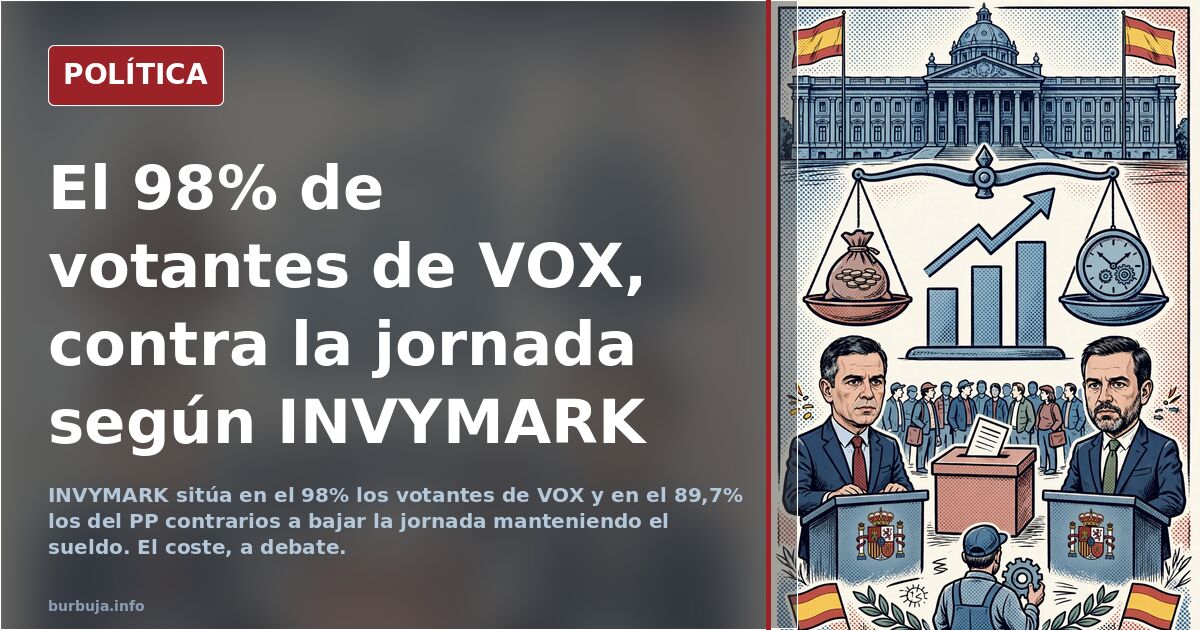
98% of VOX voters and 89.7% of PP voters reject cutting the workweek
Cutting the workweek to 37.5 hours while keeping pay sounds like a textbook improvement. The right's electorate doesn't see it that way. The INVYMARK survey puts rejection of the measure at 98% of VOX voters and 89.7% of PP voters. Two figures that turn a labor proposal into an economic standoff and leave an uncomfortable question: is there cold calculation behind it, distrust of the data, or simple rejection because of who is signing it?
What is proposed and why it is sold as earning the same
On the table is cutting the workweek to 37.5 hours a week without touching pay. That earning the same is the centerpiece of the official argument and, at the same time, the target of almost all criticism. Those who defend the proposal present it as a productivity lever; a good part of the workforce reads it as an empty promise.
Explanations for the rejection run out after a handful of possibilities. That a good part of that electorate are civil servants or retirees whom the measure does not directly affect. That they are business owners and self-employed people who bear the cost. That they oppose anything coming from the Government even if it benefits them. Or that they simply don't believe the survey numbers. The list is long and amounts to an admission that no one has a clean explanation.
The productivity argument: the Netherlands at 30 hours
This is where the most repeated data come in. The average workweek in Spain is around 37.6 hours per week, compared with 34.9 in Germany and 30 in the Netherlands. And that difference is not accompanied by worse results: the hourly productivity index puts Germany at 101.6, above the European average of 100, while Spain stays at 97.
The optimistic reading is direct: fewer hours and more output are compatible. The skeptical reading holds that productivity does not depend on the clock but on the machinery: invested capital, digitalization, cheap energy and skills. The example that circulates is that of the farmer, who produces more with a tractor than with a mule; when both have a tractor, the one who works more hours wins. And there, the argument goes, Spain is not playing with Germany's resources.
Who pays for the 2.5 fewer hours
Every week that means 2.5 fewer hours for the same money. The most repeated calculation is blunt: the company does not look at gross pay, it looks at total cost, and if that cost rises, the adjustment appears somewhere. The scenario described is a factory component going from 0.09 to 0.1 cents to balance the books.
The classic example, taken to the extreme, is retail: if all businesses see their margin reduced, bread goes from 80 cents to 90 cents and milk from 1.30 to 1.50 euros, and paid hours not worked are offset by paying more for the same thing. Some add a 10% cost increase over a year for companies, and some recall that new contracts would already start with the reduction built in while old ones would gradually converge.
From the economic argument to rejection by origin
Another strand of analysis is political. It is argued that a good part of that 98% and that 89.7% reject the proposal not because of its content, but because of who it comes from, and VOX and the PP are accused of having sold the idea that the measure means cutting pay when that has not been proposed that way. On the other side, the accusation is symmetrical: there is talk of the orchestration principle attributed to Goebbels, that of repeating an idea until it becomes truth, and it is applied to the campaign that associates the reduction with ruin.
In the middle are those who focus on the production model. The weight of the service sector in Spain makes it difficult to raise productivity simply by cutting hours, and improvements would have to come from robotization, cheaper energy and digitalization. It is the point where almost everyone agrees for once: without changing the model, moving the clock does not fix the math. The details of that calculation, item by item, are what people argue about most.
With these ingredients, the 37.5-hour workweek will remain more of a trench than a technical measure. If the cost ends up being passed on to prices and new contracts, the INVYMARK survey will have done nothing more than anticipate the anger. And if productivity responds, the same people who doubt today will have to explain why. We'll see it in the next paycheck.
Cutting the workweek to 37.5 hours while keeping pay sounds like a textbook improvement. The right's electorate doesn't see it that way. The INVYMARK survey puts rejection of the measure at 98% of VOX voters and 89.7% of PP voters. Two figures that turn a labor proposal into an economic standoff and leave an uncomfortable question: is there cold calculation behind it, distrust of the data, or simple rejection because of who is signing it?
What is proposed and why it is sold as earning the same
On the table is cutting the workweek to 37.5 hours a week without touching pay. That earning the same is the centerpiece of the official argument and, at the same time, the target of almost all criticism. Those who defend the proposal present it as a productivity lever; a good part of the workforce reads it as an empty promise.
Explanations for the rejection run out after a handful of possibilities. That a good part of that electorate are civil servants or retirees whom the measure does not directly affect. That they are business owners and self-employed people who bear the cost. That they oppose anything coming from the Government even if it benefits them. Or that they simply don't believe the survey numbers. The list is long and amounts to an admission that no one has a clean explanation.
The productivity argument: the Netherlands at 30 hours
This is where the most repeated data come in. The average workweek in Spain is around 37.6 hours per week, compared with 34.9 in Germany and 30 in the Netherlands. And that difference is not accompanied by worse results: the hourly productivity index puts Germany at 101.6, above the European average of 100, while Spain stays at 97.
The optimistic reading is direct: fewer hours and more output are compatible. The skeptical reading holds that productivity does not depend on the clock but on the machinery: invested capital, digitalization, cheap energy and skills. The example that circulates is that of the farmer, who produces more with a tractor than with a mule; when both have a tractor, the one who works more hours wins. And there, the argument goes, Spain is not playing with Germany's resources.
Who pays for the 2.5 fewer hours
Every week that means 2.5 fewer hours for the same money. The most repeated calculation is blunt: the company does not look at gross pay, it looks at total cost, and if that cost rises, the adjustment appears somewhere. The scenario described is a factory component going from 0.09 to 0.1 cents to balance the books.
The classic example, taken to the extreme, is retail: if all businesses see their margin reduced, bread goes from 80 cents to 90 cents and milk from 1.30 to 1.50 euros, and paid hours not worked are offset by paying more for the same thing. Some add a 10% cost increase over a year for companies, and some recall that new contracts would already start with the reduction built in while old ones would gradually converge.
From the economic argument to rejection by origin
Another strand of analysis is political. It is argued that a good part of that 98% and that 89.7% reject the proposal not because of its content, but because of who it comes from, and VOX and the PP are accused of having sold the idea that the measure means cutting pay when that has not been proposed that way. On the other side, the accusation is symmetrical: there is talk of the orchestration principle attributed to Goebbels, that of repeating an idea until it becomes truth, and it is applied to the campaign that associates the reduction with ruin.
In the middle are those who focus on the production model. The weight of the service sector in Spain makes it difficult to raise productivity simply by cutting hours, and improvements would have to come from robotization, cheaper energy and digitalization. It is the point where almost everyone agrees for once: without changing the model, moving the clock does not fix the math. The details of that calculation, item by item, are what people argue about most.
With these ingredients, the 37.5-hour workweek will remain more of a trench than a technical measure. If the cost ends up being passed on to prices and new contracts, the INVYMARK survey will have done nothing more than anticipate the anger. And if productivity responds, the same people who doubt today will have to explain why. We'll see it in the next paycheck.
Summary of a discussion on Burbuja.info - Foro de economía, actualidad y política., translated from Spanish and reviewed before publication. Read the full discussion (307 replies).
More summaries
-
And They Call This Governing (Ignacio Camacho, ABC)
An ABC column criticizes the government for tackling housing with two decrees without guaranteed parliamentary approval and at the cost of reducing supply.
-
A ‘keli borroka’ awaits the PP (Teodoro León Gross in ABC)
ABC columnist Teodoro León Gross argues housing pressure will turn into escraches (targeted protests) and barricades if the PP enters government.
-
A democratic obligation unfulfilled (ABC editorial)
Article 134.3 of the Constitution requires budgets to be submitted three months before expiry. Spain is still running on the 2023 Budget.
-
Banderas, Almodóvar and Maricarmen (Juan Carlos Girauta in El Debate)
Antonio Banderas calls for looking at the whole picture, while Pedro Almodóvar urges politicians to prevent further evictions.
-
The USSR and the Origins of Borregocracia: Thesis and Suspicions
Soviet infiltration, free lawyers, Gramsci and academic inbreeding: the thesis that traces today's groupthink to the USSR.
-
Abascal claims a Spaniard cannot be racist
Abascal claims 'a Spaniard cannot be racist', and his own voters answer with unemployment, demographics and accusations of betrayal