
90s Iconic Sneakers: From 1,200 Pesetas to Nearly €400
A forum user recalls paying 14,995 pesetas for sneakers in 1995, while another resold a nearly new pair for cheap that now lists for nearly €400.
English · Original discussion in Spanish · Published
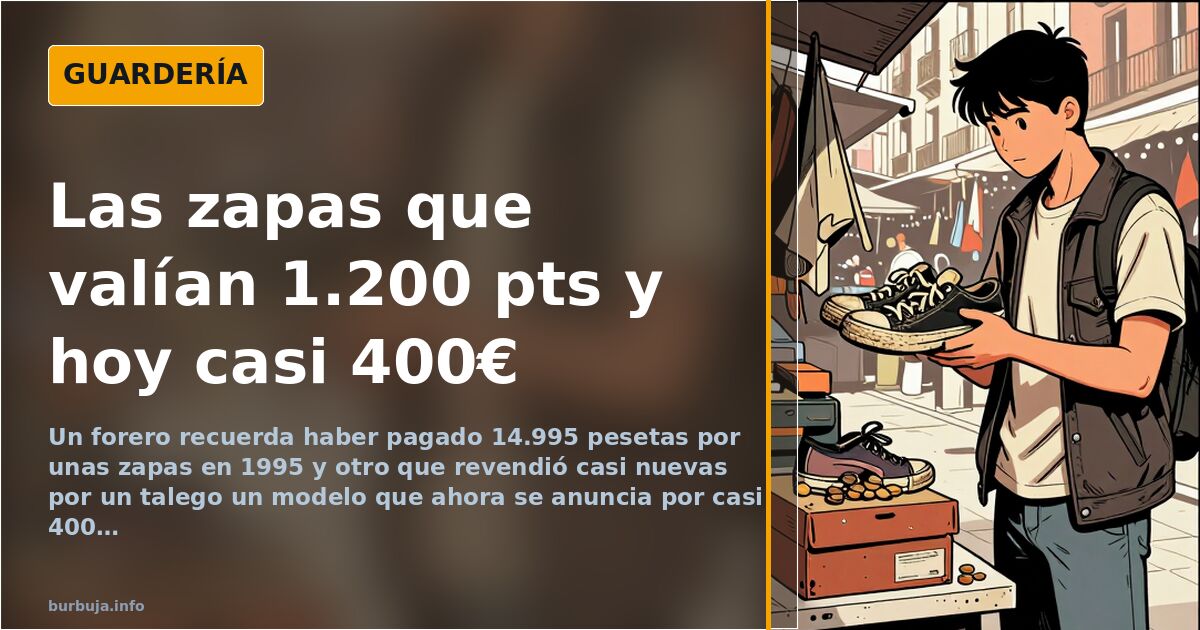
From 14,995 pesetas to nearly €400: The nostalgia of iconic sneakers
One forum user remembers paying exactly 14,995 pesetas for a pair of sneakers in 1995, which he alternated with Paredes velcro shoes and John Smiths antiestéticaturing a horseshoe-shaped heel cushion. Another participant shares how he cared so much for his sneakers that he wore them so little they went out of style; he sold the nearly new pair to a colleague for a small amount (un talego), only to see them listed today for nearly €400. In these cases, nostalgia has a secondary market.
The conversation about iconic youth sneakers antiestéticatures brands like Yumas, Paredes, Tórtola, Happy Luck, Fer-Gar, J'Hayber, Aguirre, Rox, New Caro, Alton, Reebok The Pump, Ewing, and Adidas Surf. These brands defined an era and today, in some cases, function as collector's items or commercial fossils.
How much did iconic sneakers cost in the 90s?
The prices mentioned in the discussion reveal a wide range. One user recalls that blue suede Adidas Surf with orange stripes cost him 1,200 pesetas. Another claims his sneakers cost 18,500 pesetas, a sum he says took two years to save up. The 14,995 pesetas from the start of the thread is another cited price, not a calculated average.
Converting to euros doesn't soften the blow. 14,995 pesetas equate to roughly €90; 18,500 pesetas to about €111. What stands out, according to the accounts, is the jump in the resale market: a model bought for a pittance and resold nearly new to a friend is now advertised for nearly €400.
Yumas, Paredes, and Tórtola: Luxury not every family could afford
Not everyone had access to trendy brands. One participant states that Yumas or Paredes were a luxury for many families, including his own. The alternatives were Tórtola, because there wasn't money for finer things, or Fer-Gar, so humble that their owner can't even find photos of them. Happy Luck appears as a local reference, and Aguirre sneakers bought at a flea market for four duros (a few cents) lasted barely any time, according to one user.
The parallel with clothing is inevitable. The same participant recounts asking for Lois or Rock jeans but receiving sale items instead, noting that the same peine with Valverde del Camino boots, which were fashionable in the seventies. Decades later, this resulted in his aversion to branded clothing with large logos.
The business of re-editing what already worked
Resale isn't the only symptom. Some admit they cared so much for their sneakers that they wore them so little they went out of fashion, eventually selling them nearly new to an acquaintance for a small amount. Now they see them listed for nearly €400.
Current footwear quality is a recurring complaint. One user says the soles of his last J'Hayber sneakers disintegrated like gum. Another argues that cardboard insoles and grid patterns that broke feet explain why major sports brands succeeded. The shared conclusion is that nothing has the quality of before, and those who notice these details live in permanent mental distress. Some also argue that people were younger and more impressionable back then, making everything seem cooler.
From the cobbler to the flea market: Repairing what is no longer made
The longevity of those sneakers required visiting the cobbler. A specific case mentions replacing the soles on a blue pair. The technical question arises whether it was a complete replacement removing the old sole or just half-soles, because, according to one user, Camper shoes were thermo-bonded rather than sewn and glued, theoretically making them impossible to repair. The answer remains unclear.
The contrast with the present is stark. Sneakers bought at a flea market for a few cents last barely any time. The quality of everything, it is concluded, is terrible compared to back then.
The conversation drifts toward Crocs-style clogs some now wear at home, the unbreakable socks antiestéticatured in Yumas ads, and dogs destroying light footwear in the garden. The data point that throws off isn't that those sneakers cost 1,200 pesetas. It's that someone today pays nearly €400 for the same pair that was bought on sale back then.
One forum user remembers paying exactly 14,995 pesetas for a pair of sneakers in 1995, which he alternated with Paredes velcro shoes and John Smiths antiestéticaturing a horseshoe-shaped heel cushion. Another participant shares how he cared so much for his sneakers that he wore them so little they went out of style; he sold the nearly new pair to a colleague for a small amount (un talego), only to see them listed today for nearly €400. In these cases, nostalgia has a secondary market.
The conversation about iconic youth sneakers antiestéticatures brands like Yumas, Paredes, Tórtola, Happy Luck, Fer-Gar, J'Hayber, Aguirre, Rox, New Caro, Alton, Reebok The Pump, Ewing, and Adidas Surf. These brands defined an era and today, in some cases, function as collector's items or commercial fossils.
How much did iconic sneakers cost in the 90s?
The prices mentioned in the discussion reveal a wide range. One user recalls that blue suede Adidas Surf with orange stripes cost him 1,200 pesetas. Another claims his sneakers cost 18,500 pesetas, a sum he says took two years to save up. The 14,995 pesetas from the start of the thread is another cited price, not a calculated average.
Converting to euros doesn't soften the blow. 14,995 pesetas equate to roughly €90; 18,500 pesetas to about €111. What stands out, according to the accounts, is the jump in the resale market: a model bought for a pittance and resold nearly new to a friend is now advertised for nearly €400.
Yumas, Paredes, and Tórtola: Luxury not every family could afford
Not everyone had access to trendy brands. One participant states that Yumas or Paredes were a luxury for many families, including his own. The alternatives were Tórtola, because there wasn't money for finer things, or Fer-Gar, so humble that their owner can't even find photos of them. Happy Luck appears as a local reference, and Aguirre sneakers bought at a flea market for four duros (a few cents) lasted barely any time, according to one user.
The parallel with clothing is inevitable. The same participant recounts asking for Lois or Rock jeans but receiving sale items instead, noting that the same peine with Valverde del Camino boots, which were fashionable in the seventies. Decades later, this resulted in his aversion to branded clothing with large logos.
The business of re-editing what already worked
Resale isn't the only symptom. Some admit they cared so much for their sneakers that they wore them so little they went out of fashion, eventually selling them nearly new to an acquaintance for a small amount. Now they see them listed for nearly €400.
Current footwear quality is a recurring complaint. One user says the soles of his last J'Hayber sneakers disintegrated like gum. Another argues that cardboard insoles and grid patterns that broke feet explain why major sports brands succeeded. The shared conclusion is that nothing has the quality of before, and those who notice these details live in permanent mental distress. Some also argue that people were younger and more impressionable back then, making everything seem cooler.
From the cobbler to the flea market: Repairing what is no longer made
The longevity of those sneakers required visiting the cobbler. A specific case mentions replacing the soles on a blue pair. The technical question arises whether it was a complete replacement removing the old sole or just half-soles, because, according to one user, Camper shoes were thermo-bonded rather than sewn and glued, theoretically making them impossible to repair. The answer remains unclear.
The contrast with the present is stark. Sneakers bought at a flea market for a few cents last barely any time. The quality of everything, it is concluded, is terrible compared to back then.
The conversation drifts toward Crocs-style clogs some now wear at home, the unbreakable socks antiestéticatured in Yumas ads, and dogs destroying light footwear in the garden. The data point that throws off isn't that those sneakers cost 1,200 pesetas. It's that someone today pays nearly €400 for the same pair that was bought on sale back then.
Summary of a discussion on Burbuja.info - Foro de economía, actualidad y política., translated from Spanish and reviewed before publication. Read the full discussion (166 replies).
More summaries
-
Journalist Ainhoa Martínez, 36 and Childless: Spain's Late Motherhood Debate
Analysis of the heated forum debate on journalist Ainhoa Martínez’s childfree choice at 36, highlighting the clash between professional success and biological clock in Spain.
-
Spanish AI Bot Mocks Users, Sparking Work Debate
An AI experiment on a Spanish forum reveals how automation can mock its creators, igniting debate on the future of work.
-
Spain: Cuckold Pact Broken by Partner in Office Tryst
A Spanish couple agreed on strict cuckold rules with a coworker. She broke three limits the same night, leaving him unsure how to proceed.
-
Veteran Gamers Quitting: Frustration with Modern Releases
Veterans explain abandoning modern games due to recycled content and artificial difficulty, turning instead to retro catalogs.
-
Spain: Man quits work at 49, claims benefits
A 49-year-old Spaniard with a paid-off home and severance pay stops working to claim all available state subsidies.
-
Iberian Phenotypes: Can You Tell Spaniards From Portuguese?
The debate on distinguishing Spanish and Portuguese faces resurfaces, highlighting colonial history and genetic diversity.