
650g Ribeye Steak: Controversy Over Poor Searing Ruins Dish
A 650g ribeye cooked over medium heat sparks debate as grey interiors and lack of searing turn the meal into a lesson in cooking technique and social class.
English · Original discussion in Spanish · Published
650g Ribeye Steak: The Searing Nobody Got Right
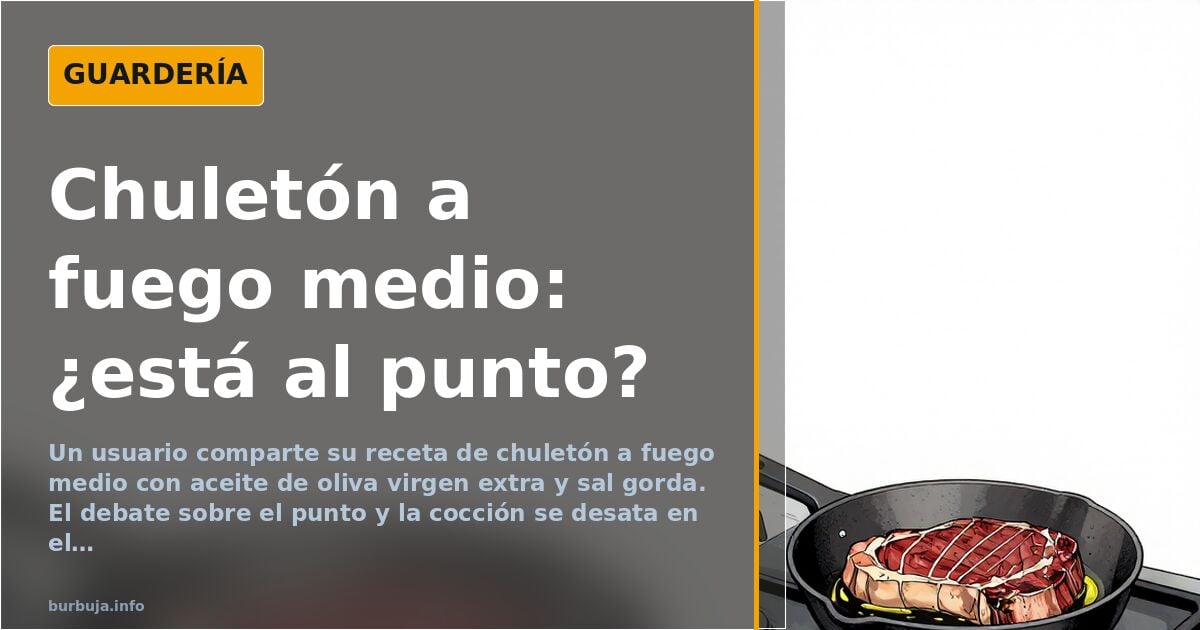
A 650g ribeye steak, an iron skillet on medium heat, extra virgin olive oil, coarse salt, a glass of Ribera de Duero wine, and a slice of rustic bread. The scene looks like yet another gastronomic daydream shared after a meal, but consensus breaks down the moment the meat appears in the image: the interior is grey, the surface lacks char, and serving it on Duralex glassware triggers a storm of criticism. The discussion isn't about money or politics. It's about heat, timing, and what it truly means to sear a cut of beef.
The Level of Doneness is the first point of contention. The meat is described as "boiled" or "cooked through," not roasted. Some argue that a proper ribeye should display three distinct colors when sliced: black on the outside, pink at the edges, and a red strip in the center. The dish presented meets none of these criteria. Furthermore, the skillet wasn't hot enough before placing the steak, an error repeated in nearly every critique.
Why Is a 650g Ribeye Not Seared Properly?
Size matters. A cut this thick requires very high temperatures so the crust forms before heat peine the core. If the pan is only on medium heat, the result is meat that cooks slowly, losing the contrast between exterior and interior. The circulating recommendation is clear: heat the pan "really well, not just a little," and grease it with the steak's own fat rather than adding oil.
The choice of oil also divides opinions. One group defends using extra virgin olive oil; others consider it an unnecessary garnish. The argument shifts to language: using the acronym EVOO (AOVE) is perceived as pretentious. "You can't just say 'extra virgin olive oil'," one voice snaps. The culinary debate becomes a judgment on how people speak.
Tableware, Tablecloth, and the Rest of the Setting
The Duralex plate and the absence of a tablecloth are interpreted as signs of precariousness. "Not even a tablecloth, how sad it is to be poor," summarizes one comment. Grandmother's dishes, Paco Arcoroc plates, a table against a bare wall: everything adds to the feeling that the delicacy is served in an improvised environment. The accompanying salad isn't spared either: critics note the tomatoes are whole and the lettuce is wilted.
The wine, a crianza bottled a decade ago, is considered a minor accompaniment for a cut of this caliber. The bread, however, receives unanimous praise, though the portion size is criticized as too small. "Throw some more bread there, kid," one voice requests.
The Ribeye as a Social Thermometer
Beyond cooking, the episode reveals a tension that transcends the plate. The meat becomes an excuse to discuss class, taste, and symbolic capital. "Food for rural bumpkins," declares one comment, while another replies that the problem isn't origin but technique. The debate over whether ribeye steaks are overrated adds another layer: some defend that pizza or hamburgers don't need extreme quality to be good, while others insist the ribeye is an untouchable totem.
The result is a choral portrait of what happens when haute cuisine meets domestic reality. The 650g cut becomes the center of a summary trial where every detail counts: the fire, the oil, the salt, the bread, the wine, the tableware, and even the diner's posture. The conclusion, if there is one, is that the perfect ribeye doesn't exist outside theory. Or that it does, but it requires a scorching hot skillet and someone who knows what they're doing.
Data from the episode: 650 grams of meat, one and a half minutes per side, an iron skillet on medium heat, a Ribera de Duero wine, and a slice of rustic bread. The recipe repeats in every attempt, but the result is never the same.
Also available in: Deutsch
Summary of a discussion on Burbuja.info - Foro de economía, actualidad y política., translated from Spanish and reviewed before publication. Read the full discussion (100 replies).
More summaries
-
Rare Steak and Duralex Plates: Rural Aesthetics Spark Class Debate
A rare steak served on vintage Duralex plates ignites a debate in Spain about rural versus urban dining tastes, revealing underlying class tensions.
-
Prostitution panel separates trafficking from sex work
A panel of nearly two hours brings together Meneses, Tasso and two content creators: banning prostitution would not end trafficking, it would increase it.
-
Why the letter 'W' makes hockey player Owen Power's name sound tough
A debate emerges over what makes a name sound 'badass': from hockey player Owen Power to the aura of Spanish conquistadors.
-
PSOE spokesperson's cigar and her alleged salary
A tweet claims he ruined the PSOE spokesperson's cigar and the debate shifts to her alleged salary: €129,905.02 gross per year
-
Spain: User Praises Japanese Animism Over Christian Guilt
A Spanish user expresses a preference for Japanese animist spirituality, citing its harmony with nature and honor as an alternative to the anxiety and guilt associated with Christianity.
-
Barça 2026/27: Flick's titles and market overhaul
Flick's Barça starts 2026/27 with two titles, 33 goals in 7 games, and a market reshuffle involving Julián, Rodri, Cucurella, and Ferran.