
3000 extra cancer deaths in Andalusia over six years are no statistical footnote
Why have cancer deaths in Andalusia, Spain risen by 3000? We break down the debate over health management, environmental causes and the impact on public health.
English · Original discussion in Spanish · Published
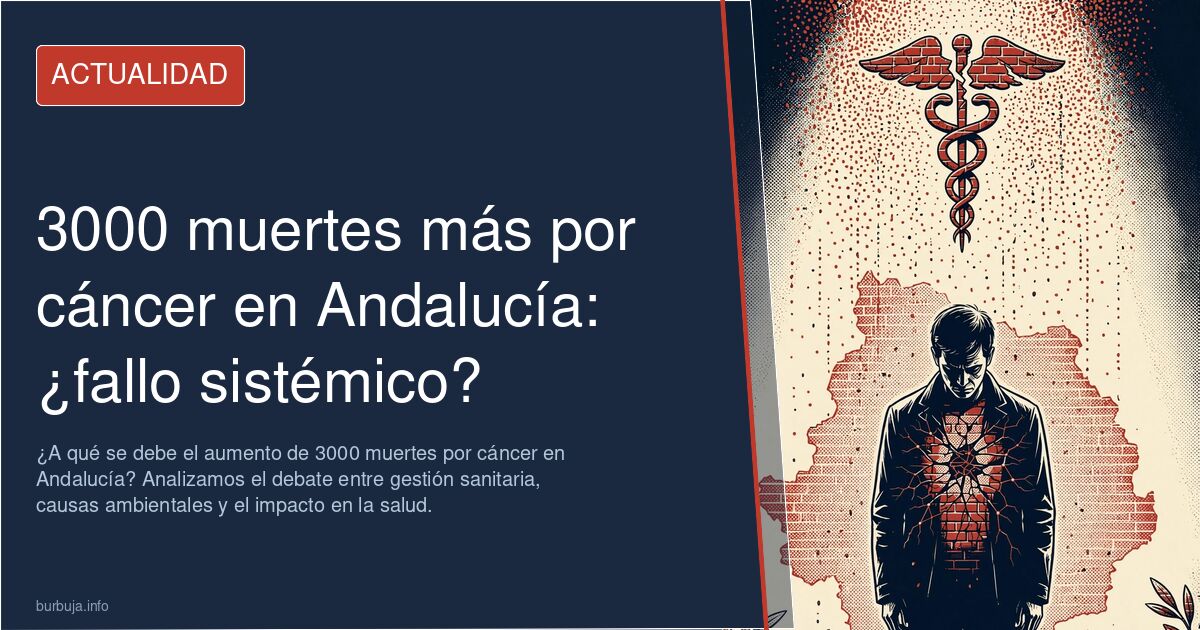
3000 extra cancer deaths in Andalusia: a systemic failure?
The rise of 3000 cancer deaths in Andalusia, Spain, over the past six years has set off every alarm bell on the forum, turning into a battleground where politics, health management and suspicions about environmental or pharmaceutical causes all collide. Far from being dismissed as a mere statistic, the figure has sparked a fierce debate over whether we are looking at a collapse in screening programmes or a public health problem of far greater depth.
What is at stake
What forum users are saying about 3000 extra cancer deaths in Andalusia over six years
Why this thread will not leave you indifferent
This debate is a raw barometer of how society perceives the health system: blind trust in official figures is gone. If users are right that this is only the tip of the iceberg, the implications for public health in Spain could be far more serious than the headlines admit.
This summary is just the surface. The full thread has 32 replies with data, sources, analysis and the unfiltered debate — registered users only. Create your free account in 30 seconds and join the debate.
Disclaimer: This content is a summary of opinions expressed by users of a public forum. It does not constitute medical or financial advice. For any health concerns, always consult a licensed healthcare professional.
Related threads on the forum
The rise of 3000 cancer deaths in Andalusia, Spain, over the past six years has set off every alarm bell on the forum, turning into a battleground where politics, health management and suspicions about environmental or pharmaceutical causes all collide. Far from being dismissed as a mere statistic, the figure has sparked a fierce debate over whether we are looking at a collapse in screening programmes or a public health problem of far greater depth.
What is at stake
- The core of the debate: The rise in cancer mortality has been used as a battering ram to question the management of the Junta de Andalucía (the regional government of Andalusia) since 2019, pitting those who see negligence in the early detection system against those who see an attempt at electoral manipulation.
- The fault line: Consensus breaks down when analysing the cause: is it a matter of political malpractice, an endemic industrial pollution problem in areas such as Huelva or Algeciras, or the delayed effect of external factors that many users hint at but few dare to state outright?
- The detail nobody expected: The emergence of earlier court rulings that found the SAS (Andalusia's public health service) liable for screening failures during the socialist era has wrong-footed those trying to pin responsibility exclusively on the current regional government, adding an unexpected twist to the discussion.
What forum users are saying about 3000 extra cancer deaths in Andalusia over six years
Position A (The critical-political take): Some users argue the figures are irrefutable proof of the decline of the current health system. They claim the neglect of screening programmes and resource management has caused a deadly setback that admits no excuses, demanding direct accountability from the government of the day.
Position B (Statistical scepticism): A more analytical and caustic segment of the forum denounces the lack of context in the data. They point out that "shock-headline merchants" throw out figures without any real comparisons, warning that, without breakdowns by age or cause, these statistics serve the electoralism of one side or the other far more than they help understand the medical reality.
Position C (The hidden-cause thesis): A large group of users points to long-term factors: from contaminated soil in industrial blackspots to the impact of lifestyle habits and, between the lines, the community's recurring doubts about the long-term effects of the "poison" and the strain on the health system since the 2020 crisis.
Why this thread will not leave you indifferent
This debate is a raw barometer of how society perceives the health system: blind trust in official figures is gone. If users are right that this is only the tip of the iceberg, the implications for public health in Spain could be far more serious than the headlines admit.
This summary is just the surface. The full thread has 32 replies with data, sources, analysis and the unfiltered debate — registered users only. Create your free account in 30 seconds and join the debate.
Disclaimer: This content is a summary of opinions expressed by users of a public forum. It does not constitute medical or financial advice. For any health concerns, always consult a licensed healthcare professional.
Related threads on the forum
- fat British influencer run over by another · 48 replies
- Segarro immigrant: "I've been here 30 years. If something happens in Segarro tomorrow, I'll side with Segarro. Even though I have Spanish nationality, I'm a Mo · 60 replies
- The Shakira and tax agency story is different from how the press tells it. · 179 replies
- search on for the bald man in the green T-shirt · 118 replies
Summary of a discussion on Burbuja.info - Foro de economía, actualidad y política., translated from Spanish and reviewed before publication. Read the full discussion (32 replies).
More summaries
-
Seven AfD candidates die in 15 days before German elections
Seven Alternative for Germany candidates died within 15 days before local elections. Police found no foul play, but the statistical anomaly raises questions.
-
Moroccan dirham falls 7% in days, according to forum user
A participant claims the dirham drops 7% in days and the trade deficit exceeds $17 billion, without material confirming it with…
-
Signs of the new 'plandemic' start appearing
We analyse the debate on Burbuja.info about alleged health alert posters: fact or hoax? Find out how to identify this kind of information.
-
Chinese graduates turning to crime: the crisis has crossed a dangerous line
China's economic crisis is pushing university graduates into crime as jobs dry up. We look at how shrinking prospects are cracking the Chinese dream.
-
Is aluminium foil really bad for your health?
Is aluminium foil harmful to your health when cooking? We look at the debate over particle migration and whether it is a real risk or a myth.
-
Just curious: why does everyone hate that burbubot so much?
We take a look at the debate on Burbuja.info about the burbubot: is it genuine hatred or rejection of an AI that doesn't get the spirit of the forum?