
20-Minute Standing Ovation in Cannes for 'The Black Ball'
Javis' film receives a 20-minute ovation at the 79th Cannes Film Festival, sparking debate between merit and promotion.
English · Original discussion in Spanish · Published
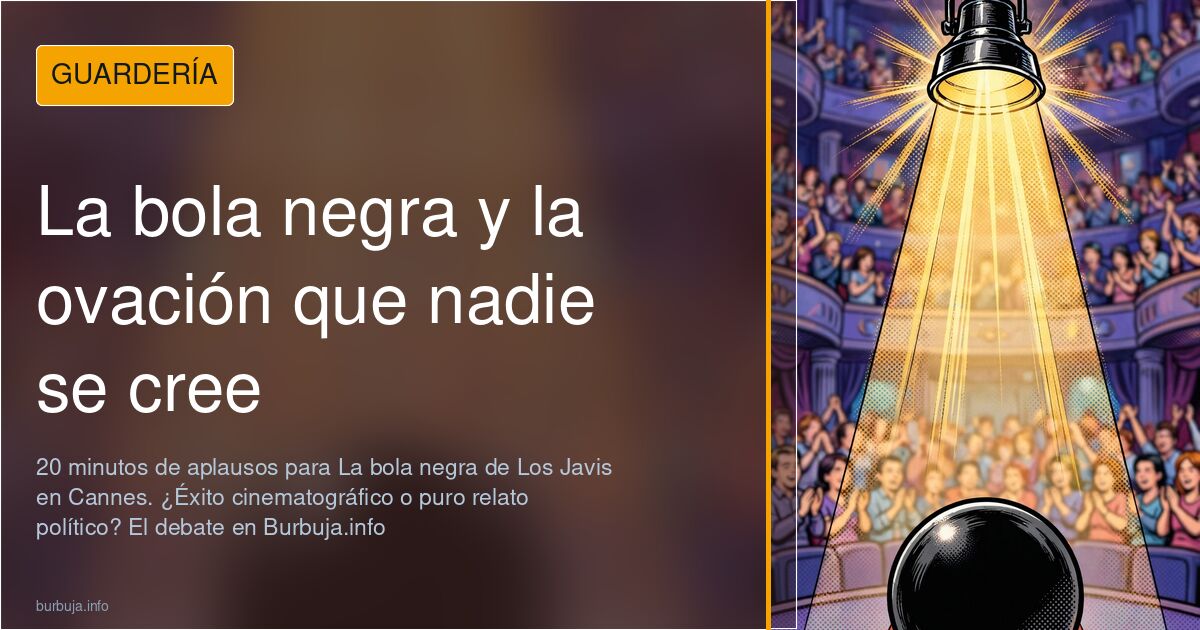
Cannes gives 'The Javis' 'Black Ball' a 20-minute ovation
Twenty minutes of standing applause. That's the figure with which 'The Black Ball' left the 79th Cannes Film Festival, one of the longest ovations in the event's history. The problem starts right there. Because an ovation measures enthusiasm in a specific room, not quality, and the data has become the main promotional argument for a film that has not yet reached cinemas.
The latest work by the Javis is based on a premise that sounds like homework well done: three men in three different eras, united by sensual, desire, pain, and heritage, with one of the last unfinished works of Federico García Lorca as a backdrop. A cast including Penélope Cruz, Lola Dueñas, Julio Torres, and names like Guitarricadelafuente or Miguel Bernardeau. And Netflix behind it.
What a 20-minute ovation really means
The most critical sector doesn't dispute the spectacle. It disputes what it means. It is argued that Cannes applauds anything that hits the right notes—historical memory and vindication—and that the long applause is, above all, a well-oiled campaign tool. The word proge appears again and again in that section.
On the other hand, the classic defense: if the film works internationally, there must be a reason. Mixing desire, heritage, and civil war is nothing new—it's been done for decades—and the underlying reproach isn't about the theme but the packaging. Some sum it up bluntly: if art bends to representation quotas, it ceases to be art.
Merit versus the promotion machine
Here the debate becomes economic. Part of the analysis recalls that promotion alone doesn't make a product good cinema: there was a time when Mediaset productions reached over five million viewers regardless of their quality. The public responds to push, not critical judgment. With that logic, the Cannes ovation would be the first link in a chain that continues with pre-sales, box office, and awards season.
Others qualify the opposite: sustained international enthusiasm—some are already talking about the Palme d'Or, even an Oscar—isn't manufactured solely with advertising. On the radio, it was emphasized that pre-sales were far ahead of the usual, and that figure, for some, says more than any applause.
The scene no one expected: the applause for 'The Gulag Archipelago'
The most cited anecdote is not cinematic. A passage from The Gulag Archipelago was recalled in which a Communist Party meeting, during the Stalinist purges, chains together endless applause because no one dares to be the first to stop. Numb arms, officials terrified of what peine to the one before. Twenty minutes of ovation, in a certain context, can measure antiestéticar, not admiration.
The comparison is exaggerated. And it's hard to completely dismiss the person who makes it.
Why a film about the Civil War and LGTBI desire generates this noise
The combination is not accidental, according to comments. Civil War and LGTBI: for some, the two themes that generate the most subsidies and headlines in recent Spanish cinema. The name 'The Black Ball' circulates more today because of the ovation than its trailer, and that's the best indicator that the phenomenon is, first and foremost, about communication.
What is clear is that the buzz has already been created. If this momentum holds until awards season, the conversation will shift from cinema to campaigns. There, I suspect, the Cannes figure will fall short compared to the millions that will be put on the table.
Twenty minutes of standing applause. That's the figure with which 'The Black Ball' left the 79th Cannes Film Festival, one of the longest ovations in the event's history. The problem starts right there. Because an ovation measures enthusiasm in a specific room, not quality, and the data has become the main promotional argument for a film that has not yet reached cinemas.
The latest work by the Javis is based on a premise that sounds like homework well done: three men in three different eras, united by sensual, desire, pain, and heritage, with one of the last unfinished works of Federico García Lorca as a backdrop. A cast including Penélope Cruz, Lola Dueñas, Julio Torres, and names like Guitarricadelafuente or Miguel Bernardeau. And Netflix behind it.
What a 20-minute ovation really means
The most critical sector doesn't dispute the spectacle. It disputes what it means. It is argued that Cannes applauds anything that hits the right notes—historical memory and vindication—and that the long applause is, above all, a well-oiled campaign tool. The word proge appears again and again in that section.
On the other hand, the classic defense: if the film works internationally, there must be a reason. Mixing desire, heritage, and civil war is nothing new—it's been done for decades—and the underlying reproach isn't about the theme but the packaging. Some sum it up bluntly: if art bends to representation quotas, it ceases to be art.
Merit versus the promotion machine
Here the debate becomes economic. Part of the analysis recalls that promotion alone doesn't make a product good cinema: there was a time when Mediaset productions reached over five million viewers regardless of their quality. The public responds to push, not critical judgment. With that logic, the Cannes ovation would be the first link in a chain that continues with pre-sales, box office, and awards season.
Others qualify the opposite: sustained international enthusiasm—some are already talking about the Palme d'Or, even an Oscar—isn't manufactured solely with advertising. On the radio, it was emphasized that pre-sales were far ahead of the usual, and that figure, for some, says more than any applause.
The scene no one expected: the applause for 'The Gulag Archipelago'
The most cited anecdote is not cinematic. A passage from The Gulag Archipelago was recalled in which a Communist Party meeting, during the Stalinist purges, chains together endless applause because no one dares to be the first to stop. Numb arms, officials terrified of what peine to the one before. Twenty minutes of ovation, in a certain context, can measure antiestéticar, not admiration.
The comparison is exaggerated. And it's hard to completely dismiss the person who makes it.
Why a film about the Civil War and LGTBI desire generates this noise
The combination is not accidental, according to comments. Civil War and LGTBI: for some, the two themes that generate the most subsidies and headlines in recent Spanish cinema. The name 'The Black Ball' circulates more today because of the ovation than its trailer, and that's the best indicator that the phenomenon is, first and foremost, about communication.
What is clear is that the buzz has already been created. If this momentum holds until awards season, the conversation will shift from cinema to campaigns. There, I suspect, the Cannes figure will fall short compared to the millions that will be put on the table.
Summary of a discussion on Burbuja.info - Foro de economía, actualidad y política., translated from Spanish and reviewed before publication. Read the full discussion (40 replies).
More summaries
-
‘La Bola Negra’ Sells Out Cinemas, Dividing Spanish Film Industry
The Javis' film fills theaters with Penélope Cruz and Antonio de la Torre in supporting roles, while some audiences refuse to pay for tickets.
-
Real Madrid's Dominance: European Glory vs. Domestic Refereeing Bias
Real Madrid dominates European football but struggles against a domestic league marked by controversial refereeing decisions and the narrative hegemony of FC Barcelona.
-
Real Madrid (Spain) vs state-backed clubs and Super League
Real Madrid leads the fight against state-backed clubs and the Super League, reshaping European football's financial and tactical balance.
-
Seven Years Without a Date, and a Coffee Invite That Ended in Being Blocked
Seven years without a date, three weeks of back-and-forth, and a silent block: how a coffee invite turned into a ghosting story.
-
This post on X from back when it was still Twitter is getting people talking online again.
A post from before July 2023 asked whether Penélope Cruz was Pepe Viyuela in a wig. The joke is doing the rounds again.
-
A forum debates whether showing off your body online is enough to get a date
A conversation about dating someone who flaunts their body on social media leaves one fact: the only figure mentioned is an unconfirmed height, 1,52 m