
2-Euro Mushroom Veggie Dinner Sparks Forum Debate
A nine-vegetable dish with €2 mushrooms from Carrefour reignites the debate between plant-based meals and animal protein, pitting bacon against broccoli.
English · Original discussion in Spanish · Published
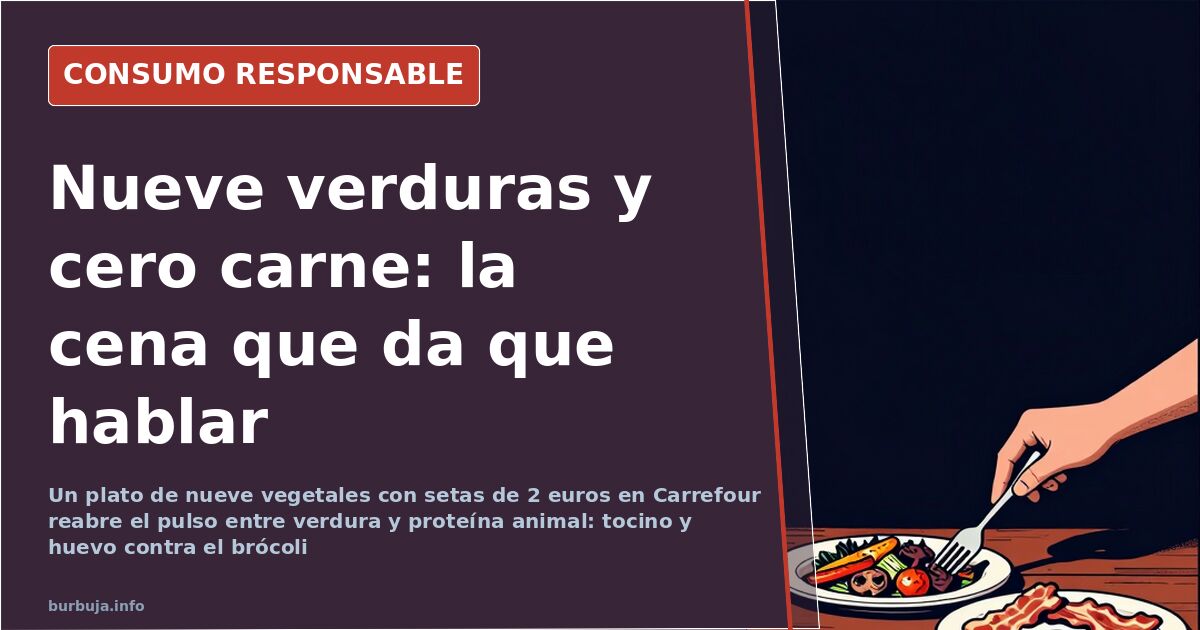
A Nine-Vegetable Dinner with Two-Euro Mushrooms and No Meat
Nine ingredients in the pan and no trace of animal protein: broccoli, spinach, red pepper, green pepper, onion, green beans, garlic, shiitake mushrooms, and carrot. The cook summed it up in one word—"brutal"—and posted the photo. The response was hardly appetizing.
"Very healthy and depressing," one diner concluded. "That needs half a kilo of bacon sautéed with garlic," another added. The topic quickly turned into banter: that it wouldn't fill a sparrow, that it looked like wildebeest food, or that eating toenails would be better for protein.
How Much Does a Shiitake Mushroom Supermarket Dinner Cost?
The pack of shiitakes cost just over €2 at Carrefour and, according to the buyer, lasted four times. It was the only hard data on the table, opening an unexpected front: supermarket mushrooms versus wild forest mushrooms.
Some argue that shiitake is "the porcini of old but three times more expensive." The counterargument came in the form of an autumn afternoon: picking boletus in the mountains is free. The calculation got complicated when someone brought up the fly agaric (amanita muscaria).
The other alternative mentioned in the exchange was ultra-frozen vegetables: peas and broccoli ready in five minutes of cooking, presented as the quintessential healthy and cheap option. More than the price of the dish, what was under discussion was its fruta.
Broccoli or Brécol: The Fight Over a Word
Amid the food discussion, an older controversy emerged. "In Spain it has always been called brécol," defended one participant, criticizing dubbed series and films for what he considers an attack on Spanish. The vegetable, as healthy as its name is debated.
The mushroom's name wasn't spared either, with someone noting that the Japanese label could rename the entire dish.
Fat, Protein, and the Alleged Lack of Substance
The most repeated complaint was always the same: lack of fat, lack of protein, lack of substance. Half a kilo of sautéed bacon, a couple of fried eggs with chorizo, a splash of olive oil, some soy sauce on top, beef steaks on the side, salmon, two scrambled eggs. Rarely does a proposal not add something of animal origin to a dinner that, according to its author, was meant to complement a day where meat had already been eaten.
And there lies the uncomfortable detail: many of the more moderate messages didn't ask to replace the vegetables, but to accompany them. Sautéed with paprika, garlic, and parsley, and scrambled with egg, and the matter was resolved. "I've quite forgotten about vegetables," one admitted. The best defense of the dinner wasn't an argument, it was a recipe.
From Vegetables to Masculinity
Part of the exchange didn't discuss nutrients, but something else. Jokes about tone of voice, manliness, and what a real man is supposed to eat for dinner. It's the old reflex that turns a plate of vegetables into a test of virility and says much more about the writer than about the pan. At that point, the dinner itself became irrelevant.
What Was Said About Fly Agaric?
Everything was said, and much of it without backing. One participant claimed that fly agaric isn't deadly but hallucinogenic, and confusing it with boletus is like confusing an apple with a pineapple; another clarified that it doesn't kill but leaves the body in a mess. These are loose statements, unverified, and with wild mushrooms, the only reasonable course of action remains the same: hands off unless an expert says otherwise.
In the end, the disorienting fact isn't the price of the mushrooms. It's that a dish of nine vegetables needed several rounds of justification to seem appealing.
Nine ingredients in the pan and no trace of animal protein: broccoli, spinach, red pepper, green pepper, onion, green beans, garlic, shiitake mushrooms, and carrot. The cook summed it up in one word—"brutal"—and posted the photo. The response was hardly appetizing.
"Very healthy and depressing," one diner concluded. "That needs half a kilo of bacon sautéed with garlic," another added. The topic quickly turned into banter: that it wouldn't fill a sparrow, that it looked like wildebeest food, or that eating toenails would be better for protein.
How Much Does a Shiitake Mushroom Supermarket Dinner Cost?
The pack of shiitakes cost just over €2 at Carrefour and, according to the buyer, lasted four times. It was the only hard data on the table, opening an unexpected front: supermarket mushrooms versus wild forest mushrooms.
Some argue that shiitake is "the porcini of old but three times more expensive." The counterargument came in the form of an autumn afternoon: picking boletus in the mountains is free. The calculation got complicated when someone brought up the fly agaric (amanita muscaria).
The other alternative mentioned in the exchange was ultra-frozen vegetables: peas and broccoli ready in five minutes of cooking, presented as the quintessential healthy and cheap option. More than the price of the dish, what was under discussion was its fruta.
Broccoli or Brécol: The Fight Over a Word
Amid the food discussion, an older controversy emerged. "In Spain it has always been called brécol," defended one participant, criticizing dubbed series and films for what he considers an attack on Spanish. The vegetable, as healthy as its name is debated.
The mushroom's name wasn't spared either, with someone noting that the Japanese label could rename the entire dish.
Fat, Protein, and the Alleged Lack of Substance
The most repeated complaint was always the same: lack of fat, lack of protein, lack of substance. Half a kilo of sautéed bacon, a couple of fried eggs with chorizo, a splash of olive oil, some soy sauce on top, beef steaks on the side, salmon, two scrambled eggs. Rarely does a proposal not add something of animal origin to a dinner that, according to its author, was meant to complement a day where meat had already been eaten.
And there lies the uncomfortable detail: many of the more moderate messages didn't ask to replace the vegetables, but to accompany them. Sautéed with paprika, garlic, and parsley, and scrambled with egg, and the matter was resolved. "I've quite forgotten about vegetables," one admitted. The best defense of the dinner wasn't an argument, it was a recipe.
From Vegetables to Masculinity
Part of the exchange didn't discuss nutrients, but something else. Jokes about tone of voice, manliness, and what a real man is supposed to eat for dinner. It's the old reflex that turns a plate of vegetables into a test of virility and says much more about the writer than about the pan. At that point, the dinner itself became irrelevant.
What Was Said About Fly Agaric?
Everything was said, and much of it without backing. One participant claimed that fly agaric isn't deadly but hallucinogenic, and confusing it with boletus is like confusing an apple with a pineapple; another clarified that it doesn't kill but leaves the body in a mess. These are loose statements, unverified, and with wild mushrooms, the only reasonable course of action remains the same: hands off unless an expert says otherwise.
In the end, the disorienting fact isn't the price of the mushrooms. It's that a dish of nine vegetables needed several rounds of justification to seem appealing.
Summary of a discussion on Burbuja.info - Foro de economía, actualidad y política., translated from Spanish and reviewed before publication. Read the full discussion (149 replies).
More summaries
-
Two old cars for 350€ a year: a forum user’s thesis
A forum user argues that a devalued second car costs 350€ annually for insurance, oil, and inspection, but unexpected repairs drive up the real bill.
-
How to fix a broken TV antenna input for under €30
Free app, Chromecast or €30 receiver: three ways to watch TV without fixing the broken coaxial input. The cheapest costs zero euros.
-
Garage sends you to scrapyard for part: fair or rip-off?
A 2003 car, a discontinued part, and a garage sending the customer to a scrapyard. This is how repair works when official spares are gone.
-
Combustion cars decline: European gas stations lose 2.5 million customers
European gas stations lost 2.5 million customers in a year as Brent stays at $60. EVs grow, but the used market and subsidies remain key factors.
-
Fedora vs. Beret: Hats for Bald Men That Avoid Gangster Vibes
From wide-brimmed fedoras to grandpa's berets, discover which hat covers baldness without looking like a movie gangster.
-
Homemade Soap from Used Oil: Savings or Safety Risk?
Making natural soap with used cooking oil sparks debate on Burbuja.info. Is the cost saving worth the chemical risks?