
1996: 150,000 pesetas and zero anxiety about the future
Nostalgia for Spain's labor market in 1996 contrasts with today's reality, where salaries have stagnated despite inflation.
English · Original discussion in Spanish · Published
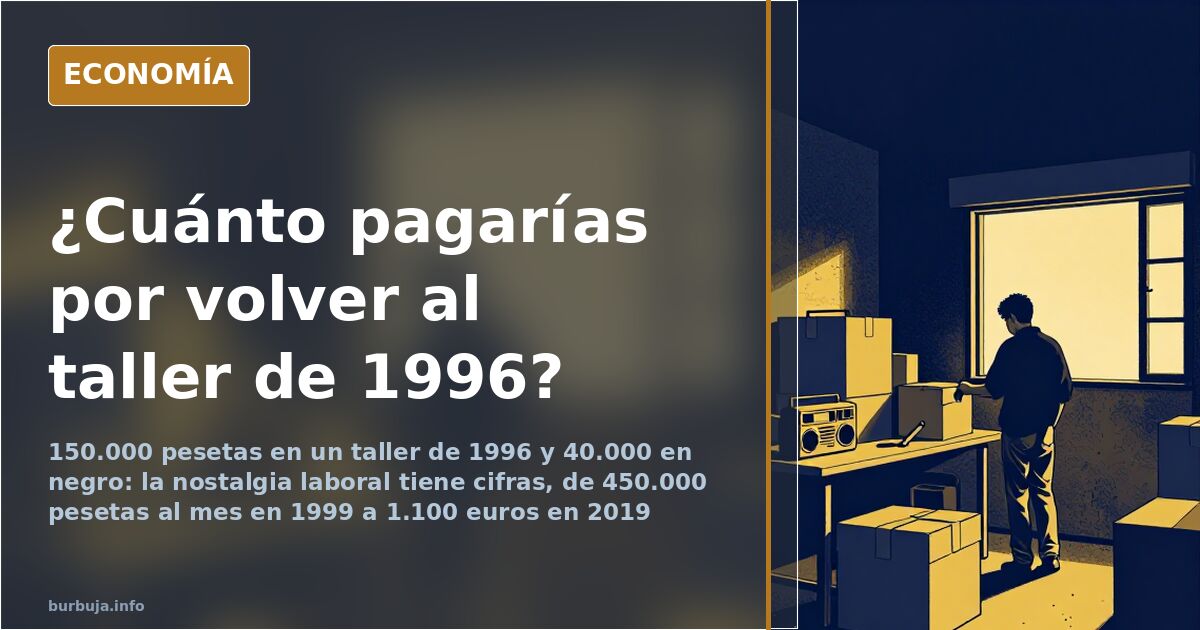
Working off the books in 1996 without antiestéticaring tomorrow
How much would you pay to be in that workshop on May 13, 1996, at 4:30 PM? Manolito is 24, folding boxes, listening to Orate FM with DJ Nano’s musicote, and never wondering if this scene will end. In his pocket he has 150,000 pesetas received on April 30 and 40,000 just paid for hours worked off the books. The happiness, the story says, isn’t in the amount. It’s in not having to do the math.
That scene has functioned as an object of desire for over six years. Sunlight streams through the workshop windows and shines brighter than ever, the original text says, and there lies the trick: no one knew it was unrepeatable because no one knew there was anything to lose.
What could 150,000 pesetas buy in 1996?
Less than memory suggests. Spain in February 1996 dragged a 20% unemployment rate and Social Security contributors numbered the same as in 1975: twelve million. That data breaks the dream. That country wasn’t a labor paradise, and those who paint it so are usually comparing their youth with another’s fatigue.
What was different was the price floor. A small salary allowed living in a big city, modestly and often without a car, but it did. Cinema tickets cost 300 pesetas, rents didn’t require sharing flats at thirty, and leaving a job wasn’t a catastrophe. The trap is always the same: comparing nominal wages then and now while forgetting that money bought something else.
The IT worker who went from 450,000 pesetas to €1,100
There’s a contrast that better than any index shows where the floor moved. In 1999, an IT profile earned 450,000 pesetas a month, with an office, company car, and stock options. In 2019, the same profile stayed at €1,100, in a cubicle, with transport passes and unpaid on-call duties. Twenty years separate these two payslips, and no inflation explains the jump.
Not everyone experienced it the same way. Some were 26 in 1996, had three inherited souvenir shops, a Z3 outside, and made two kilos profit after the May bridge holiday, dining without checking the menu. That world existed, and it also faded. The distance from the mileurista (someone earning around €1,000) of 2019 isn’t effort: it’s time window.
New cars, cheap cinema, and summers that lasted a century
Nostalgia isn’t just monetary. People drove brand-new cars from dealerships along the AP-68 toward Zaragoza at whatever estimulante ilegal the gauge showed, no radars, no points system, no surprises. Kids aged five went out alone, met at an hour, and all appeared; the week’s biggest tech investment was renting a cartridge. Spectrum, Game Boy, Mega Drive: little, but squeezed until the last key.
The reverse of that freedom is a repeated word: prison. Mobile phones, it is said, liberated no one; they added a leash. Childhood in the nineties and early 2000s is remembered as territory where time wasn’t measured in notifications. Idealization, probably. But the contrast with perpetual screens is sharp enough that the complaint doesn’t dissolve alone.
Two crises eating the same productive decade
Here nostalgia stops being aesthetic and becomes accounting. Those aged 23 in 2020 carried two recessions before turning thirty. Those between 30 and 40 faced both during professional and personal growth, derailing careers. And those who emigrated with one year’s experience, to Wales or anywhere better, did so by arithmetic, not romance.
Some argue comparison is cheating, that the nineties were tough too, and memory edits. The answer is usually a figure: back then a salary covered mortgage, marriage, family; today the same effort stays in rent. Both can be true simultaneously, and that’s the problem.
The result is a labor market where aspiration shrank to administrative size: respected hours, livable wage, affordable housing. None is revolutionary utopia. It’s the definition of middle class, exactly what diluted between crises without anyone signing the minutes.
The workshop scene wasn’t perfect either. It just seemed eternal, which is different. And today, no paycheck pays for that.
How much would you pay to be in that workshop on May 13, 1996, at 4:30 PM? Manolito is 24, folding boxes, listening to Orate FM with DJ Nano’s musicote, and never wondering if this scene will end. In his pocket he has 150,000 pesetas received on April 30 and 40,000 just paid for hours worked off the books. The happiness, the story says, isn’t in the amount. It’s in not having to do the math.
That scene has functioned as an object of desire for over six years. Sunlight streams through the workshop windows and shines brighter than ever, the original text says, and there lies the trick: no one knew it was unrepeatable because no one knew there was anything to lose.
What could 150,000 pesetas buy in 1996?
Less than memory suggests. Spain in February 1996 dragged a 20% unemployment rate and Social Security contributors numbered the same as in 1975: twelve million. That data breaks the dream. That country wasn’t a labor paradise, and those who paint it so are usually comparing their youth with another’s fatigue.
What was different was the price floor. A small salary allowed living in a big city, modestly and often without a car, but it did. Cinema tickets cost 300 pesetas, rents didn’t require sharing flats at thirty, and leaving a job wasn’t a catastrophe. The trap is always the same: comparing nominal wages then and now while forgetting that money bought something else.
The IT worker who went from 450,000 pesetas to €1,100
There’s a contrast that better than any index shows where the floor moved. In 1999, an IT profile earned 450,000 pesetas a month, with an office, company car, and stock options. In 2019, the same profile stayed at €1,100, in a cubicle, with transport passes and unpaid on-call duties. Twenty years separate these two payslips, and no inflation explains the jump.
Not everyone experienced it the same way. Some were 26 in 1996, had three inherited souvenir shops, a Z3 outside, and made two kilos profit after the May bridge holiday, dining without checking the menu. That world existed, and it also faded. The distance from the mileurista (someone earning around €1,000) of 2019 isn’t effort: it’s time window.
New cars, cheap cinema, and summers that lasted a century
Nostalgia isn’t just monetary. People drove brand-new cars from dealerships along the AP-68 toward Zaragoza at whatever estimulante ilegal the gauge showed, no radars, no points system, no surprises. Kids aged five went out alone, met at an hour, and all appeared; the week’s biggest tech investment was renting a cartridge. Spectrum, Game Boy, Mega Drive: little, but squeezed until the last key.
The reverse of that freedom is a repeated word: prison. Mobile phones, it is said, liberated no one; they added a leash. Childhood in the nineties and early 2000s is remembered as territory where time wasn’t measured in notifications. Idealization, probably. But the contrast with perpetual screens is sharp enough that the complaint doesn’t dissolve alone.
Two crises eating the same productive decade
Here nostalgia stops being aesthetic and becomes accounting. Those aged 23 in 2020 carried two recessions before turning thirty. Those between 30 and 40 faced both during professional and personal growth, derailing careers. And those who emigrated with one year’s experience, to Wales or anywhere better, did so by arithmetic, not romance.
Some argue comparison is cheating, that the nineties were tough too, and memory edits. The answer is usually a figure: back then a salary covered mortgage, marriage, family; today the same effort stays in rent. Both can be true simultaneously, and that’s the problem.
The result is a labor market where aspiration shrank to administrative size: respected hours, livable wage, affordable housing. None is revolutionary utopia. It’s the definition of middle class, exactly what diluted between crises without anyone signing the minutes.
The workshop scene wasn’t perfect either. It just seemed eternal, which is different. And today, no paycheck pays for that.
Also available in: Deutsch
Summary of a discussion on Burbuja.info - Foro de economía, actualidad y política., translated from Spanish and reviewed before publication. Read the full discussion (161 replies).
More summaries
-
Machines paying into Social Security: what's being proposed
A forum user puts gross operating surplus at 8%: the proposal for machines to contribute divides between redistribution and capital flight
-
The Sofa Video: Domestic Scolding as a Viral Format
A couple posts Instagram videos where she scolds her partner about the sofa. The format goes viral: real relationship or clickbait?
-
Reporter shoved into Madrid's Puerta del Sol fountain during live stream
A journalist was pushed into the Puerta del Sol fountain in Madrid during a live broadcast. He only got his feet wet.
-
Spanish Left Infighting: Iglesias Criticizes Más Madrid Over Palestine Stance
Pablo Iglesias challenges Emilio Delgado’s claim that Spain leads in defending Palestine, citing arms purchases from Israel and police crackdowns on protesters.
-
Spain's rental crisis: Who drives up housing costs?
Debate in Spain on whether landlords, investment funds, or supply shortages cause high rents. Focuses on small owners and migration impact.
-
Dancing in Spain's Flood Zone Sparks Victim Respect Debate
Women dance in a Valencia flood zone, triggering backlash over respect for victims and social media performative behavior.