
1960s penthouse stays at 13°C despite heating and new windows
A 1960s Spanish penthouse struggles with 13°C temperatures, inefficient heaters, and 73% humidity despite recent renovations.
English · Original discussion in Spanish · Published
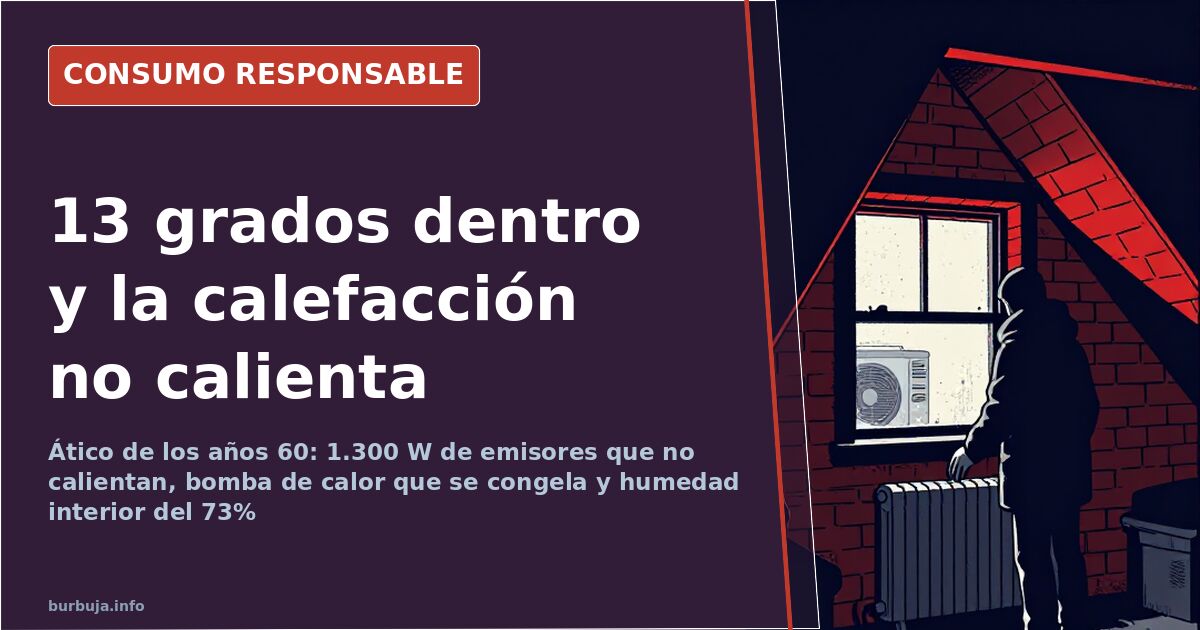
1960s penthouse: 13°C in the living room and ineffective heaters
Can you have new windows and insulation in the roof and walls but still feel freezing at home? Yes: it is enough to live in a 1960s penthouse. This case involves a home with PVC windows on three sides—without thermal bridges—an uninhabited floor below, and a cold communal staircase. The result, measured with a thermometer in hand: 13 degrees in the living room while it is two degrees outside. Without the heating on, of course; even with it on, the temperature barely rises.
The equipment is not low-quality. There are two thermal emitters of 1,300 W each and a heat pump that does blow hot air, but periodically spits out cold air to defrost the compressor. And one detail that drives anyone looking at the bill to despair: the device continues consuming power for an hour to an hour and a half after being turned off. The house is at 17.5 degrees, and the air coming out of the dehumidifier reaches 22, with humidity dropping from 73% to 50%.
Internal insulation fails to fix a penthouse exposed on three sides
The first diagnostic error is the usual one: blaming the insulation. Projected cellulose in the roof and walls helps, but it does not create thermal inertia. Insulating from the inside leaves the walls cold and forces constant heating; insulating from the outside allows the building's own mass to stabilize heat loss. With only a single row of brick and a lightweight roof, the margin for improvement is small.
Geometry carries more weight. A penthouse has, at minimum, two exposed facades, frequently three, and always the roof. If, additionally, the lower floor is empty and there are no neighbors providing residual heat, the home behaves like a box isolated from the rest of the building. The comparison is striking: someone who lived in an 80s block with neighbors running their heating at maximum remembers never dropping below 17 degrees without turning anything on.
How much does it cost to heat a home without thermal inertia?
Thermal emitters are pure electrical resistance: all energy is converted into heat, yes, but at a cost per kilowatt-hour that makes every hour of comfort expensive. With two 1,300 W units running simultaneously, the instantaneous demand exceeds 2.5 kW. A heat pump reduces this bill by delivering more heat per watt consumed than an electrical resistance.
The underlying problem is the tariff. With electricity at 30 cents per kilowatt-hour, any electrical solution skyrockets. A user provides a contrast: in a home from 2002, the maximum bill is around 80 euros per month.
The 73% humidity that goes unnoticed until your breath fogs up
In cold homes, the problem is not just temperature: it is water. At 17 degrees with 73% relative humidity, speaking produces mist and fingers go numb. A domestic dehumidifier works better the warmer the room is, so at 16 degrees it performs less efficiently and must be left running many more hours to extract the water from the air: with the living room at 16 degrees and humidity at 65-70%, the device returned air at 21 degrees and 44% humidity while consuming 400 W.
Ventilation strategy also matters. Opening up at midday works on dry, sunny days; with rain and clouds, ventilating at 15 degrees brings humidity in instead of taking it out. The logical order is to lower the humidity first and then heat, because heating humid air means heating water that provides no comfort.
Pellet stove, heat pump, or moving out?
Here, the options open up on three fronts. The thermal route bets on a pellet or wood stove—if there is a chimney flue—providing powerful, concentrated heat in the living area, using the kitchen as a refuge and electric blankets for the rest. The technological route relies on a well-sized heat pump: there are cases where 30-square-meter living rooms go from 18 to 24 degrees in less than an hour with low electrical consumption.
The structural route is the least discussed: real insulation. Injecting glass wool into the facade cavity is quoted at about 1,650 euros for 90 meters, taking one day of work and requiring no painting. Less epic than a new stove, but it attacks the cause rather than the symptom.
And the radical route: moving. Some argue that in homes without insulation and without neighbors above or below, ruin is inevitable. With indoor temperatures of 5 degrees during harsh winters, it does not seem like an exaggeration.
The winter ended without drama, but with a thermometer that never reached the desired level. Someone who buys a penthouse buys views, light, and a roof they do not own. What they do not buy is the thermal inertia of the neighbors, and it turns out that is what truly provides warmth.
Can you have new windows and insulation in the roof and walls but still feel freezing at home? Yes: it is enough to live in a 1960s penthouse. This case involves a home with PVC windows on three sides—without thermal bridges—an uninhabited floor below, and a cold communal staircase. The result, measured with a thermometer in hand: 13 degrees in the living room while it is two degrees outside. Without the heating on, of course; even with it on, the temperature barely rises.
The equipment is not low-quality. There are two thermal emitters of 1,300 W each and a heat pump that does blow hot air, but periodically spits out cold air to defrost the compressor. And one detail that drives anyone looking at the bill to despair: the device continues consuming power for an hour to an hour and a half after being turned off. The house is at 17.5 degrees, and the air coming out of the dehumidifier reaches 22, with humidity dropping from 73% to 50%.
Internal insulation fails to fix a penthouse exposed on three sides
The first diagnostic error is the usual one: blaming the insulation. Projected cellulose in the roof and walls helps, but it does not create thermal inertia. Insulating from the inside leaves the walls cold and forces constant heating; insulating from the outside allows the building's own mass to stabilize heat loss. With only a single row of brick and a lightweight roof, the margin for improvement is small.
Geometry carries more weight. A penthouse has, at minimum, two exposed facades, frequently three, and always the roof. If, additionally, the lower floor is empty and there are no neighbors providing residual heat, the home behaves like a box isolated from the rest of the building. The comparison is striking: someone who lived in an 80s block with neighbors running their heating at maximum remembers never dropping below 17 degrees without turning anything on.
How much does it cost to heat a home without thermal inertia?
Thermal emitters are pure electrical resistance: all energy is converted into heat, yes, but at a cost per kilowatt-hour that makes every hour of comfort expensive. With two 1,300 W units running simultaneously, the instantaneous demand exceeds 2.5 kW. A heat pump reduces this bill by delivering more heat per watt consumed than an electrical resistance.
The underlying problem is the tariff. With electricity at 30 cents per kilowatt-hour, any electrical solution skyrockets. A user provides a contrast: in a home from 2002, the maximum bill is around 80 euros per month.
The 73% humidity that goes unnoticed until your breath fogs up
In cold homes, the problem is not just temperature: it is water. At 17 degrees with 73% relative humidity, speaking produces mist and fingers go numb. A domestic dehumidifier works better the warmer the room is, so at 16 degrees it performs less efficiently and must be left running many more hours to extract the water from the air: with the living room at 16 degrees and humidity at 65-70%, the device returned air at 21 degrees and 44% humidity while consuming 400 W.
Ventilation strategy also matters. Opening up at midday works on dry, sunny days; with rain and clouds, ventilating at 15 degrees brings humidity in instead of taking it out. The logical order is to lower the humidity first and then heat, because heating humid air means heating water that provides no comfort.
Pellet stove, heat pump, or moving out?
Here, the options open up on three fronts. The thermal route bets on a pellet or wood stove—if there is a chimney flue—providing powerful, concentrated heat in the living area, using the kitchen as a refuge and electric blankets for the rest. The technological route relies on a well-sized heat pump: there are cases where 30-square-meter living rooms go from 18 to 24 degrees in less than an hour with low electrical consumption.
The structural route is the least discussed: real insulation. Injecting glass wool into the facade cavity is quoted at about 1,650 euros for 90 meters, taking one day of work and requiring no painting. Less epic than a new stove, but it attacks the cause rather than the symptom.
And the radical route: moving. Some argue that in homes without insulation and without neighbors above or below, ruin is inevitable. With indoor temperatures of 5 degrees during harsh winters, it does not seem like an exaggeration.
The winter ended without drama, but with a thermometer that never reached the desired level. Someone who buys a penthouse buys views, light, and a roof they do not own. What they do not buy is the thermal inertia of the neighbors, and it turns out that is what truly provides warmth.
Summary of a discussion on Burbuja.info - Foro de economía, actualidad y política., translated from Spanish and reviewed before publication. Read the full discussion (461 replies).
More summaries
-
Heat Pump Tumble Dryer: €200 A+++ Model Takes Too Long to Pay Off
An A+++ rated dryer uses 0.5 kWh less per cycle than an A++ model but costs €200 more. It would take 2,000 drying cycles to recoup the extra cost.
-
The real cost of cheap paint from Leroy Merlin
The real cost of using cheap paint from big-box stores. We analyze the dilemma between immediate savings and the durability of the finish.
-
iMac Review: Paying 2,000 Euros for an Old i5 and Slow Hard Drive
An iMac costing nearly 2,000 Euros features an outdated i5 processor and a slow 5,400 rpm hard drive, revealing the premium charged for the Apple brand.
-
Spain's 2020 Electricity Tariff Cuts Off-Peak Hours to 8 for All Consumers
The 2020 Spanish electricity reform reduces off-peak hours to 8 and extends time-of-use to 100% of users, diluting previous savings.
-
Home burglaries surge as bumping exposes vulnerable lock flaws
Burglaries spike due to vulnerable borjas locks and black-market bump keys, leaving homeowners with insurance gaps and rising security costs.
-
Firefox Market Share Plummets as Chromium Dominates Desktop
Firefox drops to 3.79% on desktop, 2.19% global, as Chromium takes over. Analysis of technical and management causes.