
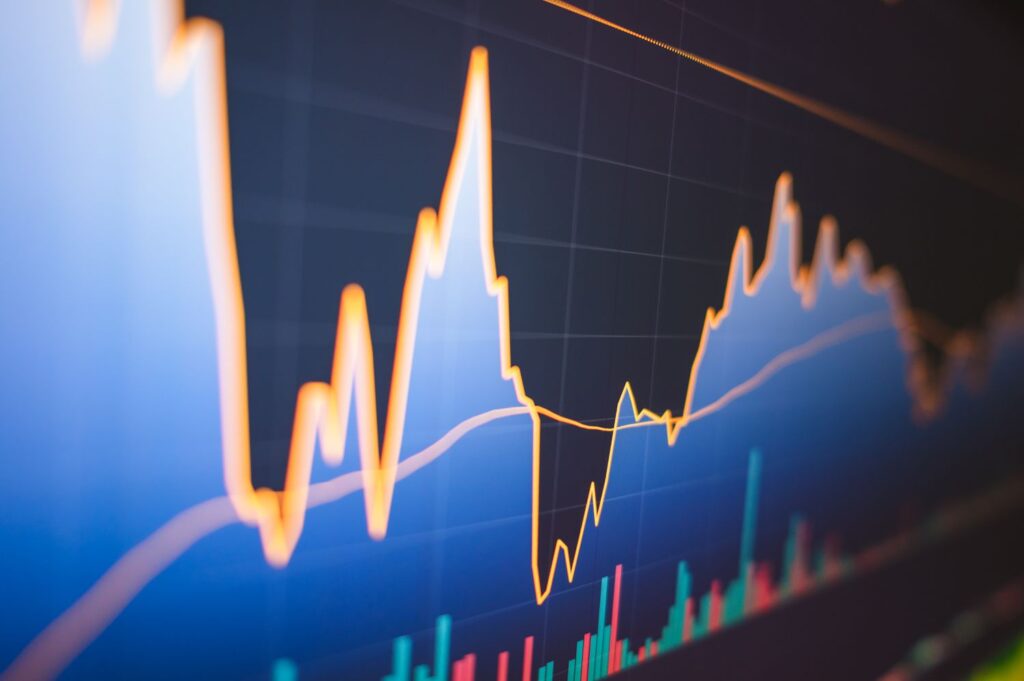
Volatility has become something people actively seek out. Investors, traders, and online gamers all encounter it in different ways, yet they’re often chasing the same experience, and that’s the possibility of a bigger payoff in exchange for accepting more uncertainty. Stock options let traders profit from price swings without buying shares outright. Crypto markets thrive on rapid moves, while crash games build rising risk into every round.
They may belong to different industries, but they’re all built around the same trade-off between risk and reward, making volatility a product people intentionally choose rather than simply experience.
Why demand for volatility keeps growing
Traditional investing has always rewarded patience. Buy quality assets, stay invested, and let time do the heavy lifting. Plenty of people still follow that approach, yet millions are also looking for opportunities where results unfold much faster.
This demand reaches across financial markets and online gaming, covering everything from options contracts and leveraged crypto positions to crash games en sportbet.one casino España, where every decision comes down to balancing a larger potential payout against the possibility of losing everything in seconds.
Trading activity reflects that appetite. According to Cboe, U.S. listed options set another record in 2025 with 15.2 billion contracts traded, marking the sixth consecutive annual record. Average daily volume reached 61 million contracts, an increase of 26% from 2024.
Retail participation, institutional demand, and new trading products all contributed to the surge. Those numbers point to a broader shift. More people are treating volatility as something worth buying rather than something to avoid.
Options traders buy uncertainty every day
Options are one of the clearest examples of volatility becoming a product. A call or put option gives its holder the right to buy or sell an asset at a predetermined price before expiration. Some investors use options to protect existing portfolios, while others use them to speculate on future price movements. In either case, expected volatility plays a major role in determining what those contracts are worth.
One of the biggest recent developments has been the rise of zero days to expiration, or 0DTE, options. These contracts expire on the same day they’re traded, leaving very little time value and putting almost all the focus on immediate price movement.
In 2025, 0DTE contracts represented 59% of all S&P 500 Index options volume, averaging about 2.3 million contracts every trading day. For many participants, the attraction isn’t long-term investing. It’s gaining exposure to short bursts of market volatility.
Crypto thrives when markets move
Cryptocurrency has built much of its reputation on dramatic price swings. Bitcoin, Ethereum, and other digital assets regularly experience moves that would grab headlines in traditional markets. Those swings attract active traders because larger price movements create more opportunities to profit, especially when leverage enters the picture.
The market has also become far more sophisticated than it was a few years ago. Traders now have access to perpetual futures, options, leveraged exchange-traded funds in some jurisdictions, and decentralized derivatives. Following the launch of U.S. spot Bitcoin ETFs in 2024, options tied to those funds expanded the number of ways investors could trade Bitcoin volatility through regulated financial markets.
By 2025, U.S. spot Bitcoin ETFs collectively managed well over $120 billion in assets, showing how quickly institutional interest has grown. For many traders, the biggest question isn’t where Bitcoin will be five years from now. They’re focused on how far it might move this week, today, or even within the next hour.
Crash games turn volatility into entertainment
Crash games apply the same risk and reward equation in a very different setting. Each round begins with a multiplier that steadily climbs until it suddenly crashes. Players decide when to cash out, knowing that waiting a little longer could increase their payout or erase it completely. The longer they stay in, the greater both the reward and the risk become.
Financial markets respond to earnings reports, inflation data, central bank announcements, and breaking news. Crash games rely on provably fair technology or certified random number generators, depending on the platform. Even with those differences, the decision-making feels familiar. Every round mirrors the decision traders face in volatile markets, choosing between taking the profit now and holding on for something bigger.
The constant tension explains why crash games have become one of the fastest-growing categories in online casinos. The excitement comes from making real-time decisions while the odds keep changing.
The psychology stays remarkably consistent
People respond to uncertainty in surprisingly similar ways, regardless of the platform.
Behavioral finance research has shown that individuals often place too much weight on the possibility of a large reward while underestimating the chances of a loss. Those tendencies appear in options trading, crypto speculation, and crash games alike.
Winning positions tempt people to stay in longer than planned. Losing positions encourage some to take even greater risks in an attempt to recover quickly. Fear of missing out can keep traders from taking profits, while overconfidence after a winning streak often leads to bigger mistakes. The product changes, yet those emotional patterns remain remarkably consistent.
Recognizing those habits doesn’t eliminate them, but it does make them easier to manage.
Risk management separates success from short-lived wins
Volatility creates opportunity, but it also punishes poor decisions quickly.
Experienced options traders usually define their maximum loss before entering a position. Crypto traders commonly use position sizing and stop loss orders to protect their capital. Responsible crash game players often decide on a spending limit before the first round begins rather than chasing losses later.
That discipline matters because volatility cuts both ways. During periods of heightened market uncertainty in 2026, options trading continued reaching record levels as investors used derivatives to speculate on price swings and manage portfolio risk at the same time. The products may differ, yet they all reward participants who know when to step back instead of pressing for one more win.