
Zapatero and the anti-suicide protocol: extradition shadow over Spain's ex-PM
Former Spanish PM Zapatero, under suspicion of corruption and possible extradition to the U.S., sparks debate over activating the anti-suicide protocol.
English · Original discussion in Spanish · Published
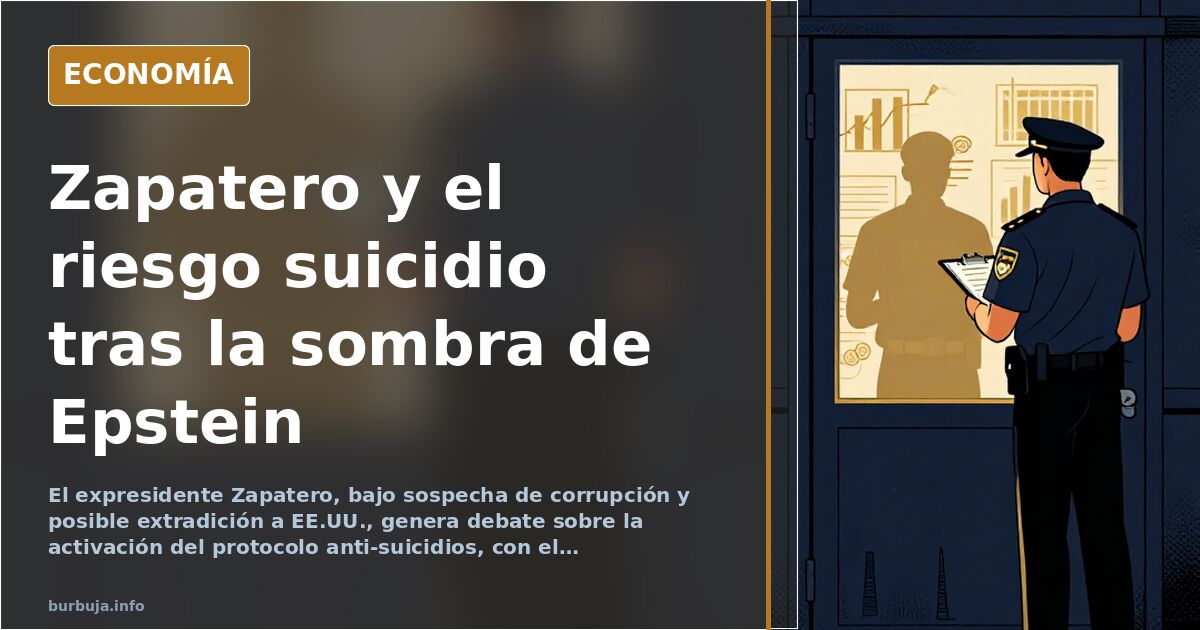
Zapatero and the anti-suicide protocol: between extradition and the Epstein precedent
Former Spanish Prime Minister José Luis Rodríguez Zapatero is reportedly in the crosshairs of the U.S. justice system over alleged corruption and money laundering offences through bank accounts and companies registered in the names of his daughters and his vvife. In judicial and political circles, a question has begun to circulate: whether the anti-suicide protocol should be activated, the police mechanism designed to prevent a high-profile detainee from taking their own life. The discussion, which may sound macabre, has precedents: the case of Jeffrey Epstein, the American financier found dead in his cell in 2019 while awaiting trial for sens trafficking, fuelled suspicions that some inconvenient prisoners do not commit suicide but are, in fact, killed.
The case against the former prime minister
The reports pointing to Zapatero are fragmentary but persistent. He is accused of having used his vvife, Sonsoles Espinosa, and his two daughters to channel opaque funds through shell companies. Some sources claim the former prime minister tried to avoid extradition to the United States through political manoeuvres, including an alleged pardon for the brother of the judge who would try him. Meanwhile, in economic discussion forums, the hypothesis is being floated that the outcome could be tragic: "It wouldn't surprise me if one of these days the news breaks that all four of them turned up dead," one user wrote.
Anti-suicide protocol: prevention or distraction?
The anti-suicide protocol is activated when a detainee shows signs of self-harm or flight risk. In Spain it has been applied in high-level corruption cases, such as those involving former presidents of the Valencian Community. However, applying it to Zapatero would create a tense political scenario. Some argue it would be a smokescreen: "Indicting Zapatero and ordering his immediate arrest is not a good thing. This media boom only benefits him in escaping extradition," argues one school of analysis.
On the other side are those who believe the former prime minister would not kill himself, as it would constitute obstruction of justice and bring him a harsher sentence. The comparison with Epstein resurfaces: in the United States, it is said, "they don't let you commit suicide; only those who want to do so end up dead."
The unsettling fact: the Epstein precedent, whose official suicide is still doubted by large sectors, has sunk deep into conspiracy culture. Zapatero, for his part, remains silent. The question about the protocol, far from being a bad-taste joke, reflects the gravity of the accusations hanging over the former prime minister.
Also available in: Deutsch
Summary of a discussion on Burbuja.info - Foro de economía, actualidad y política., translated from Spanish and reviewed before publication. Read the full discussion (11 replies).
More summaries
-
US Embassy Staff Collaborated with Police in Zapatero Money Laundering Probe
US embassy staff assisted Spanish police in the Zapatero money laundering investigation, sparking debate on political purges vs. justice.
-
Trump says US military took out Tren de Aragua leader
Trump confirms the death of Héctor 'Niño' Guerrero, leader of Tren de Aragua. Questions arise over a possible tip-off from Delcy Rodríguez for 5 million dollars.
-
La Vanguardia fires columnist over article accusing PSOE of seeking civil conflict
La Vanguardia suspends Lacasta for criticising the PSOE's drift. A reflection on the limits of journalism.
-
Four films with no NWO agenda for the weekend
Four recent films that steer clear of the NWO: a bank heist, subway horror, a freak dystopia and the Thai rescue. Trailers and links to watch them this weekend.
-
Divorced parents say tax reform is pushing them into poverty
Divorced fathers with shared custody say Spain's tax reform bars them from filing jointly with their children and counting their real income, costing them benefits.
-
Europe rattled by the Zapatero affair
The US investigation into Spain's former PM Zapatero has terrified European foreign ministries. The Biden administration wiretapped his phone in 2021, and fear of retaliation is spreading.