
Young men's denial of gender violence doubles
A Reina Sofía Centre study reveals that 23% of Spanish young men aged 15-29 believe gender-based violence is an ideological invention, up from 12% in 2019.
English · Original discussion in Spanish · Published
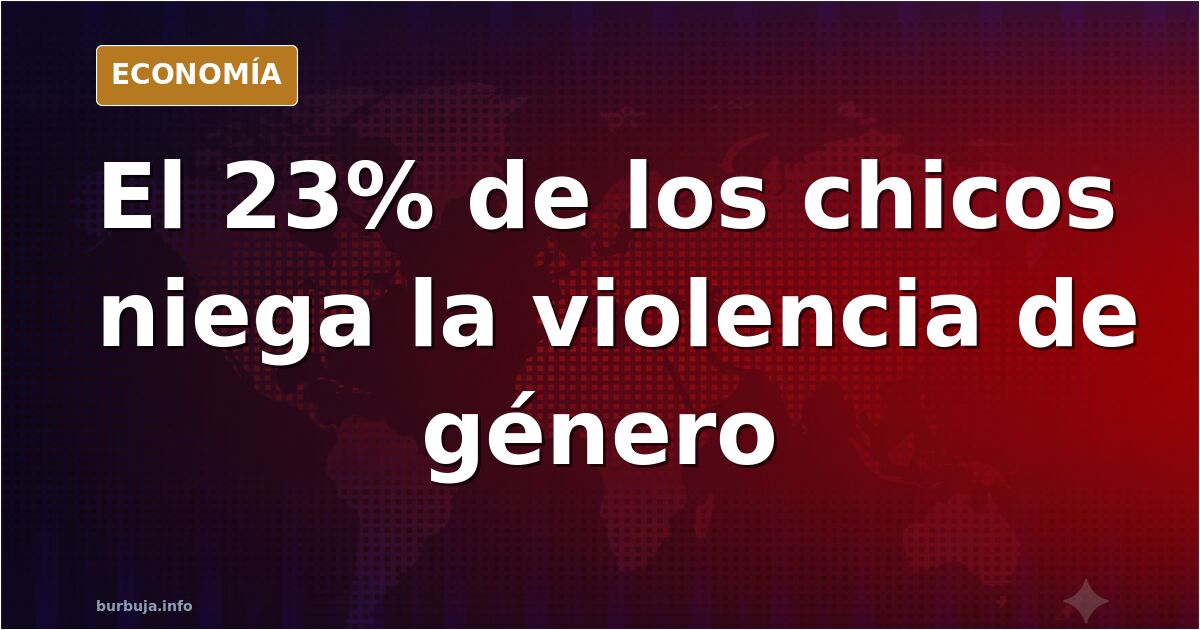
23% of young men aged 15 to 29 deny gender-based violence
87% of young people in Spain are aware of at least one case of male-perpetrated abuse within their immediate circle. The same study that highlights this figure—presented by the Reina Sofía Centre of Fad Juventud on the eve of November 25, the International Day for the Elimination of Violence against Women—asserts that nearly one in four young men between 15 and 29 believes gender-based violence does not exist or is merely an ideological fabrication. In 2019, this figure stood at 12%. Four years later, it has risen to 23%. The more the issue is discussed, the more people appear to deny it; this is the paradox the study places on the table.
Denialism doubles among young males
The data handled by the centre’s deputy director, Anna Sanmartín, outlines a sustained trend rather than an anecdotal spike. Among boys, denial rises from 12% to 23%. Among girls, it increases from 5% to 13%. Furthermore, 18% maintain that gender-based violence is common in relationships, compared to 11% four years ago. The author summarizes the diagnosis bluntly: “there is an anti-feminist narrative gaining traction.” It is not the majority, but it is no longer marginal, which is precisely the terrain where an idea begins to sound debatable rather than unacceptable.
Some interpret this rise as a proportional reaction to public discourse that treats young men as default suspects. Conversely, there is the argument that this reaction is fueled by slogans heard on social media, not by verifiable experiences. The only measurable factor is the percentage, and it is moving in one direction.
Why is anti-feminism growing among boys aged 15 to 19?
The age group where the phenomenon concentrates is 15 to 19. Sanmartín explains this through the channels where discourse circulates today: social networks, content creators, and public representatives. “They buy into slogans they hear on social media, from influencers, and from public officials,” she states. Format matters: memes turn minority arguments into shareable, entertaining content.
The interview also introduces a term that encapsulates this ecosystem: the manosphere, the digital space where this narrative is manufactured and amplified. It points to the discourse presenting men as victims of the system, a narrative with more traction among adolescents than adults. When asked if the controversy over the effects of the "only yes means yes" law (Spain's consent legislation) might have influenced this, the response is that these discourses existed before the law was passed.
Coercive control: checking phones and dictating who to speak to
The study measures not just beliefs, but what people witness. What is observed, in order of frequency, is control: 46% know someone in their circle checks their partner’s phone, the same percentage who know cases of partners deciding who their significant other can speak to or where they can go. Insulting or humiliating them is reported by 41%; making them feel antiestéticar, 38%; telling them they are worthless, 35%; hitting them, 27%.
Among female respondents, 25% admit their own partner checks their phone, and one in five claims to have had unwanted sensual relations. Sanmartín attributes this to a conception of romantic love where jealousy functions as proof of affection, and where dialogue, trust, or consent do not appear among priorities.
Male disengagement the study does not measure
The weak point appears when asking about men. Presented with the hypothesis that these young men feel abandoned—early school dropout is predominantly a male problem and there are no specific programs for them—the answer is that work with women came first. She then acknowledges the need to seek complicity between both sens because “we lose those who feel mistreated, humiliated, and misunderstood.” Two consecutive sentences that, together, explain quite a lot.
She adds that schools are saturated and that work must be done with families and teachers. Regarding whether the data has worsened, she clarifies that likely more cases are reported, victims feel better supported, and institutions respond better. A reasonable objection remains: increased reporting does not explain why a 17-year-old boy considers abuse to be an invention.
With these numbers on the table, the question is no longer how much education is missing, but what happens when this generation reaches legislative power.
87% of young people in Spain are aware of at least one case of male-perpetrated abuse within their immediate circle. The same study that highlights this figure—presented by the Reina Sofía Centre of Fad Juventud on the eve of November 25, the International Day for the Elimination of Violence against Women—asserts that nearly one in four young men between 15 and 29 believes gender-based violence does not exist or is merely an ideological fabrication. In 2019, this figure stood at 12%. Four years later, it has risen to 23%. The more the issue is discussed, the more people appear to deny it; this is the paradox the study places on the table.
Denialism doubles among young males
The data handled by the centre’s deputy director, Anna Sanmartín, outlines a sustained trend rather than an anecdotal spike. Among boys, denial rises from 12% to 23%. Among girls, it increases from 5% to 13%. Furthermore, 18% maintain that gender-based violence is common in relationships, compared to 11% four years ago. The author summarizes the diagnosis bluntly: “there is an anti-feminist narrative gaining traction.” It is not the majority, but it is no longer marginal, which is precisely the terrain where an idea begins to sound debatable rather than unacceptable.
Some interpret this rise as a proportional reaction to public discourse that treats young men as default suspects. Conversely, there is the argument that this reaction is fueled by slogans heard on social media, not by verifiable experiences. The only measurable factor is the percentage, and it is moving in one direction.
Why is anti-feminism growing among boys aged 15 to 19?
The age group where the phenomenon concentrates is 15 to 19. Sanmartín explains this through the channels where discourse circulates today: social networks, content creators, and public representatives. “They buy into slogans they hear on social media, from influencers, and from public officials,” she states. Format matters: memes turn minority arguments into shareable, entertaining content.
The interview also introduces a term that encapsulates this ecosystem: the manosphere, the digital space where this narrative is manufactured and amplified. It points to the discourse presenting men as victims of the system, a narrative with more traction among adolescents than adults. When asked if the controversy over the effects of the "only yes means yes" law (Spain's consent legislation) might have influenced this, the response is that these discourses existed before the law was passed.
Coercive control: checking phones and dictating who to speak to
The study measures not just beliefs, but what people witness. What is observed, in order of frequency, is control: 46% know someone in their circle checks their partner’s phone, the same percentage who know cases of partners deciding who their significant other can speak to or where they can go. Insulting or humiliating them is reported by 41%; making them feel antiestéticar, 38%; telling them they are worthless, 35%; hitting them, 27%.
Among female respondents, 25% admit their own partner checks their phone, and one in five claims to have had unwanted sensual relations. Sanmartín attributes this to a conception of romantic love where jealousy functions as proof of affection, and where dialogue, trust, or consent do not appear among priorities.
Male disengagement the study does not measure
The weak point appears when asking about men. Presented with the hypothesis that these young men feel abandoned—early school dropout is predominantly a male problem and there are no specific programs for them—the answer is that work with women came first. She then acknowledges the need to seek complicity between both sens because “we lose those who feel mistreated, humiliated, and misunderstood.” Two consecutive sentences that, together, explain quite a lot.
She adds that schools are saturated and that work must be done with families and teachers. Regarding whether the data has worsened, she clarifies that likely more cases are reported, victims feel better supported, and institutions respond better. A reasonable objection remains: increased reporting does not explain why a 17-year-old boy considers abuse to be an invention.
With these numbers on the table, the question is no longer how much education is missing, but what happens when this generation reaches legislative power.
Summary of a discussion on Burbuja.info - Foro de economía, actualidad y política., translated from Spanish and reviewed before publication. Read the full discussion (157 replies).
More summaries
-
Spain grants 570 euros monthly to gender violence victims starting November
From November 1, gender violence victims can claim a 570 euro monthly unemployment subsidy for six months under new Spanish regulations.
-
Ignacio Lázaro: 'Maricarmen paid €154 rent while we paid €750'
Ignacio Lázaro, grandson of the original owner, reveals the other side of the Maricarmen case: 'We subsidized her for years and now, with our taxes.'
-
Mossos arrest Isaac Andic's son for Mango founder's murder
Jonathan Andic arrested by Mossos d'Esquadra for killing his father, Mango founder. Forum debates digital evidence reliability and family dynamics in wealthy estates.
-
Spain's Left Gains Edge Through State-Linked Voter Base
Over 9.5 million pensioners and 3.647 million public employees form a voting bloc focused on paychecks rather than fiscal deficits.
-
Madrid cinema defies decline with dozens of weekly screenings for 'La Bola Negra'
Over 3,000 tickets sold in pre-sale for 'La Bola Negra' in Madrid. The film challenges predictions of cinema's decline.
-
Spain's Economy: Forum Warns of Imminent Collapse
Analysis of Burbuja.info threads on Spain's economic stability amid debt and inflation pressures.