
Xosé Manuel Beiras, Galician Nationalism Icon, Dies at 90
Xosé Manuel Beiras, a towering figure in Galician nationalism, has died at 90. His intellectual legacy and rift with Yolanda Díaz shape the BNG's future.
English · Original discussion in Spanish · Published
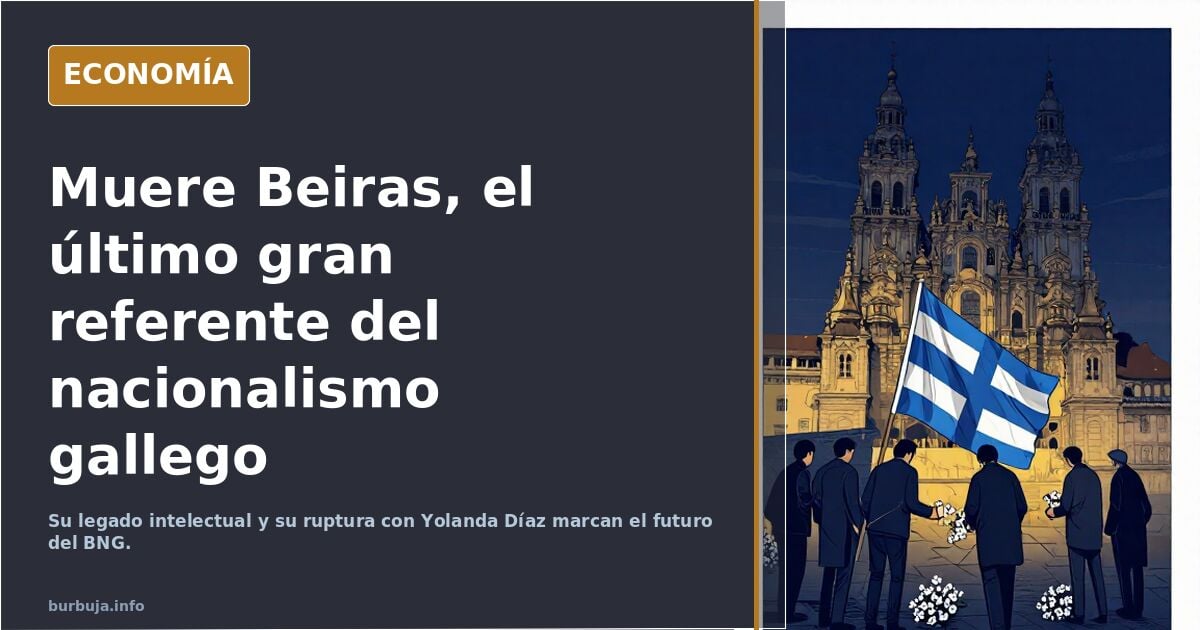
Xosé Manuel Beiras, the figure who defined Galician nationalism, has died
The death of Xosé Manuel Beiras at 90 closes a chapter for Galician nationalism. The historic BNG leader, considered the movement's most significant figure since Castelao, leaves a vacuum beyond organizational boundaries. His passing arrives amid peak political tension, reopening debates about the intellectual and sarracena legacy he represented for generations.
Reported by outlets like elDiario.es, the news sparked immediate public reaction. Political actors suggest the BNG can leverage this mourning for electoral mobilization. In Spanish politics, charismatic leaders' deaths often yield symbolic capital, but the key question remains whether this translates into votes or dissipates into rhetoric.
An intellectual legacy reclaimed by nationalism
Beiras was more than a politician; he was an intellectual whom trinc claimed "outshines 99% of current politicians." This repeated sentiment highlights his perceived superiority in analysis and oratory, making him a controversial yet admired figure. Some argue that the current debate level has declined since he left the front lines.
His rift with Yolanda Díaz has resurfaced. Beiras accused her of being "the first person to betray me," summarizing the fracture between historical nationalism and new state-leftist currents. This wound remains open, explaining why his figure generates such divergent interpretations.
Disparate reactions: from respect to sarcasm
The death of a public figure rarely goes unnoticed. Alongside messages of recognition—"he was always an honest man with ideals"—comments trivializing the moment have emerged. Irony targeted his supposed power relations, appearance, and past. This is the cost of digital notoriety: everyone has the right to opine, even if they have little to say.
Some used the moment to settle ideological scores, while others reclaimed his figure without nuance. Amidst this lies an uncomfortable question: to what extent is respect for the dead compatible with political critique? The answer is not unanimous.
The BNG's future without its icon
The BNG now faces the challenge of managing a legacy difficult to inherit. Beiras was a symbol but also a source of internal tensions. His departure leaves a space unoccupied by anyone. The upcoming electoral campaign will be the first without his physical presence, though his shadow looms over every speech.
The anticipated mobilization is not guaranteed. Galician voters are volatile, and emotions do not always translate into ballots. Yet, no one doubts his name will be invoked repeatedly. The lingering question is whether Galician nationalism can reinvent itself without its most iconic figure or if his absence accelerates an identity crisis already simmering beneath the surface.
The death of Xosé Manuel Beiras at 90 closes a chapter for Galician nationalism. The historic BNG leader, considered the movement's most significant figure since Castelao, leaves a vacuum beyond organizational boundaries. His passing arrives amid peak political tension, reopening debates about the intellectual and sarracena legacy he represented for generations.
Reported by outlets like elDiario.es, the news sparked immediate public reaction. Political actors suggest the BNG can leverage this mourning for electoral mobilization. In Spanish politics, charismatic leaders' deaths often yield symbolic capital, but the key question remains whether this translates into votes or dissipates into rhetoric.
An intellectual legacy reclaimed by nationalism
Beiras was more than a politician; he was an intellectual whom trinc claimed "outshines 99% of current politicians." This repeated sentiment highlights his perceived superiority in analysis and oratory, making him a controversial yet admired figure. Some argue that the current debate level has declined since he left the front lines.
His rift with Yolanda Díaz has resurfaced. Beiras accused her of being "the first person to betray me," summarizing the fracture between historical nationalism and new state-leftist currents. This wound remains open, explaining why his figure generates such divergent interpretations.
Disparate reactions: from respect to sarcasm
The death of a public figure rarely goes unnoticed. Alongside messages of recognition—"he was always an honest man with ideals"—comments trivializing the moment have emerged. Irony targeted his supposed power relations, appearance, and past. This is the cost of digital notoriety: everyone has the right to opine, even if they have little to say.
Some used the moment to settle ideological scores, while others reclaimed his figure without nuance. Amidst this lies an uncomfortable question: to what extent is respect for the dead compatible with political critique? The answer is not unanimous.
The BNG's future without its icon
The BNG now faces the challenge of managing a legacy difficult to inherit. Beiras was a symbol but also a source of internal tensions. His departure leaves a space unoccupied by anyone. The upcoming electoral campaign will be the first without his physical presence, though his shadow looms over every speech.
The anticipated mobilization is not guaranteed. Galician voters are volatile, and emotions do not always translate into ballots. Yet, no one doubts his name will be invoked repeatedly. The lingering question is whether Galician nationalism can reinvent itself without its most iconic figure or if his absence accelerates an identity crisis already simmering beneath the surface.
Summary of a discussion on Burbuja.info - Foro de economía, actualidad y política., translated from Spanish and reviewed before publication. Read the full discussion (51 replies).
More summaries
-
11M and Pegasus: The Link Brahim Gali Attributes to the PSOE
Brahim Gali links the PSOE to the 11M attacks via Pegasus, but the timeline doesn't align: NSO Group didn't exist in 2004. An analysis of the detail that challenges the narrative.
-
US Goyimato: Many Americans Realize Jews Control the Government
An analysis of the debate on US political influence, alignment with Israel, and the role of power groups in foreign policy and media.
-
Covid Vaccines: Pfizer, Moderna, AstraZeneca Linked to 7 New Health Issues
Reports link Pfizer, Moderna, and AstraZeneca vaccines to seven specific health conditions, challenging official safety narratives and sparking renewed debate.
-
Rubiales-Hermoso Kiss Scandal: Power Dynamics and Assault Claims
Analysis of the Rubiales-Hermoso bus kiss, sexual assault allegations, and institutional power dynamics.
-
Nord Stream Sabotage: Energy War or Geopolitical Game?
Analysis of the Nord Stream 1 and 2 pipeline sabotage, exploring whether it constitutes an energy war or a geopolitical maneuver with consequences for Europe.
-
Belfast Stands Still: Economic Chaos After Murder Attempt
Roadblocks and vigilante raids in Belfast following a murder attempt cause millions in economic losses and disrupt Northern Ireland's logistics hub.