
Why your washing machine may be dirtying clothes instead of cleaning them
White polyester traps soap residue and a dirty door gasket transfers stains: why your washing machine could be making your laundry dirtier instead of cleaner.
English · Original discussion in Spanish · Published
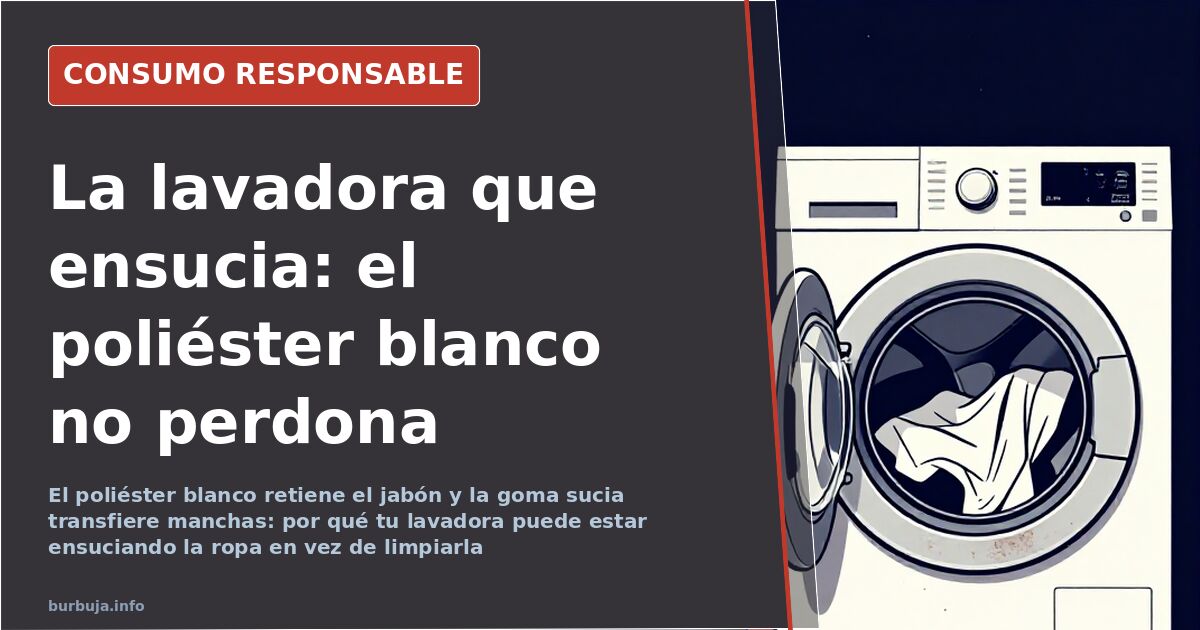
When the washing machine leaves your laundry dirtier than before
There is an uncomfortable consensus among people who have taken a close look inside their washing machine: the appliance that is supposed to clean may be actively making things dirtier. The most common case has a fabric name: white polyester. A new T-shirt, after its first wash, comes out covered in blotches that its owner blamed on body oil — until they ruled out the oil and pointed at the machine. It was not their imagination.
White polyester holds on to what should go down the drain
The mechanism is easy to describe and hard to accept: synthetic fibres attract and trap the particles that cotton and other natural fibres shed inside the drum. That is why the first rule for preserving colours is to separate cotton from synthetics. Polyester acts like a magnet, and white hides nothing.
On top of this comes an almost universal dosing mistake. Many washing machines calculate water according to the weight of the load, but users rarely measure the detergent: they tend to be generous. Two caps instead of one seems like a harmless decision, and it is the origin of the problem. The optimal amount also depends on how hard the water is, so the same dose may work in one region and leave residue in another. The result is a gloopy mess of soap that settles on technical fabrics.
The gasket nobody cleans and the excess detergent
The second source of contamination is where almost nobody looks: the door gasket. If it builds up soap residue and is not cleaned often, it ends up transferring stains, sometimes black ones. Overloading the machine multiplies the odds. The most cited episode is a judo suit washed in the machine at a holiday home: it came out marked, and it was lucky the stains fell on the inside, because on the outside they are almost impossible to hide.
The recommendations that keep coming up are few and cheap. Alternate between liquid and powder detergent, because liquid leaves more residue. Replace fabric softener with vinegar. And clean the machine — gasket included — more often than intuition suggests.
When the problem is not the laundry but the timer
Not everything is solved with maintenance. There is one case that derails any fabric-based diagnosis: a washing machine with clean filters that kept returning dirty clothes, or clothes dirtier than before. The mystery was solved by watching the full cycle. The machine only added water at the start, along with the detergent, and did not fill again until the final rinse. It spun, the laundry smelled of softener and came out the same or worse.
The diagnosis came down to a faulty timer, fixed at the workshop. The brand involved was Corberó, in a machine already well along in years. For anyone looking for a solution without going through customer service, the most repeated answer is a single word: Miele.
One loose end remains untied. There is no official figure for how many washing machines wash badly, nor a reliable home method to tell whether the problem is the gasket, the detergent dose, hard water or a broken timer. You can clean everything, separate fabrics and adjust the detergent, and still the white T-shirt may come out stained. The most honest conclusion is the one where the diagnosis stalls: if the fabric traps the residue and the machine does not rinse it out, no washing ritual will fully fix it.
Also available in: Deutsch
Summary of a discussion on Burbuja.info - Foro de economía, actualidad y política., translated from Spanish and reviewed before publication. Read the full discussion (21 replies).
More summaries
-
Washing machine limescale remover: Calgonit, vinegar or marketing hype?
Washing machine descalers: price, homemade alternatives like vinegar and citric acid, and whether Calgonit is really worth it. Consumer data and warnings.
-
Baking soda for laundry: real savings with proven limits
90% savings compared to detergent: two tablespoons of baking soda per wash cost 3 cents. But heavily soiled clothes don't come out as clean. Real-life experience.
-
Myopia, Floaters, and the Fear of Vision Loss
Black spots in vision after getting new glasses: what are floaters, when to seek urgent care, and why they don't mean blindness.
-
How many litres of milk can you get from 1 kg of condensed milk?
A forum calculation says a 1 kg can yields 6.6 to 10 litres, but others warn it's not milk but added sugar.
-
UN drops the most extreme climate change scenarios
The UN has ruled out the most extreme climate scenarios, sparking debate over the validity of current policies and the future of the climate emergency narrative.
-
Civil service exam candidates in Spain: do you use the loop system or the drag system?
Debate on study methods for Spain's civil service exams (oposiciones): is the loop system or the drag system better? A critical analysis from the forum.