
Why the Spanish sportswear brand Joma is named after a son
How Fructuoso López founded Joma in 1965 and why the Spanish sportswear brand carries the name of his first son, José Manuel. A story of entrepreneurship and legacy.
English · Original discussion in Spanish · Published
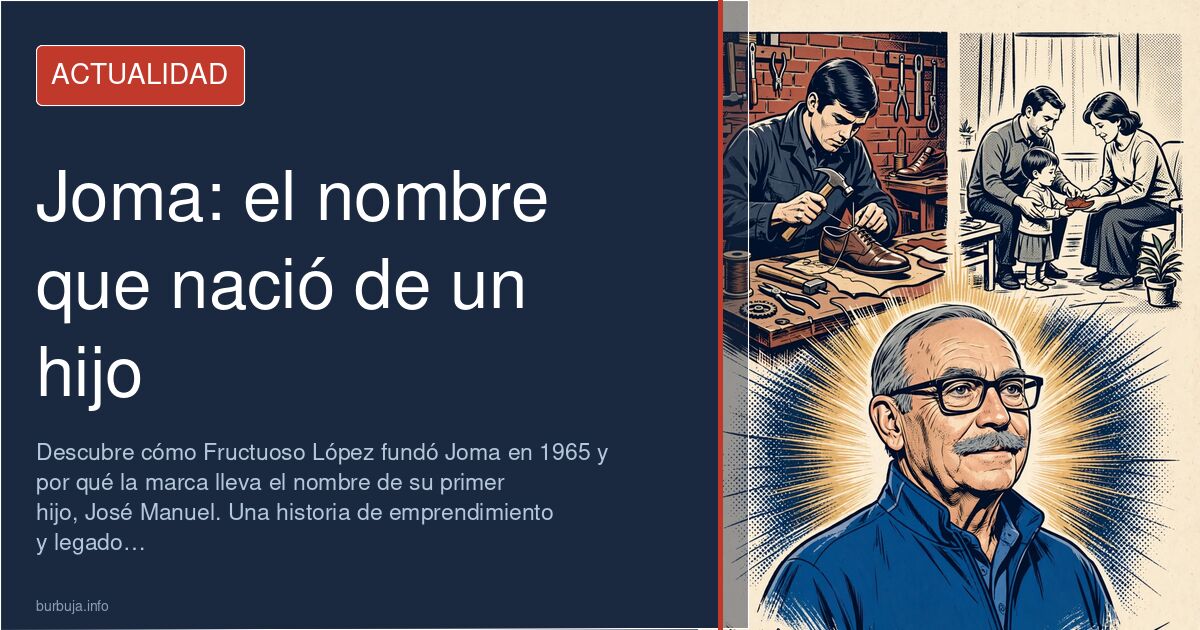
Joma: a name born from a son and sheer determination[SIZE]
Few Spanish sportswear brands have an origin as personal as Joma. In 1965, an 18-year-old young man from Toledo, Fructuoso López, decided to start his own athletic footwear company. He called it Joma, an acronym made from the name of his first son: José Manuel. Hence «JO sé MA nuel». It was not a marketing decision, but a tribute.
The founder and his bet
Fructuoso López was not an experienced businessman, but he had a clear idea. He started with a small workshop and, over time, turned Joma into a well-known brand, sponsoring top-flight football teams. His story is an example of perseverance: he «never gave up on his determination», as has been noted. The brand earned the respect of many, not only for its quality, but for its humble origins.
A name with a history
The name Joma hides a family story. It is not an acronym for anything like «Young, Worker, Brand». It is simply the joining of the first syllables of José Manuel. Moreover, Joma's original logo was an imperial eagle, a symbol that was later changed. Today, Joma is one of the most popular sportswear brands in Spain, known for its value for money.
The origin of the name remains a mystery to many consumers, but the reality is that behind it there is a father who wanted to leave his son's mark on his project. The next time you see a pair of Jomas, remember that it is not just a brand, it is a family legacy. And even though the market may change, Fructuoso López's story will probably keep inspiring entrepreneurs.[/SIZE]
Also available in: Deutsch
Summary of a discussion on Burbuja.info - Foro de economía, actualidad y política., translated from Spanish and reviewed before publication. Read the full discussion (50 replies).
More summaries
-
Denmark breaks down crime by origin: Somalis 19 times Danish rate
Denmark publishes crime rates by country of origin: Somalis 19.3x, Lebanese 11.9x, Moroccans 7.5x the Danish rate. The methodological and political debate that...
-
Ndongo: in a war, my loyalty would be to Cameroon
Bertrand Ndongo, a Vox journalist of Cameroonian origin, admits he would defend his country in a war and is giving up his Spanish nationality.
-
Leaked Nicknames of PSOE's 'Plumber' Spark Uproar in Ferraz
Leire Díez's agendas reveal insults to Yolanda Díaz, Patxi López, Pablo Iglesias and others. The list of nicknames shakes Ferraz.
-
Immigration: Spain's economic backbone or an excuse for low wages
Without immigrants, sectors such as hospitality and care work would collapse. Yet their willingness to accept lower pay drags wages down. A dependence nobody wants to admit.
-
The dangerous profile of a man with a violent past
A man with a homicide record, three children by three different mothers and regular drug use: the kind of profile nobody wants to come across.
-
Honk's car overturned in Spain: accident or conspiracy?
A 26-year-old man overturned an activist's car in Hortaleza, Madrid. Tampered brakes, threatened witnesses and a strange chain of car loans. What lies behind it?