
Who Was to Blame for American Independence, According to Tertsch
American independence, two centuries later: the narrative blames England, Freemasonry, and Creole elites, not indigenous peoples.
English · Original discussion in Spanish · Published
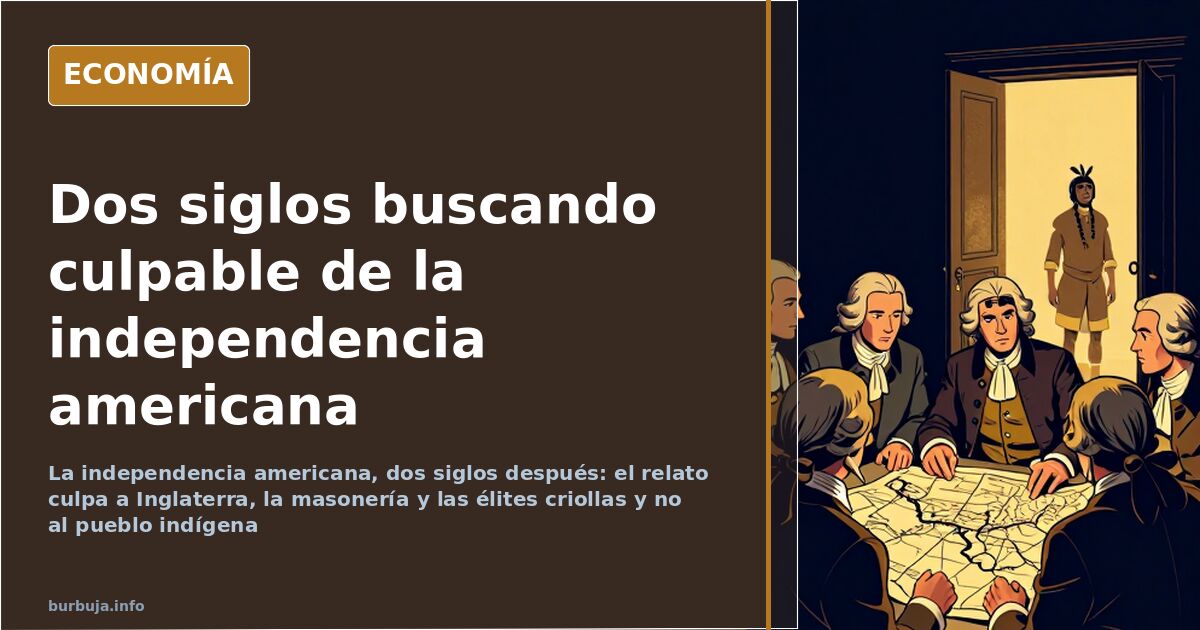
Tertsch and American Independence: Two Centuries of Blame-Shifting
There's a case that encapsulates why this issue has flared up. A woman, newly arrived in Spain with jaw cancer, reportedly entered the country on a humanitarian visa because her father was born in Galicia. From there, the controversy that has peine relations between Spain and America—and places Vox leader Hermann Tertsch at the center—is being debated today in terms of nationality, healthcare, and public spending, not history. The underlying question remains the same as two centuries ago: who was to blame for American independence.
What is Attributed to Tertsch
The discussion stems from a thesis attributed to the Vox leader: that it was Hispanic America that created and made Spain great. This formulation, defended as a vindication of Hispanidad (Hispanic identity), is what generates the most rejection. One current interprets it as a cultural and political operation—with Vox as its arm—aimed at imposing a narrative of brotherhood while ignoring the dark episodes of the American territories. At the opposite extreme, those who defend it argue that reclaiming this bond is not a concession but a historical reparation that remains unfinished.
Why England and Creole Elites Are Blamed
The most prevalent version places the origin of the independence movements outside Spanish America. It was the Creole elites—the upper classes of the viceroyalties, educated in England and France and linked to Freemasonry—who promoted the break, with British economic and military backing, according to this interpretation. Spain did not expel America; privileged minorities simply stopped reporting to the Crown. The repeated parallel is with separatist movements in the Iberian Peninsula: the origin of Catalan or Basque secession would not be in Madrid, but in local elites with their own interests. Shifting the focus from collective grievance to a handful of beneficiaries is precisely the goal of the argument.
The Indigenous Peoples Who Didn't Want Independence
The most uncomfortable assertion is that the indigenous peoples did not want independence. It is argued that they were, in general, against the break, that troops and money were needed to carry it out, and that they were mass-recruited as cannon fodder by the liberators themselves. From this, the thesis emerges that the rejection of Spain did not come from the American people, but from their leaders. This is the point where history becomes an identity dispute: if the rejection was by elites, the brotherhood remains intact; if it was popular, the narrative collapses.
The "Spanish Empire" That, According to This Thesis, Never Existed
One of the most radical objections questions even the name. It is argued that the Spanish empire never existed as such, because the territories were fiefs administered first by a Flemish family and then by a French one, and that no ordinary Spaniard could settle there without explicit royal permission, under penalty of forced labor. Only the clergy and authorized officials had free passage. The conclusion drawn—that the American venture was a business unrelated to the interests of the average Spaniard—fits with the general disdain for the project, but it remains a one-sided hypothesis.
From History to Nationality and Healthcare
The subtext of the matter is economic. Article 22 of the Spanish Civil Code is cited as the channel through which about twenty Ibero-American countries—from Argentina to Venezuela, from Mexico to Portugal—easily obtain nationality. This channel, defended as a cultural tie, is also seen as an entry point for immigration and an added cost for already strained public services. The episode of the cancer patient points in the same direction: the discussion is not about abstract rights, but about who pays the bill. And on that, positions do not budge.
A Hispanidad That, According to Some, is Five Years Old
There is a fundamental objection: that the discourse of Hispanidad is recent. It is claimed that until about five years ago, this narrative had no presence in Spain, that indigenous American peoples maintain a deep-seated rejection, and that enthusiasm for brotherhood is primarily a recruitment strategy. With the same argument, proponents of the project are described as a small group within the right wing. This thesis coexists with its opposite: that Hispanidad is the natural inheritance of a shared culture, and that renouncing it is the real anomaly.
From there, everyone chooses their culprit. Some distribute responsibility among foreign powers, secret societies, and local heirs of the Crown; others place it directly on Spain. The disconcerting fact is not historical, but domestic: compared to the five years attributed to the rise of Hispanidad, some estimate 200 or 300 years of continuous work to dismantle the country. Placed side by side, the two numbers leave the controversy a draw. And the bill, to the bearer.
There's a case that encapsulates why this issue has flared up. A woman, newly arrived in Spain with jaw cancer, reportedly entered the country on a humanitarian visa because her father was born in Galicia. From there, the controversy that has peine relations between Spain and America—and places Vox leader Hermann Tertsch at the center—is being debated today in terms of nationality, healthcare, and public spending, not history. The underlying question remains the same as two centuries ago: who was to blame for American independence.
What is Attributed to Tertsch
The discussion stems from a thesis attributed to the Vox leader: that it was Hispanic America that created and made Spain great. This formulation, defended as a vindication of Hispanidad (Hispanic identity), is what generates the most rejection. One current interprets it as a cultural and political operation—with Vox as its arm—aimed at imposing a narrative of brotherhood while ignoring the dark episodes of the American territories. At the opposite extreme, those who defend it argue that reclaiming this bond is not a concession but a historical reparation that remains unfinished.
Why England and Creole Elites Are Blamed
The most prevalent version places the origin of the independence movements outside Spanish America. It was the Creole elites—the upper classes of the viceroyalties, educated in England and France and linked to Freemasonry—who promoted the break, with British economic and military backing, according to this interpretation. Spain did not expel America; privileged minorities simply stopped reporting to the Crown. The repeated parallel is with separatist movements in the Iberian Peninsula: the origin of Catalan or Basque secession would not be in Madrid, but in local elites with their own interests. Shifting the focus from collective grievance to a handful of beneficiaries is precisely the goal of the argument.
The Indigenous Peoples Who Didn't Want Independence
The most uncomfortable assertion is that the indigenous peoples did not want independence. It is argued that they were, in general, against the break, that troops and money were needed to carry it out, and that they were mass-recruited as cannon fodder by the liberators themselves. From this, the thesis emerges that the rejection of Spain did not come from the American people, but from their leaders. This is the point where history becomes an identity dispute: if the rejection was by elites, the brotherhood remains intact; if it was popular, the narrative collapses.
The "Spanish Empire" That, According to This Thesis, Never Existed
One of the most radical objections questions even the name. It is argued that the Spanish empire never existed as such, because the territories were fiefs administered first by a Flemish family and then by a French one, and that no ordinary Spaniard could settle there without explicit royal permission, under penalty of forced labor. Only the clergy and authorized officials had free passage. The conclusion drawn—that the American venture was a business unrelated to the interests of the average Spaniard—fits with the general disdain for the project, but it remains a one-sided hypothesis.
From History to Nationality and Healthcare
The subtext of the matter is economic. Article 22 of the Spanish Civil Code is cited as the channel through which about twenty Ibero-American countries—from Argentina to Venezuela, from Mexico to Portugal—easily obtain nationality. This channel, defended as a cultural tie, is also seen as an entry point for immigration and an added cost for already strained public services. The episode of the cancer patient points in the same direction: the discussion is not about abstract rights, but about who pays the bill. And on that, positions do not budge.
A Hispanidad That, According to Some, is Five Years Old
There is a fundamental objection: that the discourse of Hispanidad is recent. It is claimed that until about five years ago, this narrative had no presence in Spain, that indigenous American peoples maintain a deep-seated rejection, and that enthusiasm for brotherhood is primarily a recruitment strategy. With the same argument, proponents of the project are described as a small group within the right wing. This thesis coexists with its opposite: that Hispanidad is the natural inheritance of a shared culture, and that renouncing it is the real anomaly.
From there, everyone chooses their culprit. Some distribute responsibility among foreign powers, secret societies, and local heirs of the Crown; others place it directly on Spain. The disconcerting fact is not historical, but domestic: compared to the five years attributed to the rise of Hispanidad, some estimate 200 or 300 years of continuous work to dismantle the country. Placed side by side, the two numbers leave the controversy a draw. And the bill, to the bearer.
Summary of a discussion on Burbuja.info - Foro de economía, actualidad y política., translated from Spanish and reviewed before publication. Read the full discussion (263 replies).
More summaries
-
The enduring debate: Did Arabs civilize Spain?
The debate over whether Al-Andalus civilized Spain rages online, with opposing narratives of genocide versus agricultural heritage.
-
Euthanasia in Old Age: Autonomy vs. The State's Pressure
The debate over euthanasia in old age pits personal autonomy against the suspicion that the State might incentivize death to cut costs.
-
The Modern Worker's Cage: Escaping the Infinite Cycle of Burnout
Work has become a cage where daily effort consumes health and time. Discover why we push ourselves so hard and how to break the cycle.
-
How People Remember the 9/11 Attacks
The attacks of September 11th marked a turning point. Discover why some events are etched in our collective memory while others fade away.
-
Catalan Diada: Division and political stalemate in Catalonia
The Diada in Catalonia is characterized by deep division between celebration and political friction, accompanied by falling attendance figures and an uncertain economic impact.
-
Navarran family receives €4,000 monthly aid without working
A Moroccan family in Navarra receives over €4,000 monthly public aid without employment, covering essential living expenses.