
What Happens to the Nervous System After Years of Accumulated Trauma
Chronic stress exhausts the adrenal system, leaving lasting physical and mental scars. Survivors report that the damage isn't always reversible.
English · Original discussion in Spanish · Published
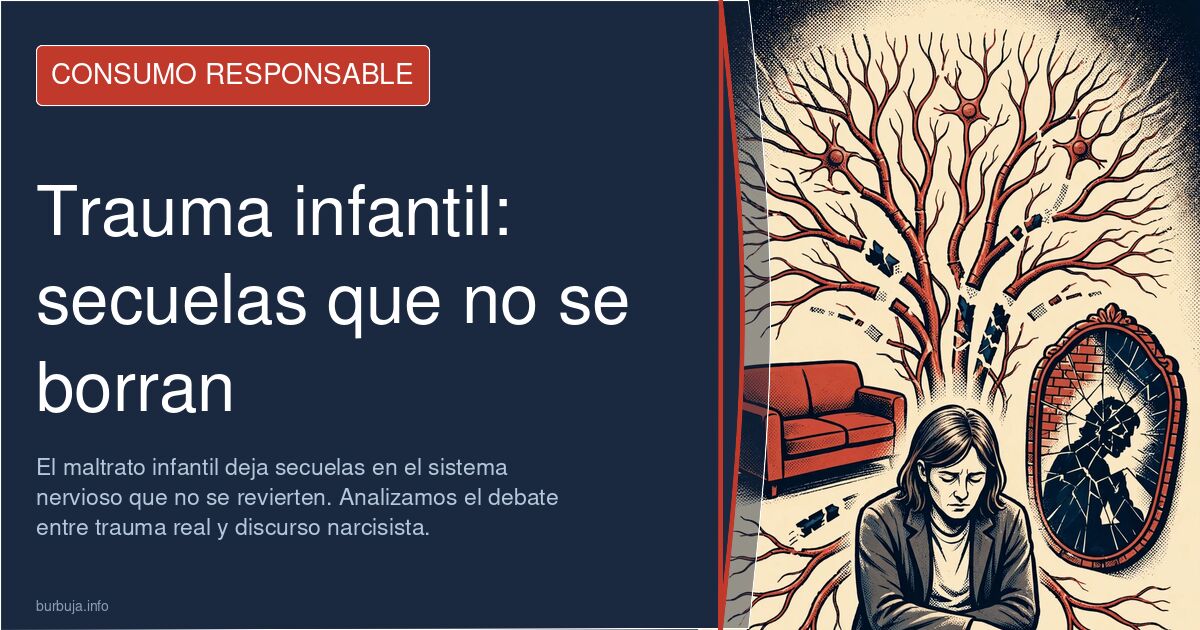
What Remains of the Nervous System After Years of Accumulated Trauma
Those who have endured years of extreme stress claim their nervous system never returns to its original state. This is the prevailing idea: the body is permanently marked, and simply changing your environment isn't enough to reset it. The issue gained public attention trinc a Spanish content creator, reportedly living in Asia, who attributed her distress to a history of family abuse. Her case serves as a reflection of a much broader problem.
The Adrenal System Ends Up Exhausted
One participant who claims to have experienced this describes it as the body becoming accustomed to releasing adrenaline and never lowering its guard. The adrenal system ends up exhausted from being subjected to outrageous stress for years, they maintain. According to this account, many physical and mental illnesses are triggered after living in a sustained tense environment, to the point where the nervous system is left in pieces.
Some go further, suggesting the impact lodges in a specific area of the brain. In this view, the stress and adrenaline of the traumatic moment remain deep in the right hemisphere: a wound that doesn't heal and that the body keeps alive, partly to prevent it from happening again. The price is intermittent suffering that no one asked for.
From Anxiety to Fibromyalgia: When the Body Pays the Price
Trauma isn't confined to the head. Testimonies collected speak of physical ailments associated with prolonged exposure to stress: fibromyalgia, for example, or gallbladder issues, which one participant attributes to a severe and prolonged infection. Childhood and adolescent abuse is devastating, summarizes someone who claims to have lived it firsthand, and impossible to reverse. And it's not an isolated case: some confirm they could write a pavor novel about their own family, and no one would believe them.
Can the Damage Be Reversed?
Here, opinions diverge. Several participants are clear: permanent damage, a wound that won't close. The discussion also splits along another axis: whether the origin is environmental or hereditary. Some maintain it's one hundred percent environmental, not genetic.
Trauma as Currency on the Internet
Not everyone buys into the narrative. A skeptical current suggests that exposing trauma publicly also generates income, and that sustained drama on social media becomes a product. It's debated whether the person shows contempt for their own audience while partly living off them. Suspicion proves nothing. But it explains why the case is so divisive.
With these elements, the question remains unanswered: how much of that damage is irreversible, and how much depends on timely escape from the environment that caused it. No one offers a prognosis.
Those who have endured years of extreme stress claim their nervous system never returns to its original state. This is the prevailing idea: the body is permanently marked, and simply changing your environment isn't enough to reset it. The issue gained public attention trinc a Spanish content creator, reportedly living in Asia, who attributed her distress to a history of family abuse. Her case serves as a reflection of a much broader problem.
The Adrenal System Ends Up Exhausted
One participant who claims to have experienced this describes it as the body becoming accustomed to releasing adrenaline and never lowering its guard. The adrenal system ends up exhausted from being subjected to outrageous stress for years, they maintain. According to this account, many physical and mental illnesses are triggered after living in a sustained tense environment, to the point where the nervous system is left in pieces.
Some go further, suggesting the impact lodges in a specific area of the brain. In this view, the stress and adrenaline of the traumatic moment remain deep in the right hemisphere: a wound that doesn't heal and that the body keeps alive, partly to prevent it from happening again. The price is intermittent suffering that no one asked for.
From Anxiety to Fibromyalgia: When the Body Pays the Price
Trauma isn't confined to the head. Testimonies collected speak of physical ailments associated with prolonged exposure to stress: fibromyalgia, for example, or gallbladder issues, which one participant attributes to a severe and prolonged infection. Childhood and adolescent abuse is devastating, summarizes someone who claims to have lived it firsthand, and impossible to reverse. And it's not an isolated case: some confirm they could write a pavor novel about their own family, and no one would believe them.
Can the Damage Be Reversed?
Here, opinions diverge. Several participants are clear: permanent damage, a wound that won't close. The discussion also splits along another axis: whether the origin is environmental or hereditary. Some maintain it's one hundred percent environmental, not genetic.
Trauma as Currency on the Internet
Not everyone buys into the narrative. A skeptical current suggests that exposing trauma publicly also generates income, and that sustained drama on social media becomes a product. It's debated whether the person shows contempt for their own audience while partly living off them. Suspicion proves nothing. But it explains why the case is so divisive.
With these elements, the question remains unanswered: how much of that damage is irreversible, and how much depends on timely escape from the environment that caused it. No one offers a prognosis.
Summary of a discussion on Burbuja.info - Foro de economía, actualidad y política., translated from Spanish and reviewed before publication. Read the full discussion (95 replies).
More summaries
-
ChatGPT Free: Three Images Daily, €8 to Remove Limits
ChatGPT's free plan limits users to three images per day, while the paid version starts at €8. Claude's intensive use plan costs €16. Explore free alternatives...
-
Brave and uBlock Origin: How to Block Website Clutter
A single line of code can remove unwanted blocks: custom filters in Brave, uBlock Origin, and other useful extensions.
-
Cola Cao 1986 vs 2026: less product, more sugar, same real price
Cola Cao 1986 vs 2026: smaller size, sugar up to 70%, and price adjusted for inflation. Is it still the same product? Data analysis.
-
Kitchen renovation costs in Spain: €13,700 to €16,200
Three quotes for a 12m² kitchen range from €13,700 to €16,200 excluding floors and tiles. Users compare this to a 2019 renovation that cost half as much.
-
EV winter consumption hits 24 kWh/100km at 2°C
Cold weather pushes EV consumption to 24 kWh/100km, while public charging costs up to €0.70/kWh erode savings.
-
Amazon turns your Kindle library into a rental service
Amazon can remove purchased Kindle e-books: users pay for licenses, not files. Calibre and airplane mode usage is rising.