
We Live Like Gods: The Paradox of Material Well-being
A retired pastor earns in a month what he spent a year preaching. The standard of living surpasses any king's, yet dissatisfaction reigns supreme. Why?
English · Original discussion in Spanish · Published
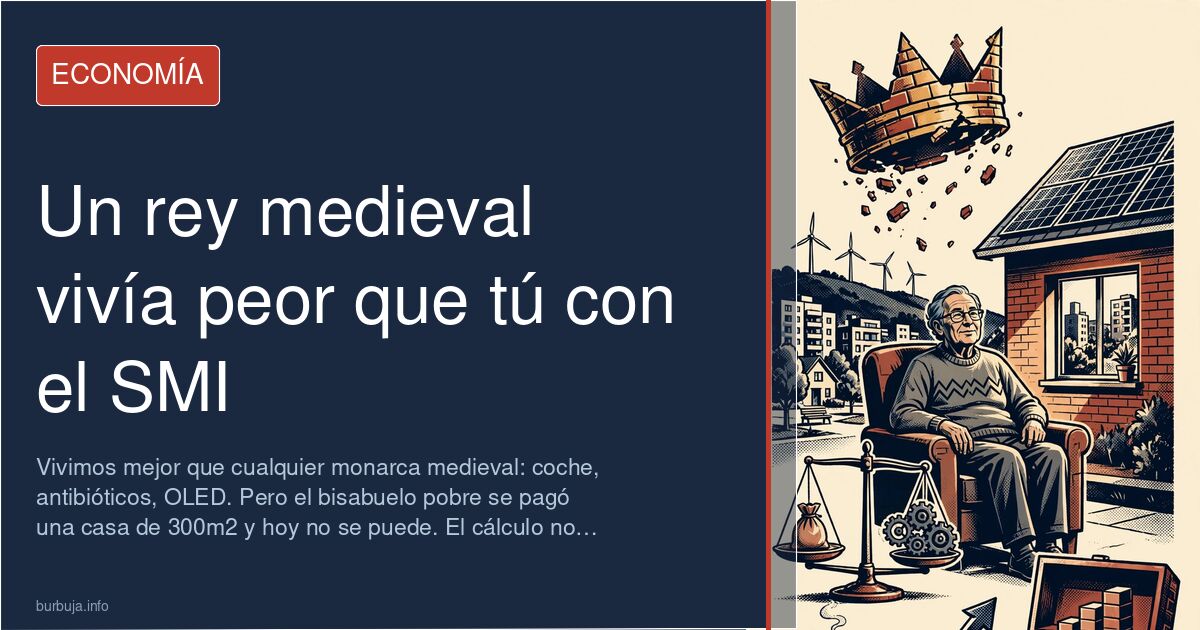
The Paradox of Well-being: Kings didn't have antibiotics, but today everyone does
A retired pastor earns in a month what he spent an entire year preaching. This phrase, spoken by an elder in a viral video, encapsulates the paradox of our time: the material standard of living has reached heights medieval monarchs could never have imagined, yet complaint is the dominant sentiment. The question is not whether we live better than a century ago, but why we don't feel it.
Material pogre is undeniable
The data is stubborn. Any citizen on minimum wage has access to foods that Charlemagne never tasted: tomato, potato chips, chocolate, ice cream. And not only that: they can listen to Bach live, study mathematics with online courses, or tour the streets of New Zealand from their sofa. Philip II, the most powerful man of his time, lacked the information offered today by a low-end mobile phone. Medicine has made routine what was once a death sentence: laryngitis without antibiotics could kill, and tooth decay was living hell. Today, an analgesic solves it.
Nostalgia as a selective filter
But nostalgia is a filter that erases the bad. Those who yearn for the 80s forget there was no internet, that phone booths were the only means of contact, and that film had to be developed. That said, they did generate jobs. Housing is another example: people say life was better before because a poor great-grandfather built a 300-square-meter house. True, but today you can buy one in any village for less than 50,000 euros. The problem is not the housing; it's that nobody wants to work in the fields because it is hard and poorly paid.
The frustration of expectations
Current dissatisfaction has more to do with expectations than reality. They sold us a future we never had: stable work, affordable housing, social advancement. The elder knew from childhood that life was hard and that good times came occasionally. Today's young person compares their situation to the promise of infinite prosperity and feels cheated. And there is the crux: we live better than any king of the past, but worse than they promised us.
Why, having more than any monarch in history, has dissatisfaction become the new standard? Perhaps the answer lies not in the data, but in human nature: complacency is a survival mechanism that runs out when comparison shifts from the past to the neighbor.
A retired pastor earns in a month what he spent an entire year preaching. This phrase, spoken by an elder in a viral video, encapsulates the paradox of our time: the material standard of living has reached heights medieval monarchs could never have imagined, yet complaint is the dominant sentiment. The question is not whether we live better than a century ago, but why we don't feel it.
Material pogre is undeniable
The data is stubborn. Any citizen on minimum wage has access to foods that Charlemagne never tasted: tomato, potato chips, chocolate, ice cream. And not only that: they can listen to Bach live, study mathematics with online courses, or tour the streets of New Zealand from their sofa. Philip II, the most powerful man of his time, lacked the information offered today by a low-end mobile phone. Medicine has made routine what was once a death sentence: laryngitis without antibiotics could kill, and tooth decay was living hell. Today, an analgesic solves it.
Nostalgia as a selective filter
But nostalgia is a filter that erases the bad. Those who yearn for the 80s forget there was no internet, that phone booths were the only means of contact, and that film had to be developed. That said, they did generate jobs. Housing is another example: people say life was better before because a poor great-grandfather built a 300-square-meter house. True, but today you can buy one in any village for less than 50,000 euros. The problem is not the housing; it's that nobody wants to work in the fields because it is hard and poorly paid.
The frustration of expectations
Current dissatisfaction has more to do with expectations than reality. They sold us a future we never had: stable work, affordable housing, social advancement. The elder knew from childhood that life was hard and that good times came occasionally. Today's young person compares their situation to the promise of infinite prosperity and feels cheated. And there is the crux: we live better than any king of the past, but worse than they promised us.
Why, having more than any monarch in history, has dissatisfaction become the new standard? Perhaps the answer lies not in the data, but in human nature: complacency is a survival mechanism that runs out when comparison shifts from the past to the neighbor.
Summary of a discussion on Burbuja.info - Foro de economía, actualidad y política., translated from Spanish and reviewed before publication. Read the full discussion (69 replies).
More summaries
-
Mercadona hits the brakes: customers are comparing prices
While comparing seven chains keeps many customers captive, Lidl and Aldi are gaining market share, and fresh produce is increasingly bought outside of Mercadona.
-
Euthanasia in Old Age: Autonomy vs. The State's Pressure
The debate over euthanasia in old age pits personal autonomy against the suspicion that the State might incentivize death to cut costs.
-
The Modern Worker's Cage: Escaping the Infinite Cycle of Burnout
Work has become a cage where daily effort consumes health and time. Discover why we push ourselves so hard and how to break the cycle.
-
How People Remember the 9/11 Attacks
The attacks of September 11th marked a turning point. Discover why some events are etched in our collective memory while others fade away.
-
Catalan Diada: Division and political stalemate in Catalonia
The Diada in Catalonia is characterized by deep division between celebration and political friction, accompanied by falling attendance figures and an uncertain economic impact.
-
Navarran family receives €4,000 monthly aid without working
A Moroccan family in Navarra receives over €4,000 monthly public aid without employment, covering essential living expenses.