
Viral cabin renovation video hides a full construction crew
A video with 47 million views shows a man renovating a cabin alone, but experts estimate the real cost is between 40,000 and 80,000 euros.
English · Original discussion in Spanish · Published
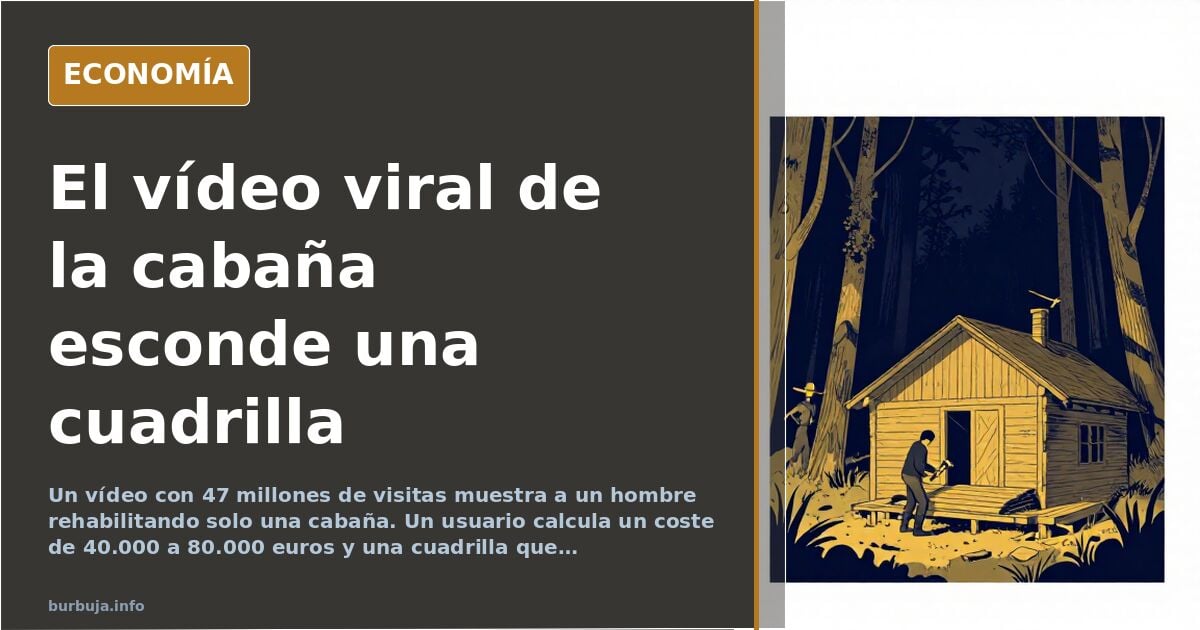
Viral cabin renovation video hides a full construction crew
A video has amassed 47 million views in a month showing a man who, apparently alone, is rebuilding a rural house on the ruins of a cabin. The debate is not whether the result is impressive, but whether one person can actually do it. The short answer: no. The long answer: it depends on how much plumbing is left off-camera.
The pattern is well-known. They show you the result, not the scaffolding. According to one user, behind a twenty-minute time-lapse there are 8 to 12 real weeks of construction, involving guasons for the flooring, electricians for the certification, plumbers, and rented machinery. That is not accomplished with just two hands and a DIY angle grinder.
How much does renovating a ruined cabin actually cost?
The figure that never appears on screen fluctuates, according to calculations circulating in the forum, between 40,000 and 80,000 euros depending on the condition of the structure. This does not include building permits for rural land (suelo rústico), rural property tax (IBI rústico), insurance, or tools, which can cost more than an average monthly salary. The real savings of this format lie not in the protagonist's skill, but in the labor that is either unpaid or simply not shown.
There is a scene the video does not capture: buying bags of cement, unloading them, and mixing mortar with a shovel. The fast-motion editing turns weeks of sweat into a three-second shot. And it works, because the average viewer compares this to assembling a piece of furniture from a well-known Swedish chain, where the instructions already warn that two people are required.
The physical labor most people are unaware of
The discussion quickly shifts toward the physical fitness of office workers. Some argue that someone coming from an administrative role can only endure eight hours of construction work for a week, no more. The body protests before the wallet does. In small towns, a recurring anecdote is that of the city dweller who needs a medical helicopter after only three hours of work.
The interesting nuance: it is not just a matter of physical fitness, it is a matter of trade. An experienced guason does in one day what an amateur cannot finish in three. Experience cannot be downloaded from a YouTube video.
The comparison with the Instagram yacht
The most cited parallel is that of accounts showcasing yachts and exotic travels: initially, that lifestyle is funded somehow, and only when the trinc base allows them to live off advertising does the narrative sustain itself. The same happens here. The creator is not documenting their life; they are documenting a product. The competition for likes and advertising distorts the reality being shown.
A counterargument also exists: some maintain that physical work and self-sufficiency are still possible, citing communities that build entire barns together. True, but together. That is the key word.
Is this possible in Spain?
The most common response is that it wouldn't work here. Rural land regulations, permits, and bureaucracy turn the dream of a self-built home into an obstacle course. Then there is the issue of energy: some doubt that the electrical grid can even reach the site, arguing that material costs can be twenty times the value of the property.
The exact point where the analysis stalls is always the same: no one knows how many hands were actually needed, because the video doesn't count them. And without that data, the antiestéticat is as real as an influencer's yacht.
A video has amassed 47 million views in a month showing a man who, apparently alone, is rebuilding a rural house on the ruins of a cabin. The debate is not whether the result is impressive, but whether one person can actually do it. The short answer: no. The long answer: it depends on how much plumbing is left off-camera.
The pattern is well-known. They show you the result, not the scaffolding. According to one user, behind a twenty-minute time-lapse there are 8 to 12 real weeks of construction, involving guasons for the flooring, electricians for the certification, plumbers, and rented machinery. That is not accomplished with just two hands and a DIY angle grinder.
How much does renovating a ruined cabin actually cost?
The figure that never appears on screen fluctuates, according to calculations circulating in the forum, between 40,000 and 80,000 euros depending on the condition of the structure. This does not include building permits for rural land (suelo rústico), rural property tax (IBI rústico), insurance, or tools, which can cost more than an average monthly salary. The real savings of this format lie not in the protagonist's skill, but in the labor that is either unpaid or simply not shown.
There is a scene the video does not capture: buying bags of cement, unloading them, and mixing mortar with a shovel. The fast-motion editing turns weeks of sweat into a three-second shot. And it works, because the average viewer compares this to assembling a piece of furniture from a well-known Swedish chain, where the instructions already warn that two people are required.
The physical labor most people are unaware of
The discussion quickly shifts toward the physical fitness of office workers. Some argue that someone coming from an administrative role can only endure eight hours of construction work for a week, no more. The body protests before the wallet does. In small towns, a recurring anecdote is that of the city dweller who needs a medical helicopter after only three hours of work.
The interesting nuance: it is not just a matter of physical fitness, it is a matter of trade. An experienced guason does in one day what an amateur cannot finish in three. Experience cannot be downloaded from a YouTube video.
The comparison with the Instagram yacht
The most cited parallel is that of accounts showcasing yachts and exotic travels: initially, that lifestyle is funded somehow, and only when the trinc base allows them to live off advertising does the narrative sustain itself. The same happens here. The creator is not documenting their life; they are documenting a product. The competition for likes and advertising distorts the reality being shown.
A counterargument also exists: some maintain that physical work and self-sufficiency are still possible, citing communities that build entire barns together. True, but together. That is the key word.
Is this possible in Spain?
The most common response is that it wouldn't work here. Rural land regulations, permits, and bureaucracy turn the dream of a self-built home into an obstacle course. Then there is the issue of energy: some doubt that the electrical grid can even reach the site, arguing that material costs can be twenty times the value of the property.
The exact point where the analysis stalls is always the same: no one knows how many hands were actually needed, because the video doesn't count them. And without that data, the antiestéticat is as real as an influencer's yacht.
Summary of a discussion on Burbuja.info - Foro de economía, actualidad y política., translated from Spanish and reviewed before publication. Read the full discussion (20 replies).
More summaries
-
Spain court seeks 15 months jail for mobile home on rural land
A Spanish neighbor faces 15 months in prison for installing a mobile home on rural land, highlighting Spain's strict urban planning laws.
-
Trump says Spain's Sánchez is too big for the job, needs a leader who knows what he's doing
Trump claims Spain has a housing problem Sánchez cannot fix, while also criticizing the government's migration policy.
-
Goya 2026: Political Gala and Subsidy Debate
The 2026 Goya Awards mixed prizes with speeches on Gaza, Venezuela, and Franco. The debate on subsidies and box office returns to the center.
-
Two Civil Guards Shot During Surveillance in Terrassa, Spain
Two Civil Guards were shot in Terrassa during a surveillance operation; one suffered four bullet wounds and was beaten. The incident highlights security concerns in Spain.
-
Spain's Political Polarization and the Weaponization of Terrorism Rhetoric
Analysis of how the terrorism accusation is instrumentalized in Spanish political debate following questions about the origins of aggressors.
-
Argentina: Bread Becomes a Luxury as Consumption Plummets 60%
Bread consumption in Argentina has fallen by 60%, leaving bakeries empty and prices soaring. Families can barely afford a single loaf amid the crisis.