
Valencia Flood Timeline Suggests Deliberate Emergency Failures
Spain's Valencia floods saw alerts withdrawn midday and reservoirs opened without warning, with mass alerts delayed until hours after disaster struck.
English · Original discussion in Spanish · Published
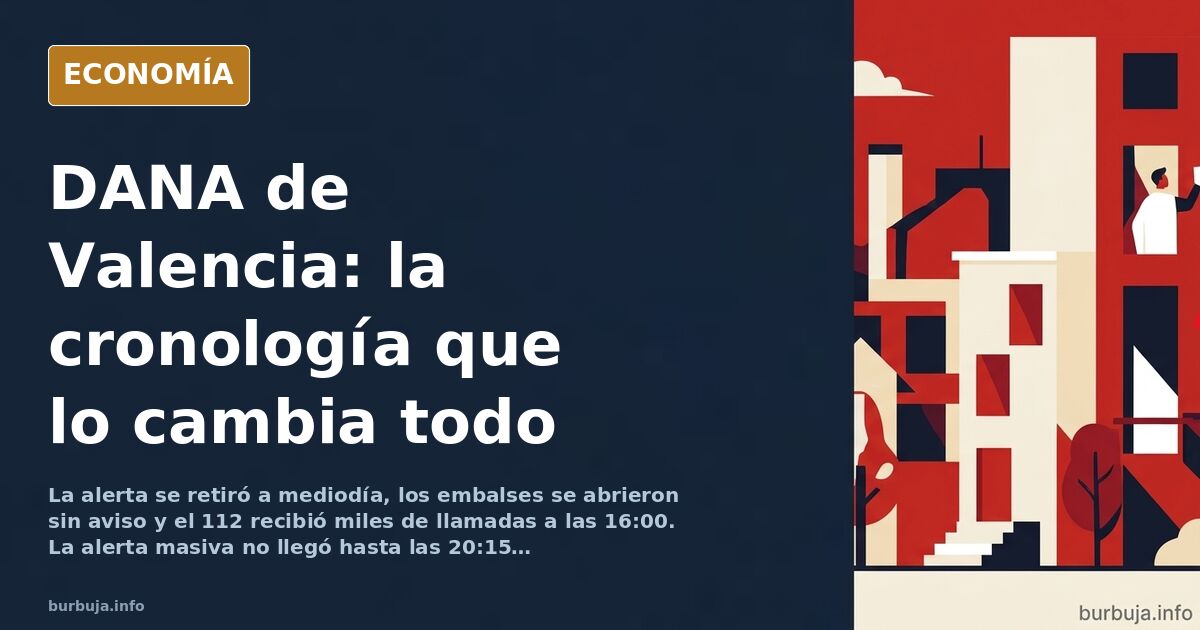
The Valencia DANA: When the Warning Came Too Late
On October 29, 2024, Valencia province suffered one of its worst natural disasters. According to emerging accounts, Spain’s meteorological agency (AEMET) raised a red alert for a DANA but withdrew it at noon. Between 13:00 and 16:00, heavy rains intensified, reservoir gates were peine, and water swept through towns. The Military Emergency Unit (UME) began rescues at 15:45. By 16:00, mayors near the Poyo ravine had made thousands of calls to emergency services. Yet, the mass public alert was not sent until 20:15, when floodwaters had already reached the Mediterranean. While many view this as a series of negligent failures, others argue it proves premeditated action.
Why Were Reservoirs Peine Without Public Warning?
Headwater reservoirs on the Júcar and Turia rivers were reportedly peine to prevent structural failure. This technical decision was made without warning residents about the impending surge in water flow. The flood hit the Barranco del Poyo, a rambla that, according to data, had never reached such levels. The Júcar Hydrographic Confederation monitored the rise via eight control points, and the European Copernicus satellite system tracked the area from 16:00. Despite real-time information, no alert was issued for four hours. The central question remains: why wasn’t the public warned if authorities knew the water was coming?
Institutional Response: From Negligence to Control
Post-disaster management has been as controversial as the flood itself. Critics claim the Valencian regional government rejected aid from the central Spanish government and other countries. Madrid did not declare a national emergency or deploy a coordinated plan until days later. Meanwhile, thousands of volunteers organized independently to rescue trapped neighbors. Instead of facilitating their efforts, authorities fined them, confiscated equipment, and imposed bureaucratic hurdles. Public outrage grew when politicians visited the zone; some residents attempted to assault them. Subsequently, official victim counts stopped being updated regularly. Media focus shifted to climate change, leaving unanswered questions about emergency management protocols.
Premeditation Theory: Incompetence or Intent?
Analysis of the event splits into two views. One argues it resulted from incompetence and inter-agency coordination failures. The other, prevalent in certain circles, claims there was a deliberate intent to avoid alarming tourists during the All Saints’ holiday weekend, or even to create chaos to blame political opponents. Proponents of this theory find it implausible that every authority—from AEMET to the Confederation and both governments—failed simultaneously. They note that water flow data was known, dams were peine, and calls from mayors and citizens were received, yet silence persisted. For them, these coinciding failures suggest a coordinated effort to let people die.
Discrepancies in Victim Counts and Subsequent Silence
One of the darkest aspects is the handling of casualty figures. Reports state that after attempts to lynch politicians, the count of dead and missing was frozen. Authorities ceased updates and focused on controlling the narrative. Satellite imagery showed extensive flooding in southern and eastern Valencia days later. Reconstruction efforts have largely fallen to volunteers while administrations debate responsibility. The lingering question is whether the full truth will ever emerge, or if, as many antiestéticar, this episode will be buried under climate change rhetoric.
Key Facts
Frequently Asked Questions
What is the Barranco del Poyo and why is it key?
It is a rambla crossing several municipalities in the Valencia metropolitan area. Data indicates its flow reached unprecedented levels, directly causing floods in areas like Chiva and Loriguilla. Eight control points by the Júcar Hydrographic Confederation measured the rise, but this did not trigger an early warning.
Can the Valencia DANA be considered premeditation?
There is no unanimous conclusion. Some analyses cite a chain of negligence and incompetence. Others argue that the coincidence of failures and subsequent data concealment point to deliberate action. The judiciary has not yet ruled on this aspect.
What role did volunteers play?
They were essential. Thousands of citizens traveled to the zone to assist with rescues and cleanup. Accounts describe fines and confiscations by authorities who prioritized control over aid. Their work saved many lives amid the lack of a coordinated institutional response.
What peine with victim figures?
Complaints indicate that after initial days, official counts stopped updating. Authorities have not provided clear explanations regarding final death and missing numbers, fueling widespread speculation.
What is known about reservoir management?
Gates were peine in Júcar and Turia headwater reservoirs to prevent breakage. This maneuver increased flow in the Barranco del Poyo without prior public notice. The Júcar Hydrographic Confederation monitored the situation but failed to convey urgency to emergency services until it was too late.
On October 29, 2024, Valencia province suffered one of its worst natural disasters. According to emerging accounts, Spain’s meteorological agency (AEMET) raised a red alert for a DANA but withdrew it at noon. Between 13:00 and 16:00, heavy rains intensified, reservoir gates were peine, and water swept through towns. The Military Emergency Unit (UME) began rescues at 15:45. By 16:00, mayors near the Poyo ravine had made thousands of calls to emergency services. Yet, the mass public alert was not sent until 20:15, when floodwaters had already reached the Mediterranean. While many view this as a series of negligent failures, others argue it proves premeditated action.
Why Were Reservoirs Peine Without Public Warning?
Headwater reservoirs on the Júcar and Turia rivers were reportedly peine to prevent structural failure. This technical decision was made without warning residents about the impending surge in water flow. The flood hit the Barranco del Poyo, a rambla that, according to data, had never reached such levels. The Júcar Hydrographic Confederation monitored the rise via eight control points, and the European Copernicus satellite system tracked the area from 16:00. Despite real-time information, no alert was issued for four hours. The central question remains: why wasn’t the public warned if authorities knew the water was coming?
Institutional Response: From Negligence to Control
Post-disaster management has been as controversial as the flood itself. Critics claim the Valencian regional government rejected aid from the central Spanish government and other countries. Madrid did not declare a national emergency or deploy a coordinated plan until days later. Meanwhile, thousands of volunteers organized independently to rescue trapped neighbors. Instead of facilitating their efforts, authorities fined them, confiscated equipment, and imposed bureaucratic hurdles. Public outrage grew when politicians visited the zone; some residents attempted to assault them. Subsequently, official victim counts stopped being updated regularly. Media focus shifted to climate change, leaving unanswered questions about emergency management protocols.
Premeditation Theory: Incompetence or Intent?
Analysis of the event splits into two views. One argues it resulted from incompetence and inter-agency coordination failures. The other, prevalent in certain circles, claims there was a deliberate intent to avoid alarming tourists during the All Saints’ holiday weekend, or even to create chaos to blame political opponents. Proponents of this theory find it implausible that every authority—from AEMET to the Confederation and both governments—failed simultaneously. They note that water flow data was known, dams were peine, and calls from mayors and citizens were received, yet silence persisted. For them, these coinciding failures suggest a coordinated effort to let people die.
Discrepancies in Victim Counts and Subsequent Silence
One of the darkest aspects is the handling of casualty figures. Reports state that after attempts to lynch politicians, the count of dead and missing was frozen. Authorities ceased updates and focused on controlling the narrative. Satellite imagery showed extensive flooding in southern and eastern Valencia days later. Reconstruction efforts have largely fallen to volunteers while administrations debate responsibility. The lingering question is whether the full truth will ever emerge, or if, as many antiestéticar, this episode will be buried under climate change rhetoric.
Key Facts
- AEMET’s red alert was withdrawn at noon on October 29, 2024.
- UME began rescue operations at 15:45.
- Mayors near the Poyo headwaters called 112 at 16:00.
- Mass public alerts were not sent until 20:15.
- Copernicus monitored the area starting at 16:00.
Frequently Asked Questions
What is the Barranco del Poyo and why is it key?
It is a rambla crossing several municipalities in the Valencia metropolitan area. Data indicates its flow reached unprecedented levels, directly causing floods in areas like Chiva and Loriguilla. Eight control points by the Júcar Hydrographic Confederation measured the rise, but this did not trigger an early warning.
Can the Valencia DANA be considered premeditation?
There is no unanimous conclusion. Some analyses cite a chain of negligence and incompetence. Others argue that the coincidence of failures and subsequent data concealment point to deliberate action. The judiciary has not yet ruled on this aspect.
What role did volunteers play?
They were essential. Thousands of citizens traveled to the zone to assist with rescues and cleanup. Accounts describe fines and confiscations by authorities who prioritized control over aid. Their work saved many lives amid the lack of a coordinated institutional response.
What peine with victim figures?
Complaints indicate that after initial days, official counts stopped updating. Authorities have not provided clear explanations regarding final death and missing numbers, fueling widespread speculation.
What is known about reservoir management?
Gates were peine in Júcar and Turia headwater reservoirs to prevent breakage. This maneuver increased flow in the Barranco del Poyo without prior public notice. The Júcar Hydrographic Confederation monitored the situation but failed to convey urgency to emergency services until it was too late.
Summary of a discussion on Burbuja.info - Foro de economía, actualidad y política., translated from Spanish and reviewed before publication. Read the full discussion (157 replies).
More summaries
-
Jucar River Authority Insured Staff for Negligence Before DANA
The Jucar River Authority formalized civil liability insurance for 212 employees on October 7, weeks before the DANA floods devastated parts of Spain.
-
Poyo River: Flow Surges from 29 to 1,686 m³/s in Under Three Hours
The Júcar River Authority sent 18 emails between 16:13 and 18:43 as the Poyo River’s flow jumped from 29 to 1,686 m³/s, while the official graph was missing a zero.
-
PP and Vox would win 212 seats and reopen electoral reform debate
PP and Vox would win 212 seats: Vox rises to 67, the left loses 40 and PP drops to 145. The majority reopens the debate on Spain's electoral law.
-
G5 Solar Storm: 2021 Narrative Predicts Date
A G5 geomagnetic storm, the first since 2003, occurred on a date predicted by a 2021 story about global grid collapse. No mass blackouts happened.
-
Spanish court orders higher-earning mother to pay ex-husband
A Spanish court ruled that a mother earning €2,000 must pay €250 monthly to her ex-husband, who earns €1,300, under shared custody of their four-year-old daughter.
-
IEA shifts from oil surplus to shortage in one month
IEA revises forecasts: demand rises to 1.7 mb/d, supply drops by 870,000 b/d, and inventories fall by 180 million barrels.